356 kr
Skickas inom 10-15 vardagar
356 kr
Skickas inom 10-15 vardagar
675 kr
Skickas inom 7-10 vardagar
1 851 kr
Skickas inom 7-10 vardagar
1 398 kr
Skickas inom 7-10 vardagar
790 kr
Skickas inom 7-10 vardagar
303 kr
Skickas inom 10-15 vardagar
2 444 kr
Skickas inom 10-15 vardagar
986 kr
Läs direkt efter köp
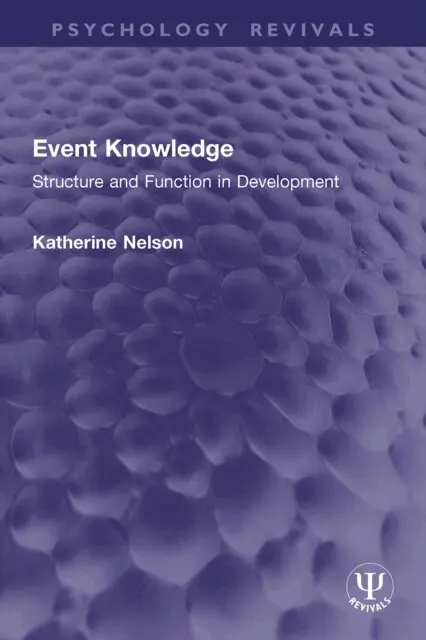
Originally published in 1986, Event Knowledge: Structure and Function in Development was first undertaken because the authors were interested in certain phenomena of cognitive development in early childhood. In particular, they were struck by the discrepancy between young children’s apparent competence in everyday activities and their apparent incompetence on certain cognitive tasks. The research was designed in an attempt to identify the basis for children’s competence in everyday life. It evolved into an effort to find links between the everyday and the experimental realms, the hope that they could explain both the successes in one and failures in the other.
Based on initial concerns and assumptions, the program of research described here was designed to explore how young children’s knowledge of their everyday world – its spatial-temporal structure, the people and objects that occupy it, and their activities – is organized and used, both in practical tasks and in abstract thinking. The approach was novel and it was hoped it would provide the foundation for a new approach to a theory of cognitive development. Today it can be read in its historical context.
972 kr
Läs direkt efter köp
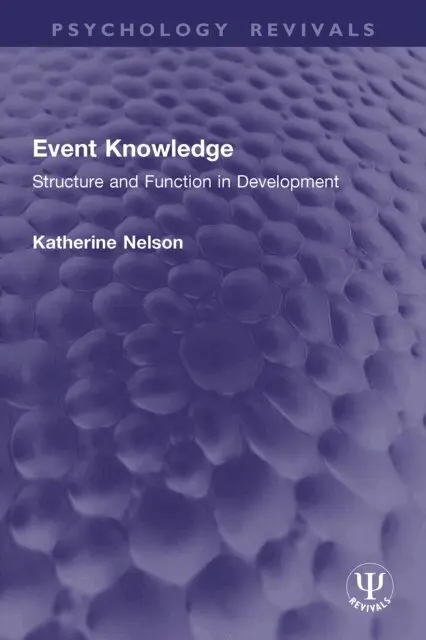
Originally published in 1986, Event Knowledge: Structure and Function in Development was first undertaken because the authors were interested in certain phenomena of cognitive development in early childhood. In particular, they were struck by the discrepancy between young children’s apparent competence in everyday activities and their apparent incompetence on certain cognitive tasks. The research was designed in an attempt to identify the basis for children’s competence in everyday life. It evolved into an effort to find links between the everyday and the experimental realms, the hope that they could explain both the successes in one and failures in the other.
Based on initial concerns and assumptions, the program of research described here was designed to explore how young children’s knowledge of their everyday world – its spatial-temporal structure, the people and objects that occupy it, and their activities – is organized and used, both in practical tasks and in abstract thinking. The approach was novel and it was hoped it would provide the foundation for a new approach to a theory of cognitive development. Today it can be read in its historical context.
1 480 kr
Skickas inom 10-15 vardagar
1 043 kr
Läs direkt efter köp
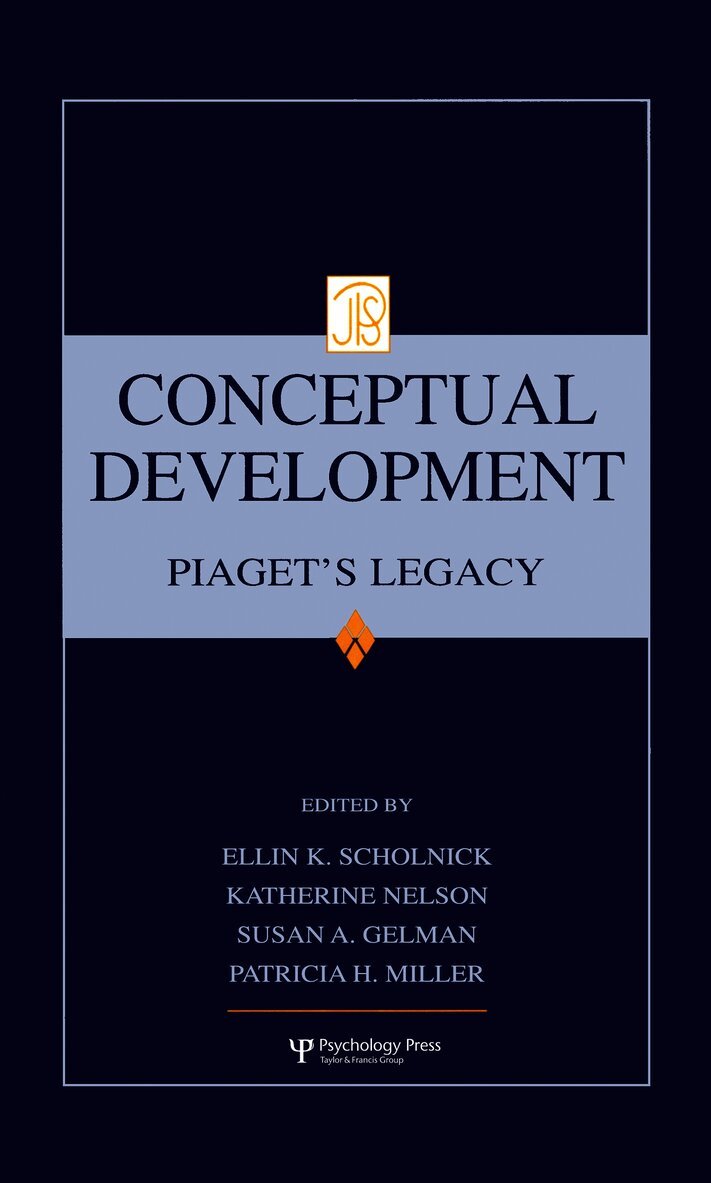
This book examines a key issue in current cognitive theories - the nature of representation. Each chapter is characterized by attempts to frame hot topics in cognitive development within the landscape of current developmental theorizing and the past legacy of genetic epistemology. The chapters address four questions that are fundamental to any developmental line of inquiry:
How should we represent the workings and contents of the mind? How does the child construct mental models during the course of development? What are the origins of these models? and What accounts for the novelties that are the products and producers of developmental change?These questions are situated in a historical context, Piagetian theory, and contemporary researchers attempt to trace how they draw upon, depart from, and transform the Piagetian legacy to revisit classic issues such as the child''s awareness of the workings of mental life, the child''s ability to represent the world, and the child''s growing ability to process and learn from experience. The theoretical perspectives covered include constructivism, connectionism, theory-theory, information processing, dynamical systems, and social constructivist approaches. The research areas span imitation, mathematical reasoning, biological knowledge, language development, and theory of mind.
Written by major contributors to the field, this work will be of interest to students and researchers wanting a brief but in-depth overview of the contemporary field of cognitive development.

1 021 kr
Läs direkt efter köp
This book examines a key issue in current cognitive theories - the nature of representation. Each chapter is characterized by attempts to frame hot topics in cognitive development within the landscape of current developmental theorizing and the past legacy of genetic epistemology. The chapters address four questions that are fundamental to any developmental line of inquiry:
How should we represent the workings and contents of the mind? How does the child construct mental models during the course of development? What are the origins of these models? and What accounts for the novelties that are the products and producers of developmental change?These questions are situated in a historical context, Piagetian theory, and contemporary researchers attempt to trace how they draw upon, depart from, and transform the Piagetian legacy to revisit classic issues such as the child''s awareness of the workings of mental life, the child''s ability to represent the world, and the child''s growing ability to process and learn from experience. The theoretical perspectives covered include constructivism, connectionism, theory-theory, information processing, dynamical systems, and social constructivist approaches. The research areas span imitation, mathematical reasoning, biological knowledge, language development, and theory of mind.
Written by major contributors to the field, this work will be of interest to students and researchers wanting a brief but in-depth overview of the contemporary field of cognitive development.
876 kr
Skickas inom 10-15 vardagar
708 kr
Läs direkt efter köp
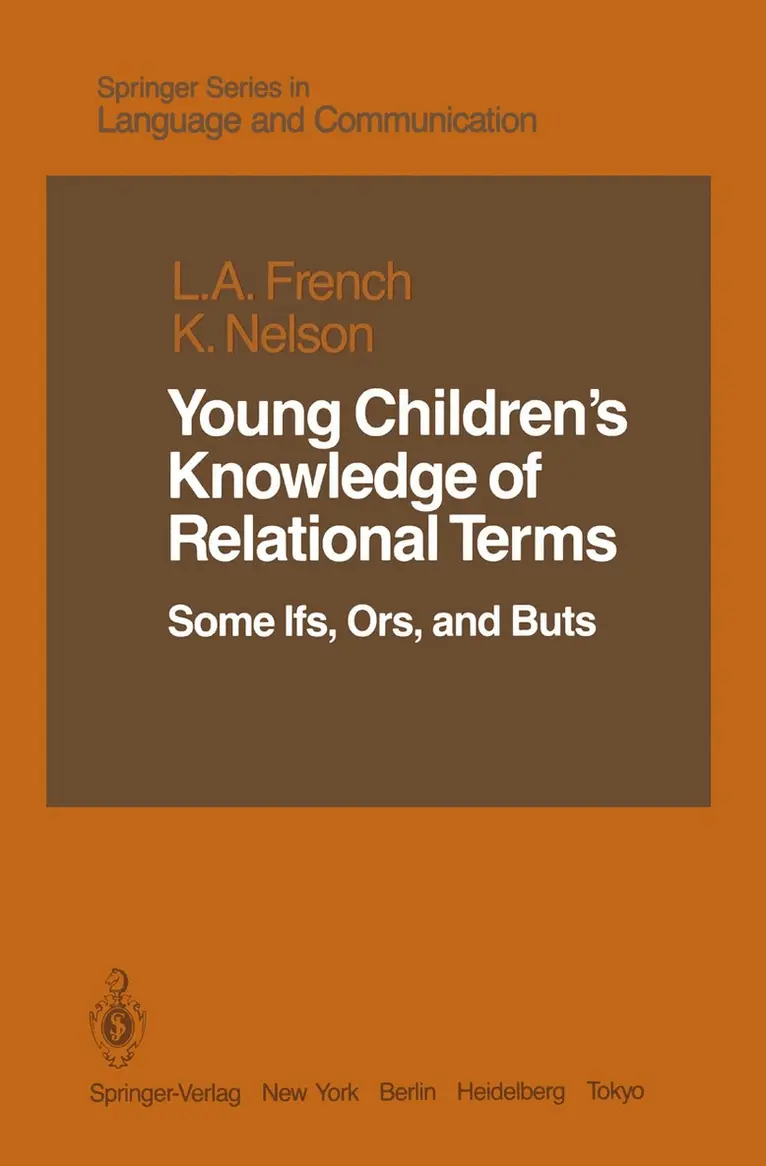
Some Ifs, Ors, and Buts
529 kr
Skickas inom 10-15 vardagar
392 kr
Skickas
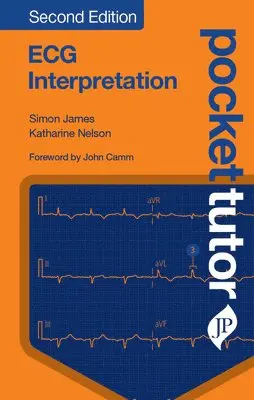
Titles in the Pocket Tutor series give practical guidance on subjects that medical students and foundation doctors need help with ‘on the go’, at a highly-affordable price that puts them within reach of those rotating through modular courses or working on attachment.
Topics reflect information needs stemming from today’s integrated undergraduate and foundation courses:
Common presentationsInvestigation options (e.g. ECG, imaging)Clinical and patient-orientated skills (e.g. examinations, history-taking)The highly-structured, bite-size content helps novices combat the ‘fear factor’ associated with day-to-day clinical training, and provides a detailed resource that students and junior doctors can carry in their pocket.
Key points
New edition of the best-selling title that breaks down a complex and daunting subject using clearly-labelled, full-page ECG traces and concise but informative textRevised text and brand-new ECG traces bring the new edition fully up-to-dateNew chapters cover electrolyte and homeostatic disorders, and normal variantsLogical, sequential content: relevant basic science, then a guide to understanding a normal ECG and the building blocks of an abnormal ECG, before describing clinical disorders34 kr
Läs direkt efter köp
210 kr
Skickas inom 7-10 vardagar
262 kr
Skickas inom 7-10 vardagar
171 kr
Skickas inom 7-10 vardagar
228 kr
Tillfälligt slut