Das wirklich gültige Werk der Welt setzt menschliche Reife voraus, und die zur Reife führende Verwandlung des Menschen die Mühe um das in der Welt aufgegebene Werk. So schließen sich innerer Weg und äußeres Werk nicht aus, sondern sie bedingen einander. Und da wir von früh bis nachts gefordert sind, sowohl von unserem inneren Wesen wie von der uns bedrohenden und in unsere Verantwortung gegebenen Welt, ist das Feld eines nie endenden Bemühens, beide Seiten miteinander zu versöhnen: der Alltag! Karlfried Graf Dürckheim (* 24. Oktober 1896 in München; å 28. Dezember 1988 in Todtmoos), Psychologe und Philosoph, lernte als deutscher Diplomat während des II. Weltkriegs in Japan den Zen-Buddhismus kennen und trug nach dem Krieg wesentlich zu dessen Bekanntheit in Deutschland bei. Er verschmolz Zen-Ideen mit tiefenpsychologischen, insbesondere jungianischen Ansätzen zu einer eigenen «Initiationstherapie», die in seiner «Existential-psychologischen Bildungs- und Begegnungsstätte» in Todtmoos-Rütte im Schwarzwald praktiziert wurde.
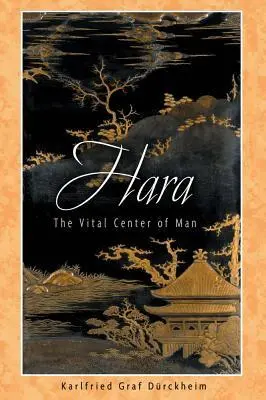
When we speak of an individual’s state,we are actually referring to something that transcends the duality of body and soul, something that reflects the entirety of a person’s being. Because each of us is a unity of body and soul, there is no psychic structure or inner tension that is not reflected outwardly in the form and order of the body. When we find the physical center of the body we also find the psychological center of the soul. According to Zen masters, by correcting posture and breathing to balance this center, one can cultivate inner tranquillity and balance: the state called Hara. In Hara,Karlfried Graf Dürckheim shows the Western world how to overcome the physical and spiritual decay of modern life by adopting the age-old techniques of Japanese Zen masters. By leaving behind the “chest out–belly in” posture and attitude of the West and adopting the belly-centered posture and attitude of Hara, individuals can live a calm, grounded, and more balanced life. Included in this classic text are vital life force practices and translations of the wisdom teachings of three Japanese Zen masters. This book also explores how the practice of Hara emphasizes empirical learning and the cultivation of self-knowledge through the perfection of arts such as painting and archery.