The architecture of model railway systems in the German post-war economic boom was surprisingly modern. New stood next to old, high-rises and half-timbered buildings coexisted peacefully. Still today the famous 'Villa in Tessin', high-rises, gas stations, and train and administrative buildings of the post-war period connect generations throughout Germany. Märklin Moderne shows for the first time how enthusiastic the nostalgic model railway builders truly were for modernism. The exhibition and catalogue present model assembly kits and the real buildings that inspired them, and thus bring the architecture and model construction history of the post-war period together.Includes texts by Daniel Bartetzko, Karin Berkemann, Oliver Elser, and Christian Holl, and interviews with Falk Jaeger and Klaus Staeck, among others. Photographs are by Hagen Stier.The exhibition by the online magazine moderneREGIONAL opens on 18th of May 2018 in the German Architecture Museum in Frankfurt am Main and will be shown simultaneously in the Architekturgalerie am Weißenhof in Stuttgart. The exhibition will be accompanied by a film by Otto Schweitzer.Text in English and German.
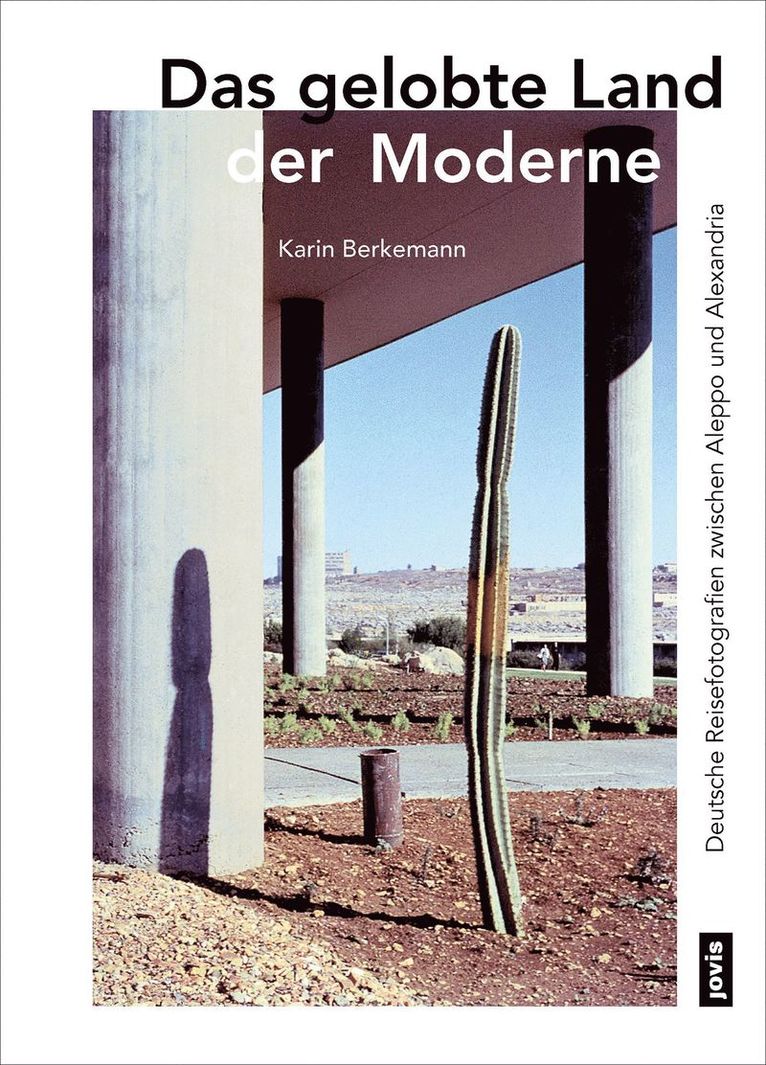
Gustaf Dalman did not place much stock in snapshots. When the German theologian traveled between Aleppo and Alexandria beginning in 1899, he took his time. He observed, made use of his notebook and a plate camera: with objectivity and style, always treating his counterpart as an equal, be it a human being or a folding shovel. Until his death in 1941, Dalman collected around 20,000 photographs in Greifswald—taken by himself and by others—of a cultural landscape moving toward modernity. For the first time, the theologian and art historian Karin Berkemann will comprehensively evaluate this collection: unique in Europe, from the perspective of visual studies, comparing it with photographs taken by German travelers from 1948 onwards, after the founding of the State of Israel. Some of these photographers used the camera to seek out what was ancient, while others looked for the signs of a new era. Spanning decades, the photographs today form a multilayered topography of a region considered sacred by three world religions and countless others with a belief in culture.