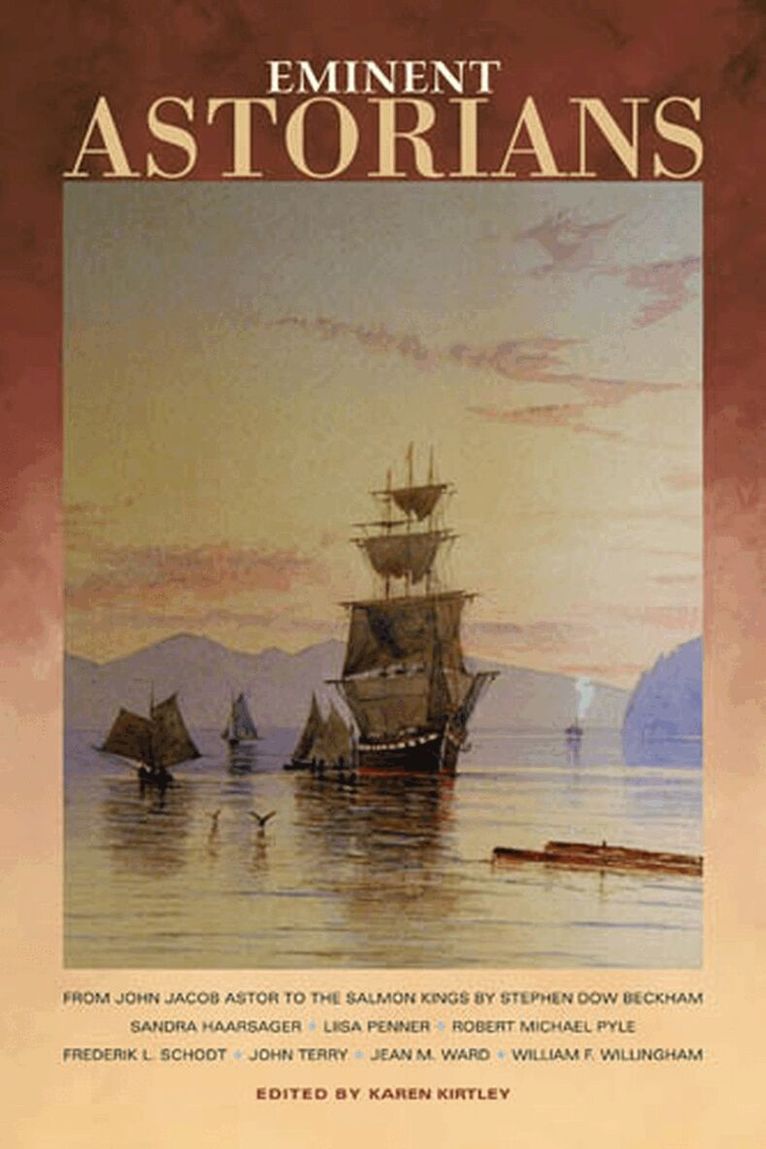
Eminent Astorians marks the bicentennial of Astoria in 2011. Each of nine essays presents a literary biography of a figure who looms large in Astoria’s history, from Comcomly, the powerful, one-eyed leader of the Chinook Tribe when Lewis and Clark arrived at the mouth of the Columbia River in 1805, to the “Salmon Kings,” who capitalized on the region’s natural bounty from the 1870s to the 1910s.Modeled after Lytton Strachey’s literary portraits in Eminent Victorians, these essays are interpretive, engaging, and rich in context. The authors are among the best known and most respected writers and scholars in the Northwest. Stephen Dow Beckham, distinguished historian at Lewis and Clark College, contributed a comprehensive introduction and served as the book’s historical advisor.Scholars as well as travelers and lay readers interested in the Pacific Northwest will enjoy the biographical storytelling and gain insights into Astoria’s history as they trace the lives of these quintessential Oregonians.Includes:Comcomly: Chinook Nation CEO by John TerryJohn Jacob Astor I: “A Most Excellent Man?” by Robert Michael PyleGeorge Gibbs by Stephen Dow BeckhamRanald MacDonald and Astoria by Frederik L. SchodtCaptain George Flavel and the Building of Astoria by William F. WillinghamBethenia Angelina Owens Adair by Jean M. WardSilas Bryant Smith by Stephen Dow BeckhamMolding Astoria—The Role of Two Editors by Sandra HaarsagerThe Salmon Kings by Liisa Penner
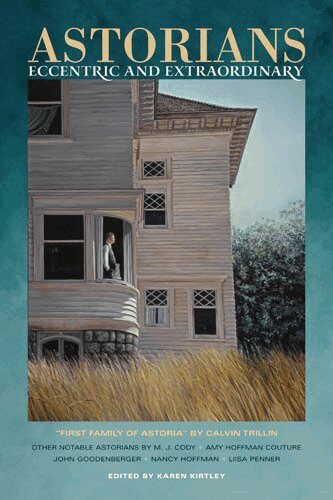
n 1993, The New Yorker published Calvin Trillin’s memorable article on the eccentric Flavel family of Astoria, the descendants of Captain George Flavel, whose ornate Queen-Anne-style mansion is a tourist draw today. With Trillin’s gracious consent, “First Family of Astoria” is reprinted in Part One of Astorians, Eccentric and Extraordinary, making its first appearance in book form.Part Two carries on the theme with portraits of fifty-five other notable Astorians. Five Oregon writers have captured the essence and the flavor of vivid personalities that include the notorious shanghaier Bridget Grant; the charming scoundrel Mayor Francis Clay Harley; the elusive English “barmaid” Jane Barnes, the first white woman in the Pacific Northwest; and Rolf Klep, who believed he could create a major maritime museum in an economically depressed town—and made it happen.In biology, it is said that the richest life forms reside at the edge of the ecosystem. Astoria epitomizes edges—the edge of the country, the edge of a great river, the edge of the Pacific Ocean, and the edge of our American culture. This book celebrates the larger-than-life quality that has appeared with regularity in the town’s two-hundred-year history. As Steve Forrester, publisher of The Daily Astorian, notes in the book’s introduction: “Extraordinary people are not necessarily eccentric. But eccentrics are driven to do extraordinary things.”