2 631 kr
Läs direkt efter köp
2 631 kr
Läs direkt efter köp
2 631 kr
Läs direkt efter köp
2 905 kr
Skickas inom 5-8 vardagar
1 908 kr
Skickas inom 7-10 vardagar
419 kr
Läs direkt efter köp
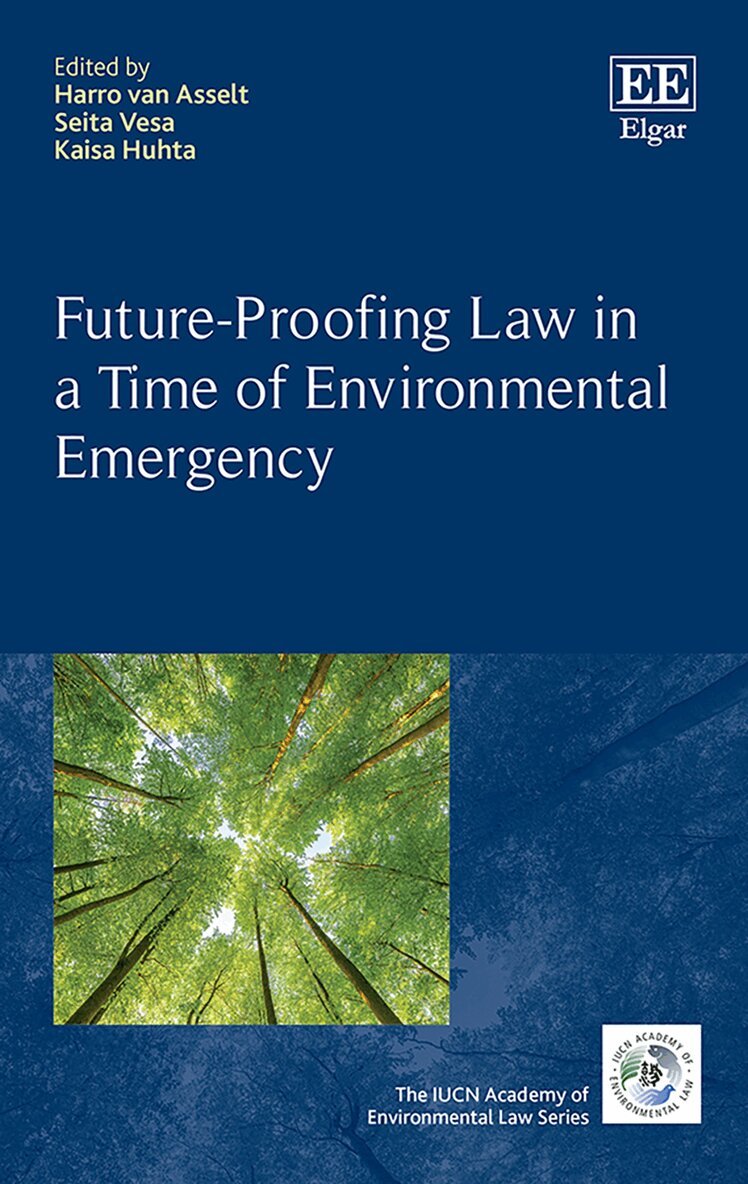
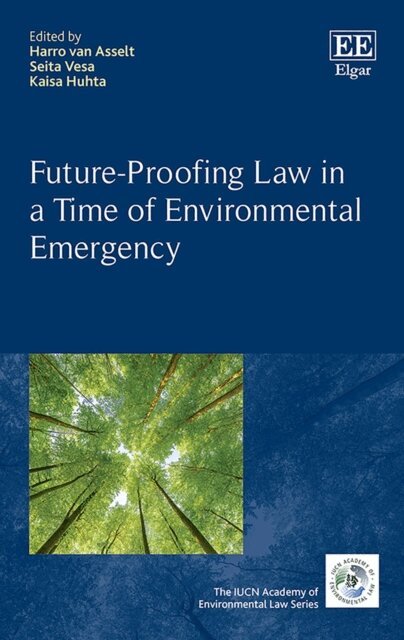
Providing global insights into the debates surrounding the future-proofing of environmental law, contributors critically analyse law’s reactive tendencies and reflect on pathways towards legal resilience. Chapters outline theoretical approaches, practical solutions and novel directions for future-proofing. These are illustrated by case studies exploring areas such as the Indus Waters Treaty, administrative sanctions of Chinese emissions trading schemes and the role of international law in addressing plastics pollution.
Students and scholars of environmental law and public international law will greatly benefit from this forward-thinking book. It is also a vital resource for policymakers and legal professionals in developmental and environmental law.
422 kr
Läs direkt efter köp
1 052 kr
Skickas inom 7-10 vardagar
889 kr
Läs direkt efter köp
Derived from the renowned multi-volume International Encyclopaedia of Laws, this book provides a systematic approach to legislation and legal practice concerning energy resources and production in Finland. The book describes the administrative organization, regulatory framework, and relevant case law pertaining to the development, application, and use of such forms of energy as electricity, gas, petroleum, and coal, with attention as needed to the pervasive legal effects of competition law, environmental law, and tax law.
A general introduction covers the geography of energy resources, sources and basic principles of energy law, and the relevant governmental institutions. Then follows a detailed description of specific legislation and regulation affecting such factors as documentation, undertakings, facilities, storage, pricing, procurement and sales, transportation, transmission, distribution, and supply of each form of energy. Case law, intergovernmental cooperation agreements, and interactions with environmental, tax, and competition law are explained.
Its succinct yet scholarly nature, as well as the practical quality of the information it provides, make this book a valuable resource for energy sector policymakers and energy firm counsel handling cases affecting Finland. It will also be welcomed by researchers and academics for its contribution to the study of a complex field that today stands at the foreground of comparative law.
1 491 kr
Läs direkt efter köp
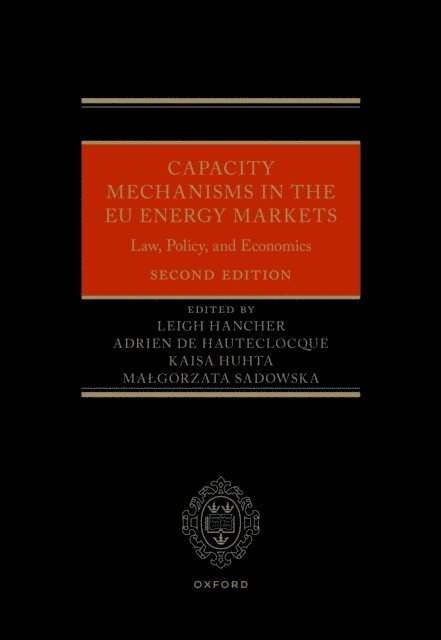
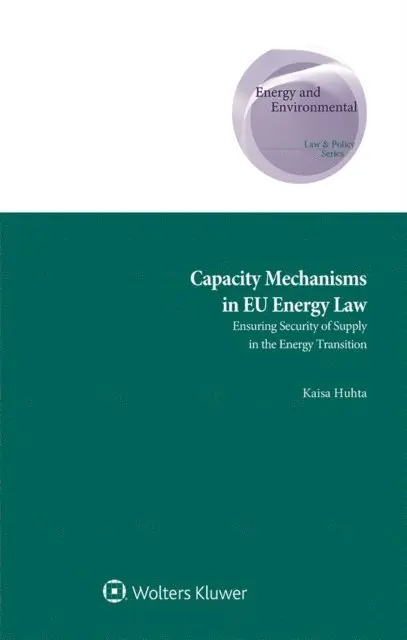
Many states – including European Union (EU) Member States – subsidise energy producers in order to guarantee the uninterrupted availability of affordable electricity. This book presents the first in-depth examination of how these so-called capacity mechanisms are addressed in EU law and how they affect the functioning of the EU energy markets.
Focusing on the existing legal framework as well as the new provisions of the Clean Energy for All Europeans package for capacity mechanisms, the author addresses and analyses such aspects as the following:
the structure and functioning of the EU electricity markets; EU’s competence to address security of supply and Member States’ margin of discretion; sector-specific rules for security of supply; legal conditions for subsidising generation adequacy; capacity remuneration under the EU State aid regime; free movement rules that address generation adequacy measures; balancing different interests of EU energy law in the context of generation adequacy; and the requirement of proportionality in State intervention to ensure generation adequacy.The analysis draws on relevant sources of EU law (treaties, regulations and directives) as well as the case law of the European Court of Justice and the General Court, together with soft law instruments such as Commission guidelines. Scholarly sources include not only legal literature but also work on energy policy, energy engineering and energy economics.
As a detailed analysis of how capacity mechanisms address issues arising in the context of the enegy transition – and how the system of EU law applicable to capacity mechanisms should be interpreted to further the objectives of EU energy law – the book will help policymakers and legislators in Member States to understand the changing legal setting for capacity mechanisms. Lawyers, academics and other professionals who deal with EU electricity markets in the EU and beyond are sure to welcome its detailed description and analysis.