Book SummaryMeet Alan Tran, Pharm. D. and his lovely wife, Anna. As the story unfolds, Alan undergoes a journey, from a new graduate to superb pharmacist. His gift of medical sleuthing swells his evergrowing ego, while his world waits on him, hand and foot. Without realizing it, his alter ego takes over and Alan starts to make poor decisions. Does he get away with it, saving his ego and his true love from demise?
Compact microstrip antennas are of great importance in meeting the miniaturization requirements of modern portable communications equipment. This book is a comprehensive treatment of design techniques and test data for current compact and broadband microstrip designs. It summarizes the work of the author and his graduate students who have published over 80 refereed journal articles on the subject in the past few years. The advanced designs reported by various other prestigious antenna designers are incorporated as well.
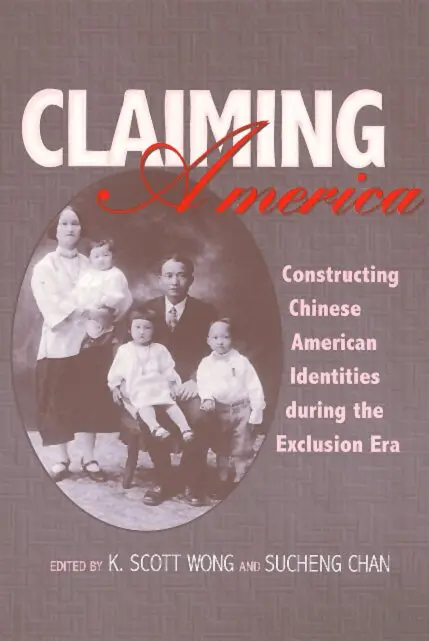
This collection of essays centers on the formation of an ethnic identity among Chinese Americans during the period when immigration was halted. The first section emphasizes the attempts by immigrant Chinese to assert their intention of becoming Americans and to defend the few rights they had as resident aliens. Highlighting such individuals as Yung Wing, and ardent advocate of American social and political ideals, and Wong Chin Foo, one of the first activists for Chinese citizenship and voting rights, these essays speak eloquently about the early struggles in the Americanization movement. The second section shows how children of the immigrants developed a sense of themselves as having a distinct identity as Chinese Americans. For this generation, many of the opportunities available to other immigrants' children were simply inaccessible. In some districts explicit policies kept Chinese children in segregated schools; in many workplaces discriminatory practices kept them from being hired or from advancing beyond the lowest positions.In the 1930s, in fact, some Chinese Americans felt their only option was to emigrate to China, where they could find jobs better matched to their abilities. Many young Chinese women who were eager to take advantage of the educational and work options opening to women in the wider U.S. society first had to overcome their family's opposition and then racism. As the personal testimonies and historical biographies eloquently attest, these young people deeply felt the contradictions between Chinese and American ways; but they also saw themselves as having to balance the demands of the two cultures rather than as having to choose between them.
This collection of essays centers on the formation of an ethnic identity among Chinese Americans during the period when immigration was halted. The first section emphasizes the attempts by immigrant Chinese to assert their intention of becoming Americans and to defend the few rights they had as resident aliens. Highlighting such individuals as Yung Wing, and ardent advocate of American social and political ideals, and Wong Chin Foo, one of the first activists for Chinese citizenship and voting rights, these essays speak eloquently about the early struggles in the Americanization movement. The second section shows how children of the immigrants developed a sense of themselves as having a distinct identity as Chinese Americans. For this generation, many of the opportunities available to other immigrants' children were simply inaccessible. In some districts explicit policies kept Chinese children in segregated schools; in many workplaces discriminatory practices kept them from being hired or from advancing beyond the lowest positions.In the 1930s, in fact, some Chinese Americans felt their only option was to emigrate to China, where they could find jobs better matched to their abilities. Many young Chinese women who were eager to take advantage of the educational and work options opening to women in the wider U.S. society first had to overcome their family's opposition and then racism. As the personal testimonies and historical biographies eloquently attest, these young people deeply felt the contradictions between Chinese and American ways; but they also saw themselves as having to balance the demands of the two cultures rather than as having to choose between them.