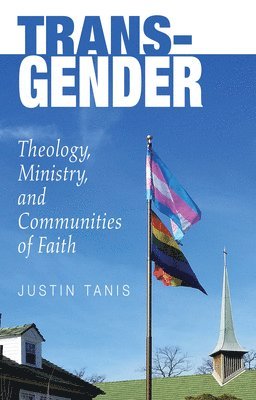
Justin Sabia-Tanis examines the rich spiritual content in the works of contemporary queer and trans artists from various cultures, religions, and countries.Artists depict, represent, and explore the realms of the spirit in ways that may more fully describe the diverse spiritual leanings and expressions of the LGBTQ communities and offer windows into the spiritual practice of queer people that is underexamined by religious institutions and theologians. This book contributes to the discourse of queer and trans theologies by adding these perspectives to the conversation, using the arts as a lens through which to see more clearly. To explore this topic, the author selected a diverse group of queer and trans artists whose work particularly speaks to one of the themes identified in the book, examining a single piece or closely-related series from each artist. The main themes discussed are queer spirit, body, liberation, religion, and future.
Bringing together material religion and discourse theory, this cross-disciplinary book argues that theories of embodiment and religion co-produce one another. Responding to the scholarly turn towards embodiment and phenomenology beginning in queer studies and branching out into the humanities more broadly, Jessica A. Albrecht brings religion to the table. This book contends that, if the turn to materiality emphasizes what religion does in bodies and spaces, or how bodies make religion, it is equally important to ask whose bodies are made legible, and under what conditions they come to matter. By shining a light on this reciprocal relationship between religion and embodiment, Albrecht reveals the processes through which meanings, “bodies,” and “religion” itself are made. Across seven chapters spanning intersectionality, queer and cuír theory, and crip studies, this book traces counter-genealogies which reveal how bodies become unintelligible within the regimes of religion, race, gender, and ability. Albrecht offers tools for examining how religious experiences are shaped by queerness, disability, and power, providing a fresh and inclusive perspective on how bodies and practices are central constituents of conceptions of religion. The resulting framework for religious studies pushes beyond normative views or religious-secular divisions, prompting readers to critically re-consider both “religion” and the “body.”