Inbunden, Engelska, 1997
1 958 kr
Skickas inom 3-6 vardagar
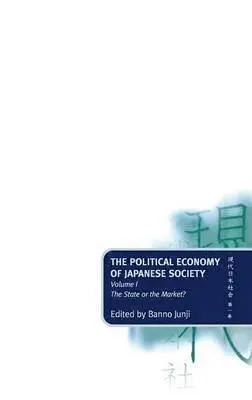
Until recently, many Japanese believed that they lived in the richest country in the world, and in the early 1990s, they welcomed the end of one-party dominance. However, by the middle of the 1990s, many Japanese are no longer confident in their economy, nor optimistic in their politics. This authoritative study analyses various aspects of Japanese society and economy in order to provide a balanced view between the optimism of the 1980s and the pessimism characteristic of more recent years. The Political Economy of Japanese Society is a revision and translation of a multidisciplinary research project carried out by the Institute of Social Science at the University of Tokyo. Beginning with the late nineteenth century, it examines the historical developments of Japan's contemporary political economy, paying particular attention to the changes that have occurred 'from below'. Social actors who have often been given peripheral treatment, such as opposition parties, the aged, female and foreign workers, are brought to the forefront of the analysis, alongside those considered more mainstream, such as the governing party, large corporations and labour unions. The Japanese political economy of the 1980s and 90s has had a strong impact on the global economy, and this book also analyses selective influences on the outside world, in particular on other Asian nations and the USA.Volume 1 analyses the structures of the Japanese political economy which encouraged continuous economic growth in the period from 1955 to 1990, focusing on such phenomena as Japanese political management, the Japanese employment system, and one-party dominance in politics. Volume 2 examines some of the problems inherited from this period of dramatic economic growth.