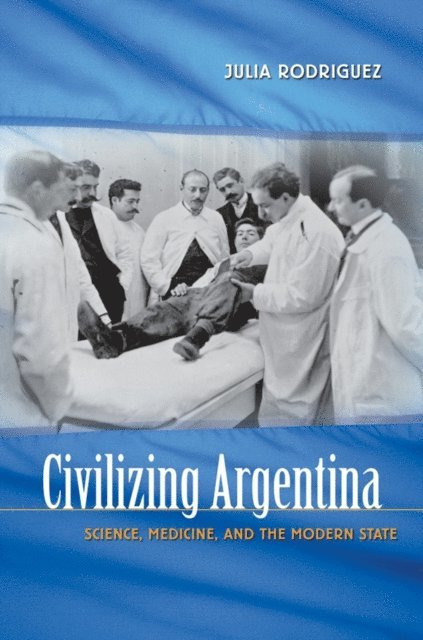
After a promising start as a prosperous and liberal democratic nation at the end of the nineteenth century, Argentina descended into instability and crisis. This stark reversal, in a country rich in natural resources and seemingly bursting with progress and energy, has puzzled many historians. In Civilizing Argentina, Julia Rodriguez takes a sharply contrary view, demonstrating that Argentina''s turn of fortune is not a mystery but rather the ironic consequence of schemes to "civilize" the nation in the name of progressivism, health, science, and public order.With new medical and scientific information arriving from Europe at the turn of the century, a powerful alliance developed among medical, scientific, and state authorities in Argentina. These elite forces promulgated a political culture based on a medical model that defined social problems such as poverty, vagrancy, crime, and street violence as illnesses to be treated through programs of social hygiene. They instituted programs to fingerprint immigrants, measure the bodies of prisoners, place wives who disobeyed their husbands in "houses of deposit," and exclude or expel people deemed socially undesirable, including groups such as labor organizers and prostitutes. Such policies, Rodriguez argues, led to the destruction of the nation''s liberal ideals and opened the way to the antidemocratic, authoritarian governments that came later in the twentieth century.
In this bold reconsideration of the human sciences, an interdisciplinary team employ an expanded theoretical and geographical critical lens centering the notion of the encounter. Drawing insights from Indigenous and Latin American Studies, nine case studies delve into the dynamics of encounters between researchers, intermediaries, and research subjects in imperial and colonial contexts across the Americas and Pacific. Essays explore ethical considerations and knowledge production practices that prevailed in field and expedition science, custodial institutions, and governance debates. They reevaluate how individuals and communities subjected to research projects embraced, critiqued, or subverted them. Often, research subjects expressed their own aspirations, asserted sovereignty or autonomy, and exercised forms of power through interactions or acts of refusal. This book signals the transformative potential of Indigenous Studies and Latin American Studies for shaping future scholarship on the history of the human sciences. This title is also available as Open Access on Cambridge Core.
In 1875, naturalists, historians, archaeologists, linguists, and ethnologists gathered for the first meeting of the International Congress of Americanists. Animated not by quests for gold or forced labor, Americanists convened with the common goal of unearthing knowledge about the fundamental nature of humankind. They set off for Latin American field sites, where objects, scientists, and informants would inspire field-changing developments in scientific discourse and come to define modern cultural anthropological inquiry. Following their evidence trails across Latin America, historian Julia E. Rodriguez uncovers the history of Americanism as an area of study and illustrates how it shaped our understanding of the hemisphere. Rodriguez examines scientific publications from this era, field notes, and archival material from eight countries in Europe and the Americas. She reveals the complex aims and ambiguous outcomes of Americanist science, including the legitimization of, and challenges to, existing ideas about race, comparative civilizations, as well as the status and personhood of Indigenous peoples. By exposing the increasingly local and embedded nature of Americanist science, Excavating Americanism challenges the accepted North Atlantic narrative about the history of anthropology and demonstrates Latin America’s central role in the development of anthropological methodologies and concepts taken for granted today.
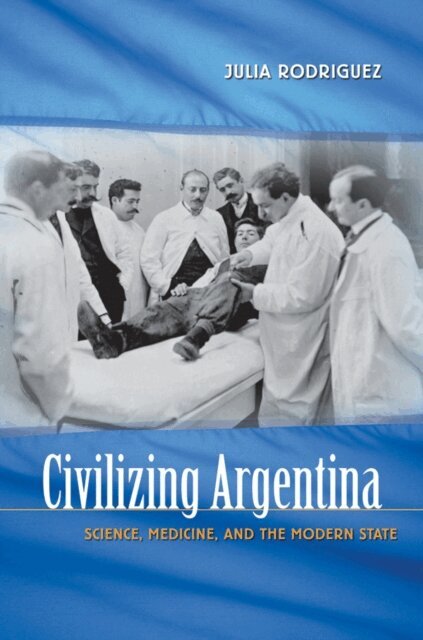
After a promising start as a prosperous and liberal democratic nation at the end of the nineteenth century, Argentina descended into instability and crisis. This stark reversal, in a country rich in natural resources and seemingly bursting with progress and energy, has puzzled many historians. In Civilizing Argentina, Julia Rodriguez takes a sharply contrary view, demonstrating that Argentina''s turn of fortune is not a mystery but rather the ironic consequence of schemes to "civilize" the nation in the name of progressivism, health, science, and public order.With new medical and scientific information arriving from Europe at the turn of the century, a powerful alliance developed among medical, scientific, and state authorities in Argentina. These elite forces promulgated a political culture based on a medical model that defined social problems such as poverty, vagrancy, crime, and street violence as illnesses to be treated through programs of social hygiene. They instituted programs to fingerprint immigrants, measure the bodies of prisoners, place wives who disobeyed their husbands in "houses of deposit," and exclude or expel people deemed socially undesirable, including groups such as labor organizers and prostitutes. Such policies, Rodriguez argues, led to the destruction of the nation''s liberal ideals and opened the way to the antidemocratic, authoritarian governments that came later in the twentieth century.