154 kr
Skickas
154 kr
Skickas
228 kr
Skickas
288 kr
Skickas
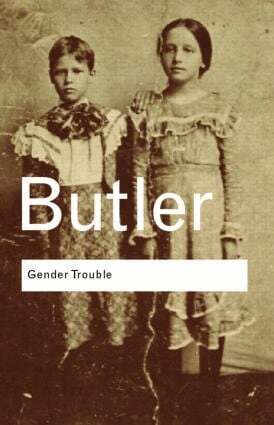
Med Vem är rädd för genus? återvänder Judith Butler till det intellektuella slagfältet och de frågeställningar som hen tog upp i sin numera klassiska Genustrubbel, en av världens mest lästa genusböcker. De frågor som Butler då tog upp har idag fått förnyad aktualitet, då kön och identitet har blivit identitetspolitiska slagträn i en ny politisk diskurs, där auktoritära regimer målar upp genusvetenskapen som en av kärnfamiljens och den traditionella livsstilens stora fiender.
Snarare än en ny teori är Vem är rädd för genus? ett reportage från en värld, där kön, identitet och rättigheter på ett olyckligt sätt har tagits som gisslan i ett alltmer oresonligt kultur- och civilisationskrig. Detta är på samma gång en angripen akademikers försvarsskrift och en plädering för allas vår rätt att vara just den vi vill vara.
361 kr
Skickas
160 kr
Skickas inom 7-10 vardagar
135 kr
Skickas inom 7-10 vardagar
361 kr
Skickas inom 10-15 vardagar
226 kr
Skickas
290 kr
Skickas
137 kr
Läs direkt efter köp
318 kr
Skickas inom 7-10 vardagar
177 kr
Skickas inom 7-10 vardagar
150 kr
Skickas inom 5-8 vardagar
233 kr
Skickas inom 7-10 vardagar
724 kr
Skickas inom 10-15 vardagar
154 kr
Skickas inom 7-10 vardagar
313 kr
Skickas
1 613 kr
Skickas inom 3-6 vardagar
259 kr
Skickas inom 7-10 vardagar
145 kr
Skickas inom 5-8 vardagar
601 kr
Skickas inom 7-10 vardagar
270 kr
Skickas inom 7-10 vardagar
859 kr
Skickas inom 7-10 vardagar
233 kr
Skickas inom 7-10 vardagar
1 188 kr
Skickas inom 7-10 vardagar
680 kr
Skickas inom 7-10 vardagar
477 kr
Läs direkt efter köp
316 kr
Läs direkt efter köp
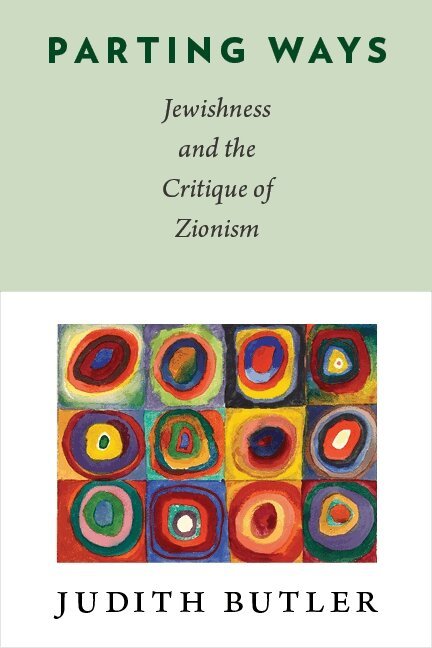
Judith Butler follows Edward Said''s late suggestion that through a consideration of Palestinian dispossession in relation to Jewish diasporic traditions a new ethos can be forged for a one-state solution. Butler engages Jewish philosophical positions to articulate a critique of political Zionism and its practices of illegitimate state violence, nationalism, and state-sponsored racism. At the same time, she moves beyond communitarian frameworks, including Jewish ones, that fail to arrive at a radical democratic notion of political cohabitation. Butler engages thinkers such as Edward Said, Emmanuel Levinas, Hannah Arendt, Primo Levi, Martin Buber, Walter Benjamin, and Mahmoud Darwish as she articulates a new political ethic. In her view, it is as important to dispute Israel''s claim to represent the Jewish people as it is to show that a narrowly Jewish framework cannot suffice as a basis for an ultimate critique of Zionism. She promotes an ethical position in which the obligations of cohabitation do not derive from cultural sameness but from the unchosen character of social plurality. Recovering the arguments of Jewish thinkers who offered criticisms of Zionism or whose work could be used for such a purpose, Butler disputes the specific charge of anti-Semitic self-hatred often leveled against Jewish critiques of Israel. Her political ethic relies on a vision of cohabitation that thinks anew about binationalism and exposes the limits of a communitarian framework to overcome the colonial legacy of Zionism. Her own engagements with Edward Said and Mahmoud Darwish form an important point of departure and conclusion for her engagement with some key forms of thought derived in part from Jewish resources, but always in relation to the non-Jew.Butler considers the rights of the dispossessed, the necessity of plural cohabitation, and the dangers of arbitrary state violence, showing how they can be extended to a critique of Zionism, even when that is not their explicit aim. She revisits and affirms Edward Said''s late proposals for a one-state solution within the ethos of binationalism. Butler''s startling suggestion: Jewish ethics not only demand a critique of Zionism, but must transcend its exclusive Jewishness in order to realize the ethical and political ideals of living together in radical democracy.
381 kr
Läs direkt efter köp
The celebrated author of Gender Trouble here redefines Antigone''s legacy, recovering her revolutionary significance and liberating it for a progressive feminism and sexual politics. Butler''s new interpretation does nothing less than reconceptualize the incest taboo in relation to kinship—and open up the concept of kinship to cultural change.Antigone, the renowned insurgent from Sophocles''s Oedipus, has long been a feminist icon of defiance. But what has remained unclear is whether she escapes from the forms of power that she opposes. Antigone proves to be a more ambivalent figure for feminism than has been acknowledged, since the form of defiance she exemplifies also leads to her death. Butler argues that Antigone represents a form of feminist and sexual agency that is fraught with risk. Moreover, Antigone shows how the constraints of normative kinship unfairly decide what will and will not be a livable life.Butler explores the meaning of Antigone, wondering what forms of kinship might have allowed her to live. Along the way, she considers the works of such philosophers as Hegel, Lacan, and Irigaray. How, she asks, would psychoanalysis have been different if it had taken Antigone—the "postoedipal" subject—rather than Oedipus as its point of departure? If the incest taboo is reconceived so that it does not mandate heterosexuality as its solution, what forms of sexual alliance and new kinship might be acknowledged as a result? The book relates the courageous deeds of Antigone to the claims made by those whose relations are still not honored as those of proper kinship, showing how a culture of normative heterosexuality obstructs our capacity to see what sexual freedom and political agency could be.
331 kr
Läs direkt efter köp