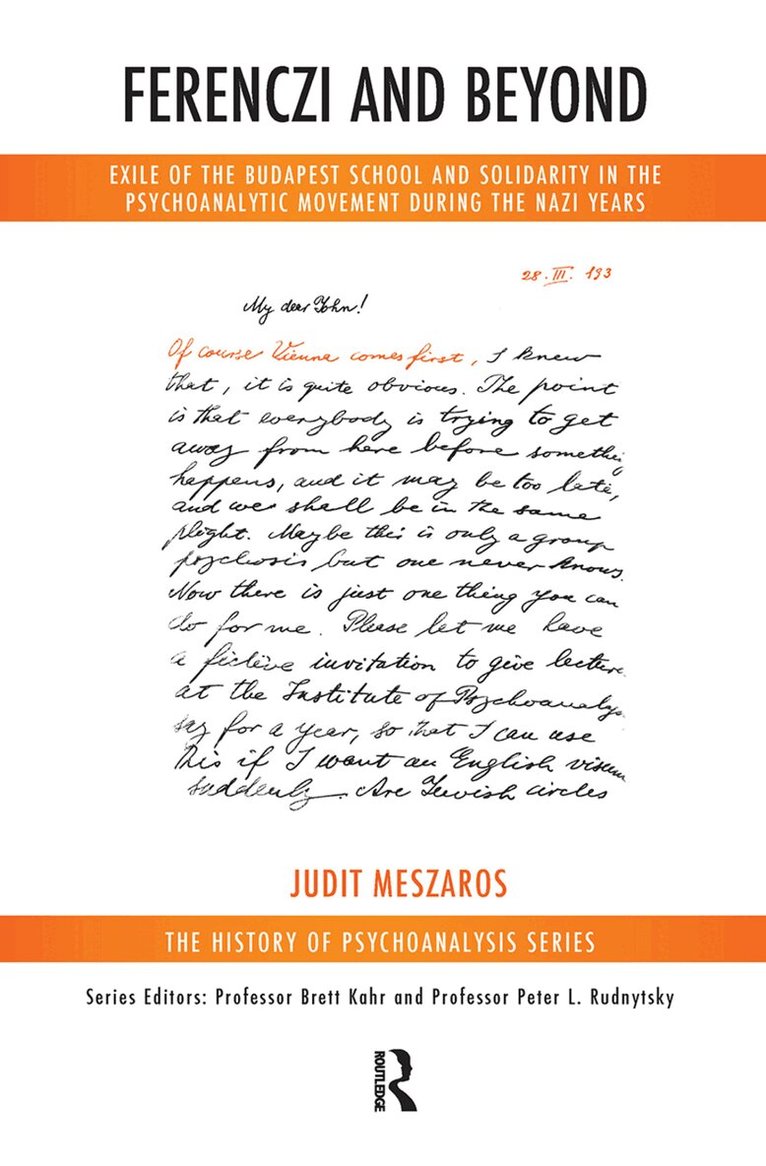
This book explores how the Budapest School of Psychoanalysis took shape and examines the role played in it by Sandor Ferenczi. It integrates the Hungarian story of the "exile of the Budapest School" with an American perspective on "solidarity in the psychoanalytic movement during the Nazi years".
Ferenczi and the Future of Psychoanalysis: On Crisis and Care examines the enduring relevance of Sándor Ferenczi’s radical insights. This volume revisits his foundational work to address contemporary global challenges, tying together the subject and the social.Contributors delve into Ferenczi’s theories on psychosomatics, trauma, sexuality, the language of the unconscious and psychosocial phenomena, while placing his ideas in conversation with major figures like Balint, Winnicott, Lacan, Searles and Laplanche. The collection further explores systemic violence, the non-human environment, the mother-child relationship and displacement. Combining historical perspectives, theoretical inquiry, and clinical reflection, this collection highlights Ferenczi’s unique capacity to inspire new directions in psychoanalysis.Written for clinicians, scholars, and curious readers alike, these insightful papers offer a vital, original contribution to contemporary psychoanalytic thought and the pressing issues of our time.
This book explores how the Budapest School of Psychoanalysis took shape, and in particular examines the role played in it by Sandor Ferenczi, Freud's closest friend and associate. It asks what the significance of this intellectual grouping held for the evolution of modern psychoanalytic theory and practice, and how the defining moments of early twentieth-century Hungarian and European politics impacted on both psychoanalysis and the analysts themselves. It also explores the importance in these pivotal times of the Emergency Committee on Relief and Immigration, an organisation formed in 1938 by the American Psychoanalytic Association. This book raises many questions and demonstrates through the emigration of the Budapest psychoanalysts how the threat of destruction can draw people together from across continents. Indeed, American psychoanalysts had set aside considerations of professional achievement and rivalry to assist their peers forced to flee European Nazism. In collaboration with the International Psychoanalytical Association, the Emergency Committee not only rescued lives, but also enriched our intellectual heritage as it salvaged seminal cultural and scholarly resources, which influenced the development of psychoanalysis in our time.