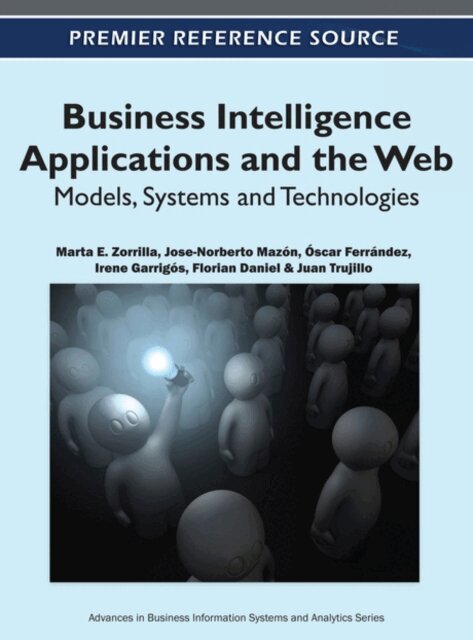
Over the last decade, we have witnessed an increasing use of Business Intelligence (BI) solutions that allow business people to query, understand, and analyze their business data in order to make better decisions. Traditionally, BI applications allow management and decision-makers to acquire useful knowledge about the performance and problems of business from the data of their organization by means of a variety of technologies, such as data warehousing, data mining, business performance management, OLAP, and periodical business reports. Research in these areas has produced consolidated solutions, techniques, and methodologies, and there are a variety of commercial products available that are based on these results. Business Intelligence Applications and the Web: Models, Systems and Technologies summarizes current research advances in BI and the Web, emphasizing research solutions, techniques, and methodologies which combine both areas in the interest of building better BI solutions. This comprehensive collection aims to emphasize the interconnections that exist among the two research areas and to highlight the benefits of combined use of BI and Web practices, which so far have acted rather independently, often in cases where their joint application would have been sensible.
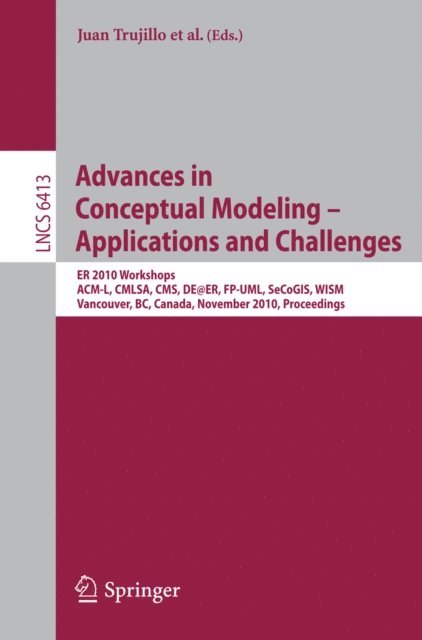
This book constitutes the refereed proceedings of workshops, held at the 29th International Conference on Conceptual Modeling, ER 2010, in Vancouver, Canada, in November 2010. The 31 revised full papers presented were carefully reviewed and selected from 82 submissions. The papers are organized in sections on the workshops Semantic and Conceptual Issues in GIS (SeCoGIS); Conceptual Modeling of Life Sciences Applications (CMLSA); Conceptual Modelling of Services (CMS); Active Conceptual Modeling of Learning (ACM-L); Web Information Systems Modeling (WISM); Domain Engineering (DE@ER); and Foundations and Practices of UML (FP-UML).
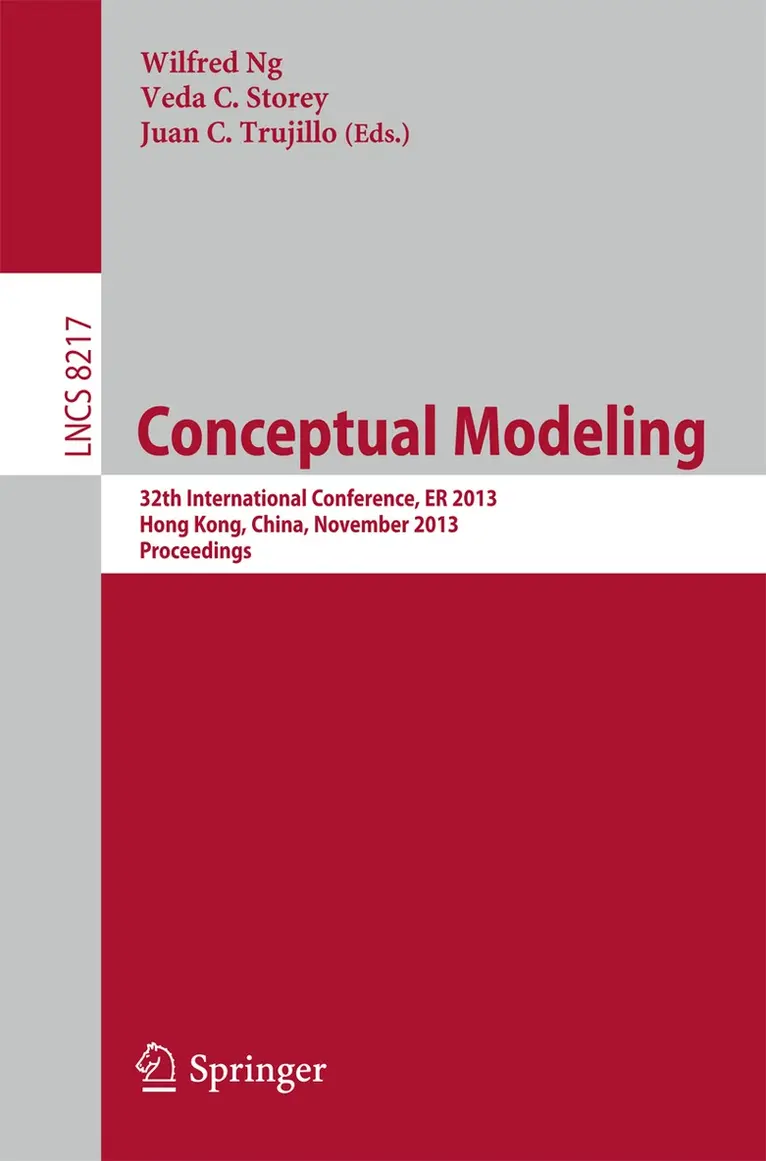
This book constitutes the refereed proceedings of the 32nd International Conference on Conceptual Modeling, ER 2013, held in Hong Kong, China, in November 2013. The 23 full and 17 short papers presented were carefully reviewed and selected from 148 abstracts and 126 full papers submissions. The papers are organized in topical sections on modeling and reasoning, fundamentals of conceptual modeling, business process modeling, network modeling, data semantics, security and optimization, ontology-based modeling, searching and mining, conceptual modeling and applications, demonstration papers.