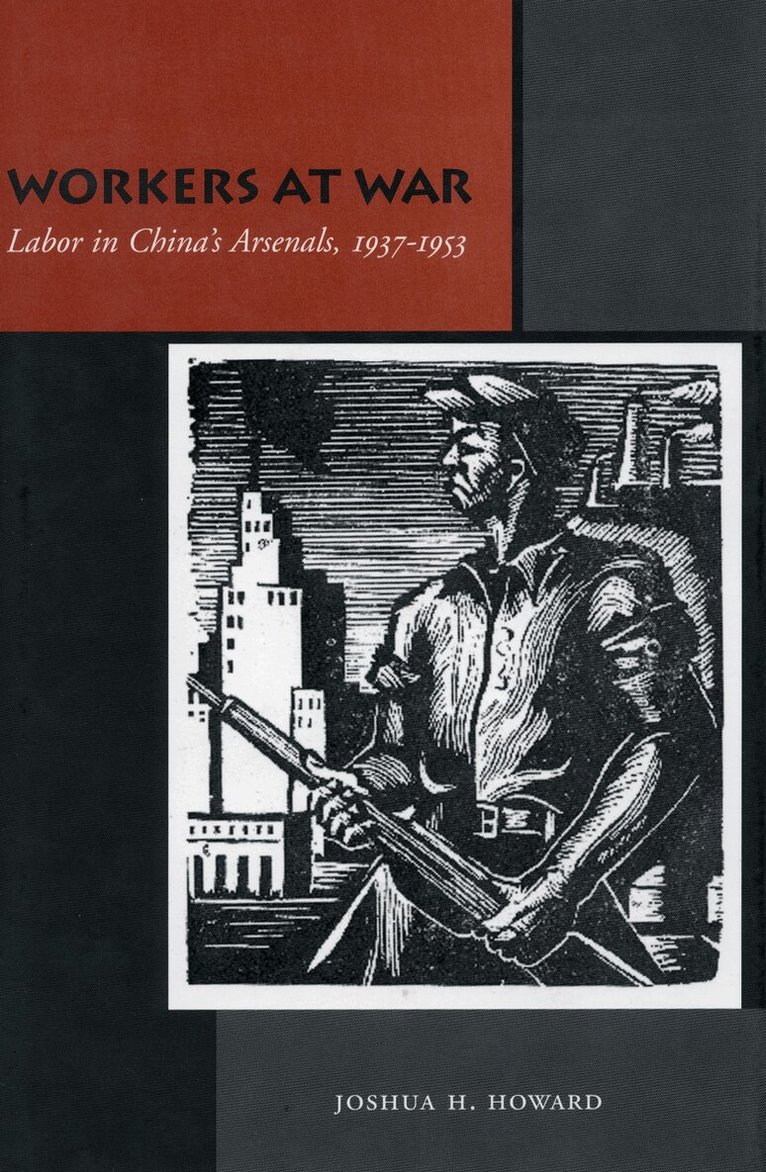
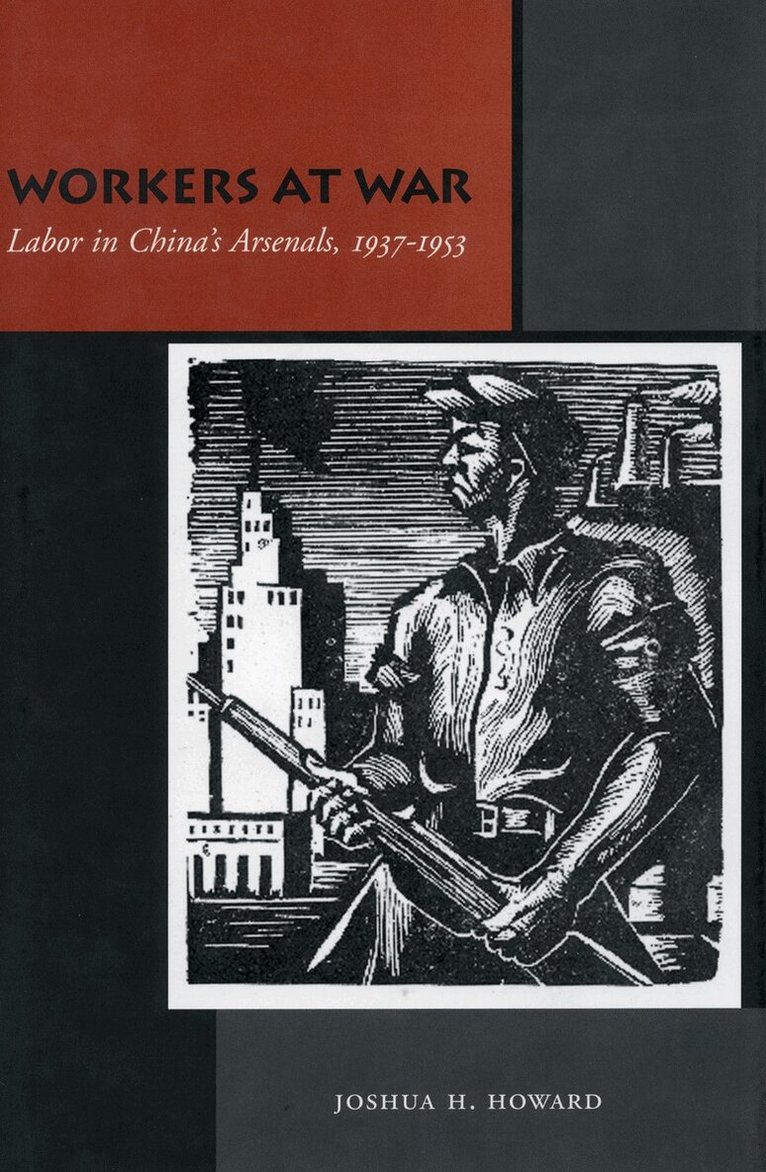
This book focuses on the lives, struggles, and contrasting perspectives of the 60,000 workers, military administrators, and technical staff employed in the largest, most strategic industry of the Nationalist government, the armaments industry based in the wartime capital, Chongqing. The author argues that China's arsenal workers participated in three interlocked conflicts between 1937 and 1953: a war of national liberation, a civil war, and a class war.The work adds to the scholarship on the Chinese revolution, which has previously focused primarily on rural China, showing how workers' alienation from the military officers directing the arsenals eroded the legitimacy of the Nationalist regime and how the Communists mobilized working-class support in Chongqing. Moreover, in emphasizing the urban, working-class, and nationalist components of the 1949 revolution, the author demonstrates the multiple sources of workers' identities and thus challenges previous studies that have exclusively stressed workers' particularistic or regional identities.
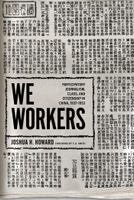
We Workers is the first book-length study examining the Chinese communist press and its relationship to the growing labor movement. New China Daily, a leading Chinese Communist Party newspaper during the Second Sino-Japanese War, preserves a unique record of workers' stories through columns dedicated to readers' letters. Long a neglected resource, the participatory journalism in New China Daily enables conflicting theories about the formation of working-class identity to be tested. Chinese workers wrote of their suffering, of wartime social life, of injustice, and of their aspirations. Their stories were read, shared, and created a community of class that ultimately fueled post-war labor's demands for rights and job security, and that contributed to the formation of post-1949 industrial citizenship.Drawing from New China Daily articles, CCP documents, memoirs, and other historical sources, We Workers explores how participatory journalism shaped a language of class and citizenship during a crucial period of political transformation in China. As the Chinese working class reconstituted in the People's Republic of China, the worker correspondence pioneered by New China Daily became a nationwide model for newspapers that sustained the practices of propaganda and mass work, offering workers a vital forum for political participation.
In Composing for the Revolution: Nie Er and China's Sonic Nationalism, Joshua Howard explores the role the songwriter Nie Er played in the 1930s proletarian arts movement and the process by which he became a nationalist icon. Composed only months before his untimely death in 1935, Nie Er's last song, the "March of the Volunteers," captured the rising anti-Japanese sentiment and was selected as China's national anthem with the establishment of the People's Republic. Nie was quickly canonized after his death and later recast into the "People's Musician" during the 1950s, effectively becoming a national monument. Howard engages two historical paradigms that have dominated the study of twentiethcentury China - revolution and modernity. He argues that active in the leftist artistic community and critical of capitalism, Nie Er availed himself of media technology, especially the emerging sound cinema, to create a modern, revolutionary, and nationalist music. This thesis stands as a powerful corrective to a growing literature on the construction of a Chinese modernity, which has privileged the mass consumer culture of Shanghai and consciously sought to displace the focus on China's revolutionary experience. Composing for the Revolution also provides insight into understudied aspects of China's nationalism - its sonic and musical dimensions. Howard's analyses highlights Nie's extensive writings on the political function of music, examination of the musical techniques and lyrics of compositions within the context of left-wing cinema, and also the transmission of his songs through film, social movements, and commemoration. Nie Er shared multiple and overlapping identities based on regionalism, nationalism, and left-wing internationalism. His march songs, inspired by Soviet "mass songs," combined Western musical structure and aesthetic with elements of Chinese folk music. The songs' ideological message promoted class nationalism, but his "March of the Volunteers" elevated his music to a universal status thereby transcending the nation.Traversing the life and legacy of Nie Er, Howard offers readers a profound insight into the meanings of nationalism and memory in contemporary China. Composing for the Revolution underscores the value of careful reading of sources and the author's willingness to approach a subject from multiple perspectives.
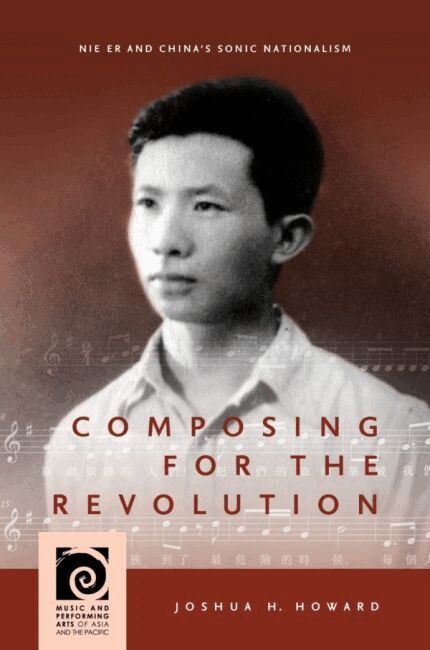
In Composing for the Revolution: Nie Er and China’s Sonic Nationalism, Joshua Howard explores the role the songwriter Nie Er played in the 1930s proletarian arts movement and the process by which he became a nationalist icon. Composed only months before his untimely death in 1935, Nie Er’s last song, the "March of the Volunteers," captured the rising anti-Japanese sentiment and was selected as China’s national anthem with the establishment of the People’s Republic. Nie was quickly canonized after his death and later recast into the "People’s Musician" during the 1950s, effectively becoming a national monument. Howard engages two historical paradigms that have dominated the study of twentieth-century China: revolution and modernity. He argues that Nie Er, active in the leftist artistic community and critical of capitalism, availed himself of media technology, especially the emerging sound cinema, to create a modern, revolutionary, and nationalist music. This thesis stands as a powerful corrective to a growing literature on the construction of a Chinese modernity, which has privileged the mass consumer culture of Shanghai and consciously sought to displace the focus on China’s revolutionary experience. Composing for the Revolution also provides insight into understudied aspects of China’s nationalism—its sonic and musical dimensions. Howard’s analyses highlights Nie’s extensive writings on the political function of music, examination of the musical techniques and lyrics of compositions within the context of left-wing cinema, and also the transmission of his songs through film, social movements, and commemoration. Nie Er shared multiple and overlapping identities based on regionalism, nationalism, and left-wing internationalism. His march songs, inspired by Soviet "mass songs," combined Western musical structure and aesthetic with elements of Chinese folk music. The songs’ ideological message promoted class nationalism, but his "March of the Volunteers" elevated his music to a universal status thereby transcending the nation.Traversing the life and legacy of Nie Er, Howard offers readers a profound insight into the meanings of nationalism and memory in contemporary China. Composing for the Revolution underscores the value of careful reading of sources and the author’s willingness to approach a subject from multiple perspectives.