252 kr
Skickas inom 7-10 vardagar
252 kr
Skickas inom 7-10 vardagar
927 kr
Skickas inom 10-15 vardagar
1 100 kr
Skickas inom 10-15 vardagar
1 038 kr
Skickas inom 10-15 vardagar
1 209 kr
Skickas inom 10-15 vardagar
460 kr
Skickas inom 10-15 vardagar
260 kr
Skickas inom 7-10 vardagar
396 kr
Skickas inom 7-10 vardagar
250 kr
Skickas inom 7-10 vardagar
541 kr
Skickas inom 7-10 vardagar
410 kr
Skickas inom 7-10 vardagar
342 kr
Skickas inom 7-10 vardagar
504 kr
Skickas inom 7-10 vardagar
480 kr
Skickas inom 3-6 vardagar
585 kr
Skickas inom 3-6 vardagar
495 kr
Läs direkt efter köp
2 426 kr
Skickas inom 7-10 vardagar
2 119 kr
Läs direkt efter köp
2 852 kr
Läs direkt efter köp
317 kr
Skickas inom 7-10 vardagar
216 kr
Skickas inom 7-10 vardagar
224 kr
Skickas inom 3-6 vardagar
601 kr
Skickas inom 7-10 vardagar
408 kr
Skickas inom 7-10 vardagar
292 kr
Skickas inom 7-10 vardagar
373 kr
Skickas inom 7-10 vardagar
222 kr
Läs direkt efter köp
526 kr
Skickas inom 7-10 vardagar
2 809 kr
Läs direkt efter köp
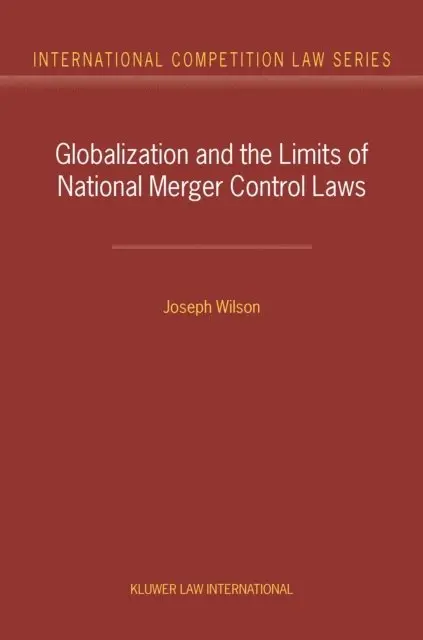
Companies today pursue their goals with little regard for national borders. However, it remains true that business activity is regulated to a significant extent by each national jurisdiction. This is particularly true of mergers; as anyone knows who has ever been involved in a transnational merger in multiple jurisdictions, the knottiest problems and issues arise from variations in national competition and merger laws.
This extremely valuable new book offers an in-depth proposal for an international merger control regime that is firmly grounded in and supported by a framework of economic and legal theory. It arrives at its conclusions along three major avenues:
• a study of the concepts of global public good and consumer welfare that underliethe progress of globalization;• detailed analyses of the two most important and highly developed merger lawsystems, those of the European Union and the United States; and• a systematic and comprehensive review of the major existing proposals, both institutional and scholarly, for an international merger control regime.A special chapter is devoted to the complex custodial role of the World Trade Organization, both in its present activity and as is envisioned in various proposals for global competition law.
Globalization and the Limits of National Merger Control Laws takes a significant step toward breaking down one of the last and most intransigent barriers to global free trade. It will be avidly studied and put to use by business lawyers and policymakers everywhere, and will quickly take its place as a fundamental work for teachers and students of international trade and international relations.