2 497 kr
Skickas inom 10-15 vardagar
2 497 kr
Skickas inom 10-15 vardagar
359 kr
Skickas inom 7-10 vardagar
187 kr
Skickas inom 7-10 vardagar
365 kr
Skickas inom 7-10 vardagar
187 kr
Skickas inom 7-10 vardagar
757 kr
Läs direkt efter köp
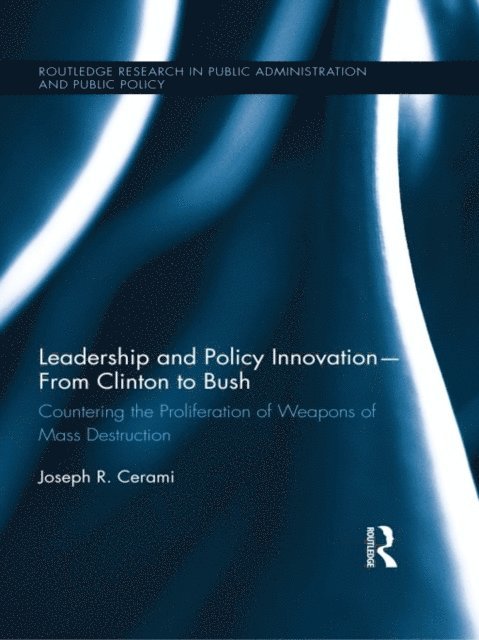
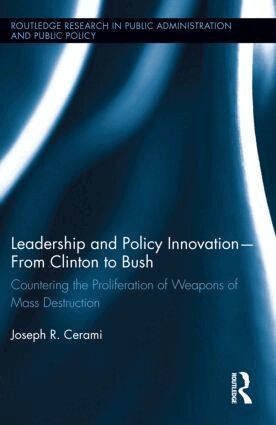
Throughout the Cold War there were longstanding efforts to control the spread of Weapons of Mass Destruction (WMD) through extensive arms control, deterrence, and defense programs. Since then counterproliferation efforts by the U.S. and international community have accelerated. Given the attention to counterproliferation in the last decade, how effective was the leadership provided by President Clinton and his Secretaries of Defense, Aspin, Perry and Cohen, in providing innovative and effective policies for countering the proliferation of WMD?
Comparing the cases of U.S.-North Korea Agreed Framework, the Nunn-Lugar Cooperative Threat Reduction Program and U.S. and U.N. efforts in Iraq under Saddam Hussein, Joseph R. Cerami examines patterns of organizational leadership and policy innovation in the development and implementation of WMD policy initiatives. Rather than criticize the framework of American and international political institutions, this leadership perspective draws important insights on the capabilities of institutions to further U.S. and international goals and objectives in security policymaking. In doing so, the book argues that the U.S.’s role and the roles of its internal government agencies are most significant in international affairs.
Smartly and appealingly positioned at the intersection of theory and practice, Cerami’s book crafts a new perspective in international relations and public administration offering great potential for understanding as well as designing policy innovations to counter the proliferation of WMD in the 21st century.

757 kr
Läs direkt efter köp
Throughout the Cold War there were longstanding efforts to control the spread of Weapons of Mass Destruction (WMD) through extensive arms control, deterrence, and defense programs. Since then counterproliferation efforts by the U.S. and international community have accelerated. Given the attention to counterproliferation in the last decade, how effective was the leadership provided by President Clinton and his Secretaries of Defense, Aspin, Perry and Cohen, in providing innovative and effective policies for countering the proliferation of WMD?
Comparing the cases of U.S.-North Korea Agreed Framework, the Nunn-Lugar Cooperative Threat Reduction Program and U.S. and U.N. efforts in Iraq under Saddam Hussein, Joseph R. Cerami examines patterns of organizational leadership and policy innovation in the development and implementation of WMD policy initiatives. Rather than criticize the framework of American and international political institutions, this leadership perspective draws important insights on the capabilities of institutions to further U.S. and international goals and objectives in security policymaking. In doing so, the book argues that the U.S.’s role and the roles of its internal government agencies are most significant in international affairs.
Smartly and appealingly positioned at the intersection of theory and practice, Cerami’s book crafts a new perspective in international relations and public administration offering great potential for understanding as well as designing policy innovations to counter the proliferation of WMD in the 21st century.

642 kr
Skickas inom 10-15 vardagar
466 kr
Skickas inom 3-6 vardagar
371 kr
Skickas inom 7-10 vardagar
637 kr
Tillfälligt slut
241 kr
Tillfälligt slut
151 kr
Tillfälligt slut
363 kr
Tillfälligt slut
180 kr
Tillfälligt slut
233 kr
Tillfälligt slut