1 126 kr
Skickas inom 10-15 vardagar
1 126 kr
Skickas inom 10-15 vardagar
2 245 kr
Skickas inom 10-15 vardagar
827 kr
Skickas inom 10-15 vardagar
2 515 kr
Skickas inom 10-15 vardagar
866 kr
Läs direkt efter köp
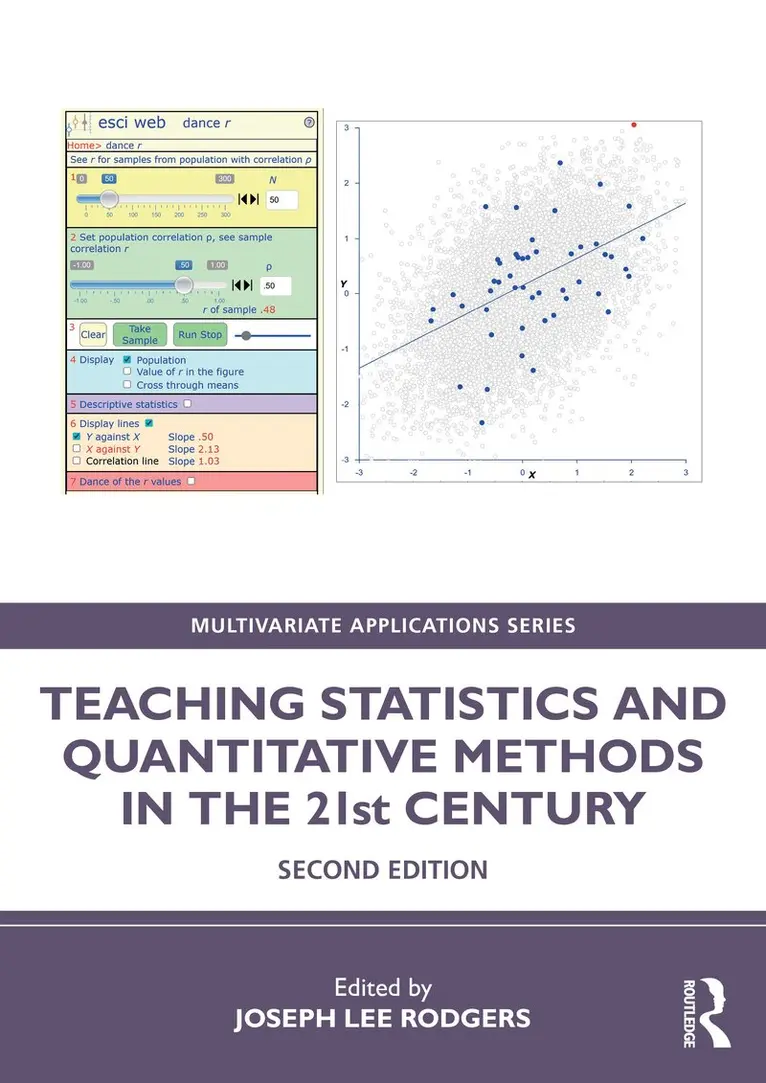
Teaching Statistics and Quantitative Methods in the 21st Century is a guide for rethinking and revitalizing statistics and quantitative methods pedagogy for both novice and experienced instructors at undergraduate and graduate levels. It offers modern, transformative approaches to prepare students as future researchers.
Now in its second edition, this ground-breaking volume tackles the question of how introductory statistics and quantitative methods should be taught, drawing on contributions from highly accomplished teachers. Many current textbooks and syllabi remain little changed from those used half a century ago, despite major developments in the field and its role in research. The book rests on a core principle: Introductory teaching should open the pathway to advanced training and equip students to become accomplished researchers.
New chapters address:
The role of Artificial Intelligence in teaching statistics Classroom software applications and applets Automated homework generation and grading Teaching the replication crisis New treatments of p-values, null hypothesis significance testing (NHST) and abduction A pedagogical approach based on statistical modeling rather than hypothesis testingUpdated and expanded chapters from the first edition are included alongside these new contributions, presenting both classroom innovations and philosophical challenges to the status quo. The result is a call for a broad reimagining of how statistics and quantitative methods are introduced, designed to engage students, support new instructors, and renew the practice of seasoned teachers.

866 kr
Läs direkt efter köp
Teaching Statistics and Quantitative Methods in the 21st Century is a guide for rethinking and revitalizing statistics and quantitative methods pedagogy for both novice and experienced instructors at undergraduate and graduate levels. It offers modern, transformative approaches to prepare students as future researchers.
Now in its second edition, this ground-breaking volume tackles the question of how introductory statistics and quantitative methods should be taught, drawing on contributions from highly accomplished teachers. Many current textbooks and syllabi remain little changed from those used half a century ago, despite major developments in the field and its role in research. The book rests on a core principle: Introductory teaching should open the pathway to advanced training and equip students to become accomplished researchers.
New chapters address:
The role of Artificial Intelligence in teaching statistics Classroom software applications and applets Automated homework generation and grading Teaching the replication crisis New treatments of p-values, null hypothesis significance testing (NHST) and abduction A pedagogical approach based on statistical modeling rather than hypothesis testingUpdated and expanded chapters from the first edition are included alongside these new contributions, presenting both classroom innovations and philosophical challenges to the status quo. The result is a call for a broad reimagining of how statistics and quantitative methods are introduced, designed to engage students, support new instructors, and renew the practice of seasoned teachers.
1 123 kr
Skickas inom 10-15 vardagar
1 123 kr
Skickas inom 10-15 vardagar
1 111 kr
Skickas inom 10-15 vardagar
2 221 kr
Skickas inom 10-15 vardagar
1 492 kr
Läs direkt efter köp
1 502 kr
Läs direkt efter köp
3 013 kr
Läs direkt efter köp
466 kr
Läs direkt efter köp
Correlation matrices (along with their unstandardized counterparts, covariance matrices) underlie the majority the statistical methods that researchers use today. A correlation matrix is more than a matrix filled with correlation coefficients. The value of one correlation in the matrix puts constraints on the values of the others, and the multivariate implications of this statement is a major theme of the volume. Alexandria Hadd and Joseph Lee Rodgers cover many features of correlations matrices including statistical hypothesis tests, their role in factor analysis and structural equation modeling, and graphical approaches. They illustrate the discussion with a wide range of lively examples including correlations between intelligence measured at different ages through adolescence; correlations between country characteristics such as public health expenditures, health life expectancy, and adult mortality; correlations between well-being and state-level vital statistics; correlations between the racial composition of cities and professional sports teams; and correlations between childbearing intentions and childbearing outcomes over the reproductive life course. This volume may be used effectively across a number of disciplines in both undergraduate and graduate statistics classrooms, and also in the research laboratory.