4 156 kr
Läs direkt efter köp
4 156 kr
Läs direkt efter köp
1 065 kr
Skickas inom 11-20 vardagar
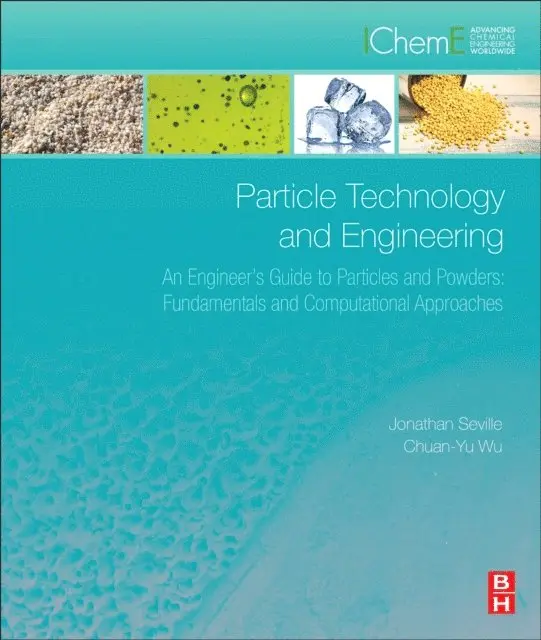
Particle Technology and Engineering presents the basic knowledge and fundamental concepts that are needed by engineers dealing with particles and powders. The book provides a comprehensive reference and introduction to the topic, ranging from single particle characterization to bulk powder properties, from particle-particle interaction to particle-fluid interaction, from fundamental mechanics to advanced computational mechanics for particle and powder systems.
The content focuses on fundamental concepts, mechanistic analysis and computational approaches. The first six chapters present basic information on properties of single particles and powder systems and their characterisation (covering the fundamental characteristics of bulk solids (powders) and building an understanding of density, surface area, porosity, and flow), as well as particle-fluid interactions, gas-solid and liquid-solid systems, with applications in fluidization and pneumatic conveying. The last four chapters have an emphasis on the mechanics of particle and powder systems, including the mechanical behaviour of powder systems during storage and flow, contact mechanics of particles, discrete element methods for modelling particle systems,and finite element methods for analysing powder systems.
This thorough guide is beneficial to undergraduates in chemical and other types of engineering, to chemical and process engineers in industry, and early stage researchers. It also provides a reference to experienced researchers on mathematical and mechanistic analysis of particulate systems, and on advanced computational methods.
Provides a simple introduction to core topics in particle technology: characterisation of particles and powders: interaction between particles, gases and liquids; and some useful examples of gas-solid and liquid-solid systemsIntroduces the principles and applications of two useful computational approaches: discrete element modelling and finite element modellingEnables engineers to build their knowledge and skills and to enhance their mechanistic understanding of particulate systems1 339 kr
Läs direkt efter köp
1 992 kr
Kommande
964 kr
Skickas inom 7-10 vardagar
1 084 kr
Läs direkt efter köp
A new edition of the indispensable guide to particulates and powders
Particle technology concerns the formation, processing and properties of the particles and powders which make up many of the products that surround us. Such products range from the cement and aggregate in the built environment to pharmaceuticals and processed foods. Most of the process industries involve particles, either as essential components such as catalysts or as intermediate or final products, and minerals such as the rare earths that are generally mined and processed in particulate form. Particles can have many beneficial uses but they can also cause harm in the environment and, through inhalation, to the individual. In all cases, the powder properties, particularly particle size, are crucially important.
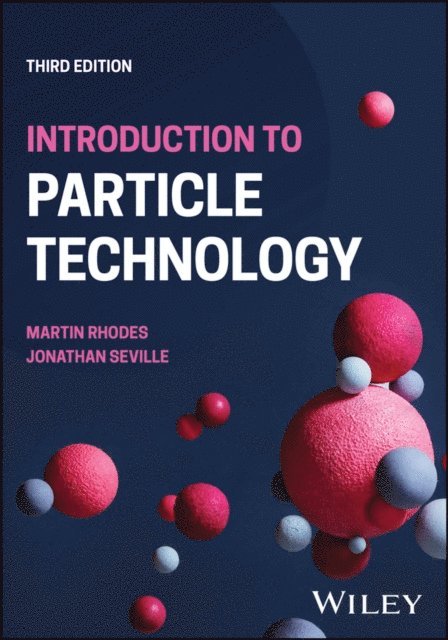
This well-known textbook, now in its 3rd edition, provides an easily-understood introduction to the underlying scientific principles of particle technology, together with examples of how these principles can be used in practical design and operation of industrial processes. Each chapter contains both worked examples and exercises for the student. Based on feedback from students and users of the earlier editions, this revised and expanded text includes introductory chapters on particles as products and on computational methods. The topics have been selected to give coverage of the broad areas of particle technology and include:
Characterization (size analysis, surface area) Processing (granulation, fluidization) Particle formation (granulation, crystallisation, tableting, size reduction) Storage and transport (hopper design, pneumatic conveying, standpipes) Separation (filtration, settling, cyclones) Safety (fire and explosion hazards, health hazards) Engineering the properties of particulate systems to achieve desired product performance Discrete element modelling of particulate systemsIntroduction to Particle Technology, 3rd Edition is essential reading for students of chemical engineering. The text is also recommended reading for students of mechanical engineering, applied chemistry, pharmaceutics, physics, mineral processing, and metallurgy, and is an excellent source for practising engineers and scientists looking to establish a working knowledge of the subject.
286 kr
Skickas inom 3-6 vardagar