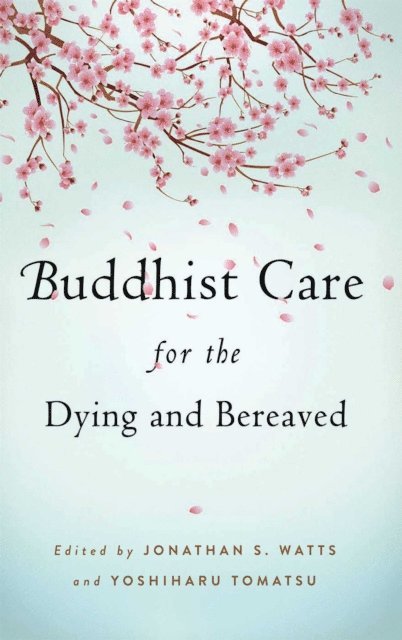
Since its beginning, Buddhism has been intimately concerned with confronting and understanding death and dying. Indeed, the tradition emphasizes turning toward the realities of sickness, old age, and death - and using those very experiences to develop wisdom and liberating compassion. In recent decades, Buddhist chaplains and caregivers all over the world have been drawing on this tradition to contribute greatly to the development of modern palliative and hospice care in the secular world at large. Specifically Buddhist hospice programs have been further developing and applying traditional Buddhist practices of preparing for death, attending the dying, and comforting the bereaved. Buddhist Care for the Dying and Bereaved contains comprehensive overviews of the best of such initiatives, drawn from diverse Buddhist traditions, and written by practitioners who embody the best of contemporary Buddhist hospice care programs practiced all over the world today. Contributors include Carl B. Becker, Moichiro Hayashi, Yozo Taniyama, Mari Sengoku, Phaisan Visalo, Beth Kanji Goldring, Caroline Prasada Brazier, Joan Jiko Halifax, and Julie Chijo Hanada.
What is a Buddhist response to political oppression and economic exploitation? Does Buddhism encourage passivity and victimization? Can violent perpetrators be brought to justice without anger and retributive punishment? What does Buddhism say -- or imply -- about collective karma and social justice?Rethinking Karma addresses these questions, and many more, through the lens of the Buddhist teachings on karma. Acknowledging that a skewed understanding of karma serves to perpetuate structural and cultural violence, specifically in the Buddhist societies of South and Southeast Asia, the book critically reexamines the teachings on karma as well as important related teachings on equanimity (upekkha), generosity (dana), and "merit" (punna).The eleven authors featured in this volume are thinker-activists who have been deeply involved in issues of social justice at a grassroots level and speak from their own experience in trying to solve them. For them, these issues are seminal ones requiring deeper contemplation and greater sharing, not only within the Buddhist community at large but among all those who seek to bridge the gaps between our idealization of human harmony, our tendencies toward violent confrontation, and the need for greater social justice.