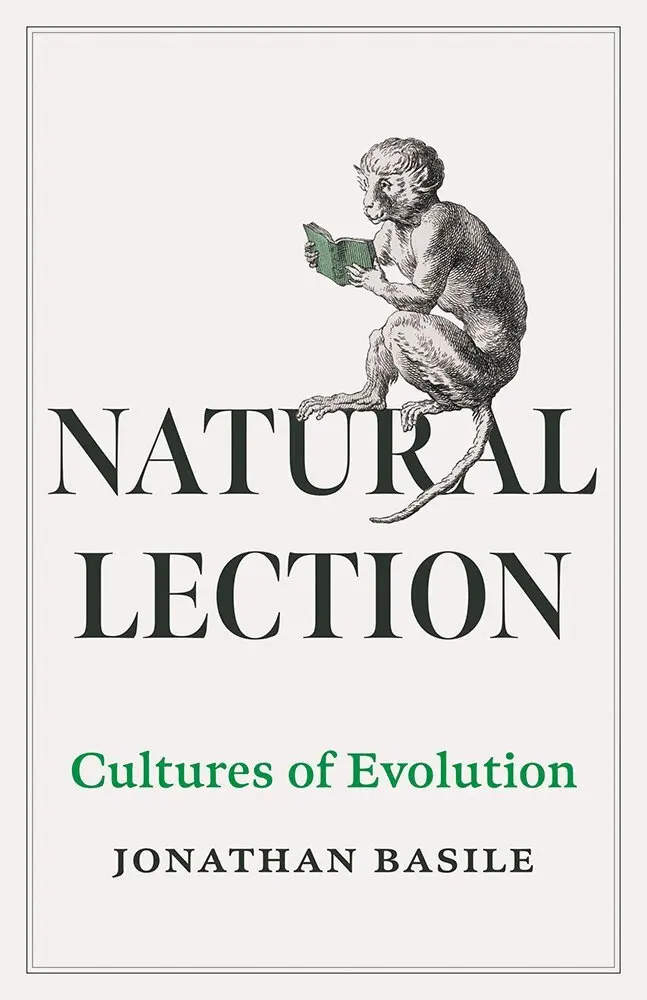
A radical deconstructive approach to evolutionary theoryFor as long as there has been evolutionary science, thinkers in the natural sciences, social sciences, and humanities have battled over whether evolutionary theory can or should provide insights into human nature and culture. Yet even the dissenters tend to agree that there is, somewhere, a natural foundation of instinctual or genetic inheritance; the debate is only whether and how human culture is an exception from it. Natural Lection complicates this fundamental boundary as it exposes how our scientific knowledge of nature rests on a faulty foundation that must be supplemented by humanist thought.Jonathan Basile, as part of the emerging movement of biodeconstruction, extends the work of Jacques Derrida into the life sciences as he parses writing on cultural evolution to reveal the contradictions within our opposing notions of genealogically governed nature and networked or viral human culture. Holding this opposition in suspense, Basile proposes a new framework: natural lection, the view of nature not as original material but as the result of a shifting, always provisional act of reading. By paying careful attention to what biologists describe as a superficial layer of metaphor and rhetoric in their writing – but which he sees as an ineluctable textuality shaping the core of their work – Basile traces the political implications of scientific thought to its theoretical fragility, which calls for philosophical and literary modes of reading.Showing how contemporary approaches to cultural evolution continue to repeat incoherent patterns of thought at least as old as Darwin – if not Aristotle – Natural Lection dismantles assumptions shared by evolutionary biology, cultural studies, and new materialism. By critically analyzing these foundations, Basile pushes back against the neoliberal and far-right weaponization of evolutionary theory, opening a novel terrain of scientific and political possibility.Retail e-book files for this title are screen-reader friendly.
A radical deconstructive approach to evolutionary theoryFor as long as there has been evolutionary science, thinkers in the natural sciences, social sciences, and humanities have battled over whether evolutionary theory can or should provide insights into human nature and culture. Yet even the dissenters tend to agree that there is, somewhere, a natural foundation of instinctual or genetic inheritance; the debate is only whether and how human culture is an exception from it. Natural Lection complicates this fundamental boundary as it exposes how our scientific knowledge of nature rests on a faulty foundation that must be supplemented by humanist thought.Jonathan Basile, as part of the emerging movement of biodeconstruction, extends the work of Jacques Derrida into the life sciences as he parses writing on cultural evolution to reveal the contradictions within our opposing notions of genealogically governed nature and networked or viral human culture. Holding this opposition in suspense, Basile proposes a new framework: natural lection, the view of nature not as original material but as the result of a shifting, always provisional act of reading. By paying careful attention to what biologists describe as a superficial layer of metaphor and rhetoric in their writing – but which he sees as an ineluctable textuality shaping the core of their work – Basile traces the political implications of scientific thought to its theoretical fragility, which calls for philosophical and literary modes of reading.Showing how contemporary approaches to cultural evolution continue to repeat incoherent patterns of thought at least as old as Darwin – if not Aristotle – Natural Lection dismantles assumptions shared by evolutionary biology, cultural studies, and new materialism. By critically analyzing these foundations, Basile pushes back against the neoliberal and far-right weaponization of evolutionary theory, opening a novel terrain of scientific and political possibility.Retail e-book files for this title are screen-reader friendly.
Reveals the fragility of basic scientific concepts through the unstable relationship between viruses and life, calling for a deconstructive reading to grapple with their theoretical and political effects.Virality Vitality explores the history and present of the life sciences and virology, focusing on moments of disruption that reveal the instability of the most basic concepts guiding scientific knowledge and their practical or political consequences. From their "discovery" to present-day experiments in synthetic virology, viruses have given rise to upheavals in our models of life because of the difficulty of rigorously distinguishing life from virus, self from other. The virus has been compared to a gene, to an agent of life's heredity and immunity, and we humans depend on the fossils of ancient viral infections in our genome in order to bear children. Can a parasite give birth to its host? To interpret the nonoppositional relationship of virality and vitality, this book draws on the work of Jacques Derrida and the growing field of biodeconstruction that has emerged from his posthumously published work on genetics. In turn, Virality Vitality suggests a novel approach to questions of the agency of "matter" or the "nonhuman," often raised in Anthropocene studies, the material turn, and ecocriticism. Nothing is more natural than the artificiality of the borders drawn, maintained, and displaced by the living and their viruses, by virality-vitality. The inscription of these borders remains to be read, and thus deconstructive textuality is anything but opposed to the sciences and what they call life.
Reveals the fragility of basic scientific concepts through the unstable relationship between viruses and life, calling for a deconstructive reading to grapple with their theoretical and political effects.Virality Vitality explores the history and present of the life sciences and virology, focusing on moments of disruption that reveal the instability of the most basic concepts guiding scientific knowledge and their practical or political consequences. From their "discovery" to present-day experiments in synthetic virology, viruses have given rise to upheavals in our models of life because of the difficulty of rigorously distinguishing life from virus, self from other. The virus has been compared to a gene, to an agent of life's heredity and immunity, and we humans depend on the fossils of ancient viral infections in our genome in order to bear children. Can a parasite give birth to its host? To interpret the nonoppositional relationship of virality and vitality, this book draws on the work of Jacques Derrida and the growing field of biodeconstruction that has emerged from his posthumously published work on genetics. In turn, Virality Vitality suggests a novel approach to questions of the agency of "matter" or the "nonhuman," often raised in Anthropocene studies, the material turn, and ecocriticism. Nothing is more natural than the artificiality of the borders drawn, maintained, and displaced by the living and their viruses, by virality-vitality. The inscription of these borders remains to be read, and thus deconstructive textuality is anything but opposed to the sciences and what they call life.