813 kr
Läs direkt efter köp
813 kr
Läs direkt efter köp
638 kr
Läs direkt efter köp
1 488 kr
Skickas inom 7-10 vardagar
1 658 kr
Skickas inom 7-10 vardagar
949 kr
Skickas inom 7-10 vardagar
3 478 kr
Skickas inom 7-10 vardagar
2 874 kr
Skickas inom 7-10 vardagar
1 526 kr
Skickas inom 7-10 vardagar
687 kr
Skickas inom 7-10 vardagar
615 kr
Skickas inom 7-10 vardagar
Towards a Localistic Theory
582 kr
Skickas inom 7-10 vardagar
2 415 kr
Skickas inom 7-10 vardagar
525 kr
Skickas inom 7-10 vardagar
411 kr
Skickas inom 7-10 vardagar
342 kr
Skickas inom 3-6 vardagar
1 693 kr
Skickas inom 7-10 vardagar
3 976 kr
Skickas inom 7-10 vardagar
3 996 kr
Läs direkt efter köp
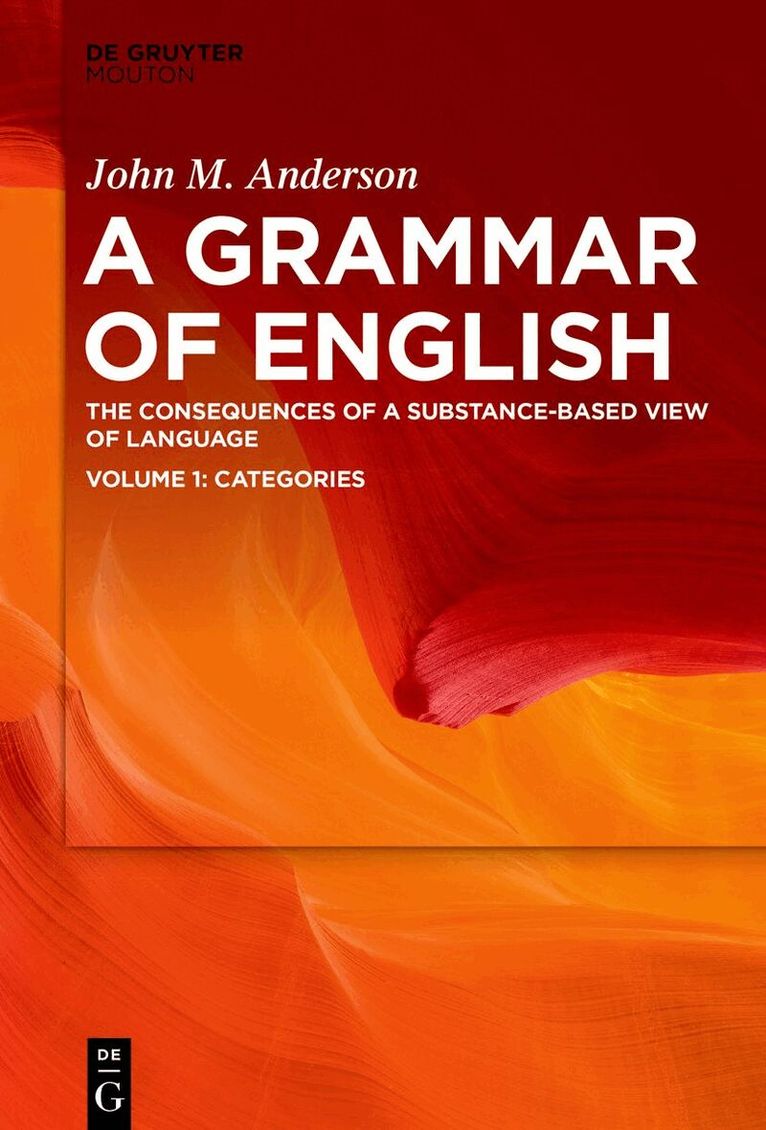
This grammar of English embraces major lexical, phonological, syntactic structures and interfaces. It is based on the substantive assumption: that the categories and structures at all levels represent mental substance, conceptual and/or perceptual. The adequacy of this assumption in expressing linguistic generalizations is tested. The lexicon is seen as central to the grammar; it contains signs with conceptual, or content, poles, minimally words, and perceptual, and expression, poles, segments. Both words and segments are differentiated by substance-based features. They determine the erection of syntactic and phonological structures at the interfaces from lexicon. The valencies of words, the identification of their semantically determined complements and modifiers, control the erection of syntactic structures in the form of dependency relations. However, the features of different segment types determines their placement in the syllable, or as prosodies. Despite this discrepancy, dependency and linearization are two of the analogical properties displayed by lexical, syntactic and phonological structure. Analogies among parts of the grammar are another consequence of substantiveness, as is the presence of figurativeness and iconicity.
3 937 kr
Läs direkt efter köp
This grammar of English embraces major lexical, phonological, syntactic structures and interfaces. It is based on the substantive assumption: that the categories and structures at all levels represent mental substance, conceptual and/or perceptual. The adequacy of this assumption in expressing linguistic generalizations is tested. The lexicon is seen as central to the grammar; it contains signs with conceptual, or content, poles, minimally words, and perceptual, and expression, poles, segments. Both words and segments are differentiated by substance-based features. They determine the erection of syntactic and phonological structures at the interfaces from lexicon. The valencies of words, the identification of their semantically determined complements and modifiers, control the erection of syntactic structures in the form of dependency relations. However, the features of different segment types determines their placement in the syllable, or as prosodies. Despite this discrepancy, dependency and linearization are two of the analogical properties displayed by lexical, syntactic and phonological structure. Analogies among parts of the grammar are another consequence of substantiveness, as is the presence of figurativeness and iconicity.
4 024 kr
Läs direkt efter köp
This grammar of English embraces major lexical, phonological, syntactic structures and interfaces. It is based on the substantive assumption: that the categories and structures at all levels represent mental substance, conceptual and/or perceptual. The adequacy of this assumption in expressing linguistic generalizations is tested. The lexicon is seen as central to the grammar; it contains signs with conceptual, or content, poles, minimally words, and perceptual, and expression, poles, segments. Both words and segments are differentiated by substance-based features. They determine the erection of syntactic and phonological structures at the interfaces from lexicon. The valencies of words, the identification of their semantically determined complements and modifiers, control the erection of syntactic structures in the form of dependency relations. However, the features of different segment types determines their placement in the syllable, or as prosodies. Despite this discrepancy, dependency and linearization are two of the analogical properties displayed by lexical, syntactic and phonological structure. Analogies among parts of the grammar are another consequence of substantiveness, as is the presence of figurativeness and iconicity.
3 996 kr
Läs direkt efter köp
This grammar of English embraces major lexical, phonological, syntactic structures and interfaces. It is based on the substantive assumption: that the categories and structures at all levels represent mental substance, conceptual and/or perceptual. The adequacy of this assumption in expressing linguistic generalizations is tested. The lexicon is seen as central to the grammar; it contains signs with conceptual, or content, poles, minimally words, and perceptual, and expression, poles, segments. Both words and segments are differentiated by substance-based features. They determine the erection of syntactic and phonological structures at the interfaces from lexicon. The valencies of words, the identification of their semantically determined complements and modifiers, control the erection of syntactic structures in the form of dependency relations. However, the features of different segment types determines their placement in the syllable, or as prosodies. Despite this discrepancy, dependency and linearization are two of the analogical properties displayed by lexical, syntactic and phonological structure. Analogies among parts of the grammar are another consequence of substantiveness, as is the presence of figurativeness and iconicity.
4 177 kr
Skickas inom 7-10 vardagar
1 550 kr
Läs direkt efter köp