

Häftad, Engelska, 2010
901 kr
Skickas inom 7-10 vardagar
901 kr
Skickas inom 7-10 vardagar

444 kr
Kommande
1 440 kr
Skickas inom 10-15 vardagar

532 kr
Skickas inom 10-15 vardagar

329 kr
Skickas inom 3-6 vardagar

470 kr
Skickas inom 7-10 vardagar

367 kr
Skickas inom 7-10 vardagar

398 kr
Skickas inom 7-10 vardagar

273 kr
Skickas inom 7-10 vardagar

385 kr
Skickas inom 7-10 vardagar

227 kr
Skickas inom 7-10 vardagar

408 kr
Skickas inom 7-10 vardagar

294 kr
Skickas inom 7-10 vardagar

421 kr
Skickas inom 7-10 vardagar

293 kr
Skickas inom 7-10 vardagar

406 kr
Skickas inom 7-10 vardagar

257 kr
Skickas inom 7-10 vardagar

411 kr
Skickas inom 7-10 vardagar

293 kr
Skickas inom 7-10 vardagar

615 kr
Kommande

2 421 kr
Kommande
279 kr
Skickas inom 7-10 vardagar

324 kr
Skickas inom 7-10 vardagar

453 kr
Skickas inom 7-10 vardagar

384 kr
Skickas inom 3-6 vardagar
1 537 kr
Läs direkt efter köp
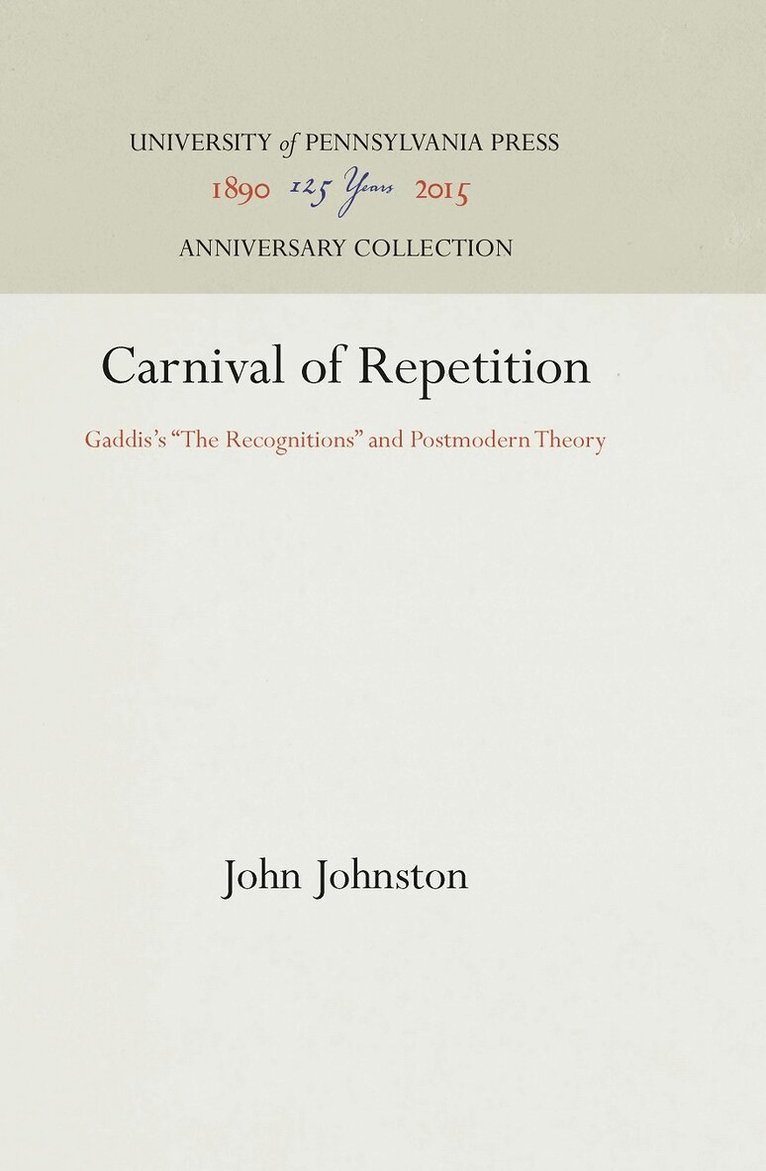
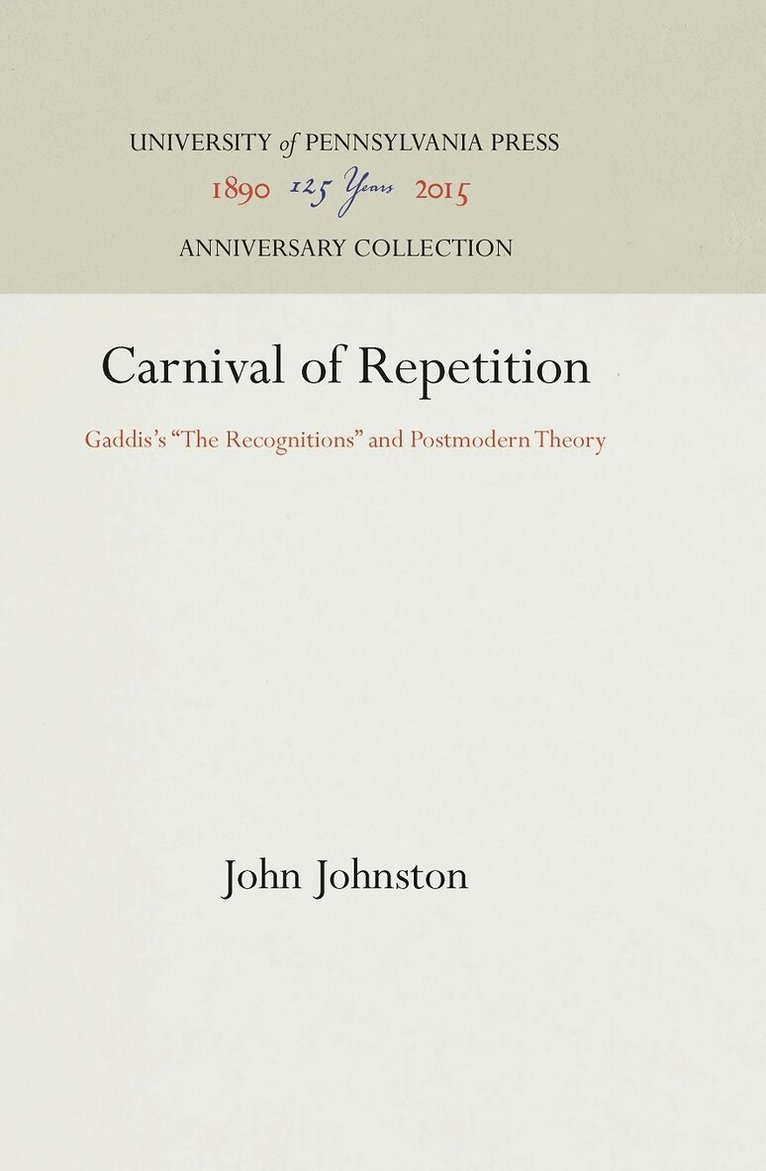
Although published many decades ago, William Gaddis''s The Recognitions is only now beginning to receive the critical attention it deserves. Carnival of Repetition, the first full-length study of the novel, is a sophisticated analysis that places it in a new literary and cultural context .This novel of the 1950 s is unlike anything else from that decade. It harks back to the works of high modernism (exemplified by Joyce''s Ulysses) and looks forward to postmodern fiction (especially as practiced by Barth, Pynchon, and DeLillo). Imitation is its major theme, one that Gaddis pursues on many levels, across several continents, into mazes of arcane knowledge and bogus scholarship, and even into the novel''s structure through the repetition of prior texts and the interplay between literal and disguised quotation. Through an endless play of repetition, Gaddis confounds the reader''s recognition of similarity and difference.Johnston uses the theories of Bakhtin and Deleuze (and others, such as Julia Kristeva) to map out a context for this most unusual and difficult work. From Bakhtin, he appropriates the concepts of "carnivalesque" fiction and dialogism (or a plurality of independent voices, no one more important than another). From Deleuze, he borrows the idea of the simulacrum, a copy that presupposes no original and that becomes meaningful through a process of infinite repetition. With these instruments, Johnston analyzes the labyrinth of copy and counterfeit that Gaddis constructs in his novel.

326 kr
Skickas inom 7-10 vardagar


352 kr
Skickas inom 7-10 vardagar
352 kr
Tillfälligt slut