1 581 kr
Skickas inom 10-15 vardagar
1 581 kr
Skickas inom 10-15 vardagar
567 kr
Skickas inom 10-15 vardagar
321 kr
Skickas inom 7-10 vardagar
641 kr
Läs direkt efter köp
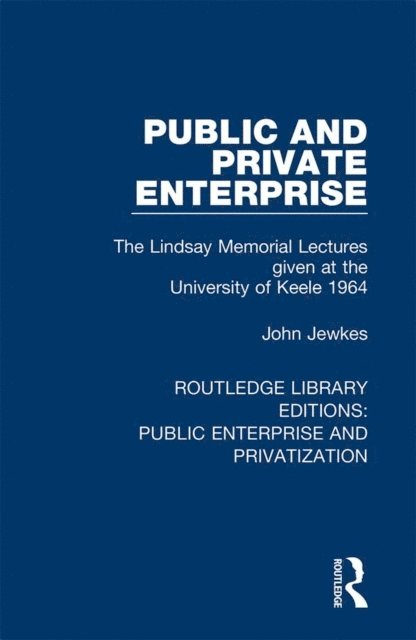
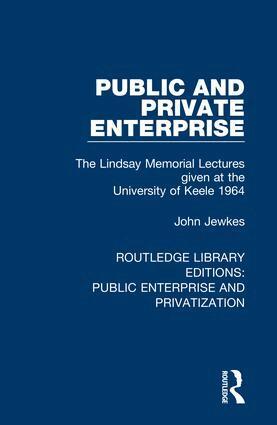
Originally published in 1965, Professor Jewkes re-examines the principles which should determine the dividing line between the role of the State and the field of individual responsibility in economic life. Beginning with a brief account of how the functions of Government at the time had been widened in recent years and the rights of individuals curbed, he examines the fundamental difficulties in establishing any rational demarcation between the one sphere and the other in deciding what part the economist should play in helping to resolve the enigma. He next examines the outstanding failures and successes of public and private enterprise respectively in the Western World in recent years. Finally, he asks what are the dominant features of the economic world in which we live and what type of social institutions are most likely to enable us to make the best of our environment.
The author’s general conclusion is that, although mixed economics will undoubtedly continue to be the rule, yet stability and economic growth will be endangered unless our social and economic institutions are flexible enough to provide continuous, and as far as possible spontaneous, adjustments to the unpredictable changes of a world in constant transition.
627 kr
Läs direkt efter köp
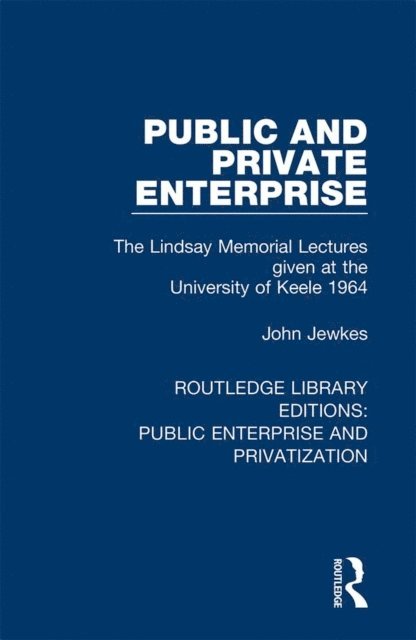
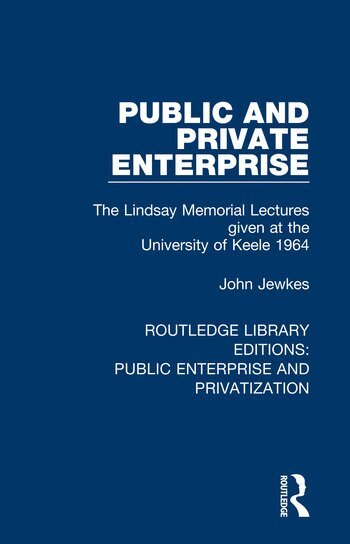
Originally published in 1965, Professor Jewkes re-examines the principles which should determine the dividing line between the role of the State and the field of individual responsibility in economic life. Beginning with a brief account of how the functions of Government at the time had been widened in recent years and the rights of individuals curbed, he examines the fundamental difficulties in establishing any rational demarcation between the one sphere and the other in deciding what part the economist should play in helping to resolve the enigma. He next examines the outstanding failures and successes of public and private enterprise respectively in the Western World in recent years. Finally, he asks what are the dominant features of the economic world in which we live and what type of social institutions are most likely to enable us to make the best of our environment.
The author’s general conclusion is that, although mixed economics will undoubtedly continue to be the rule, yet stability and economic growth will be endangered unless our social and economic institutions are flexible enough to provide continuous, and as far as possible spontaneous, adjustments to the unpredictable changes of a world in constant transition.

1 539 kr
Läs direkt efter köp
1 098 kr
Skickas inom 10-15 vardagar
208 kr
Läs direkt efter köp
171 kr
Skickas inom 10-15 vardagar