776 kr
Skickas inom 10-15 vardagar
776 kr
Skickas inom 10-15 vardagar
676 kr
Läs direkt efter köp
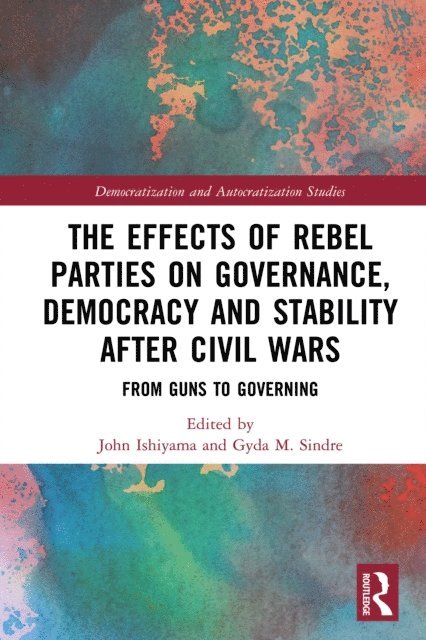
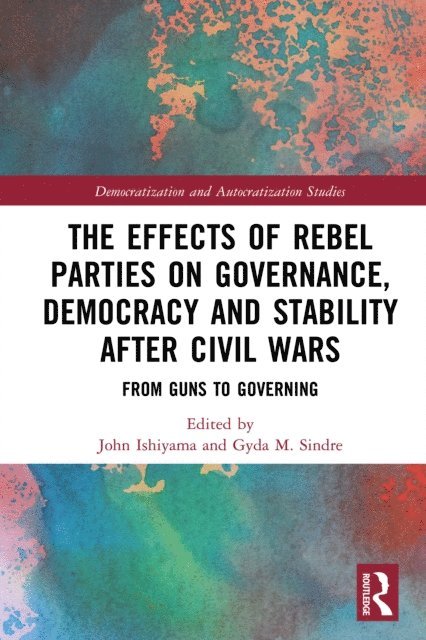
This book provides a systematic overview and in-depth analysis of the effects of rebel group inclusion on democracy following the end of conflict across the globe.
It examines different types of rebel groups, addressing the subject matter through the lens of three dimensions – democracy, stability and governance – which structure the book and the individual chapters. As such, it affords a rare opportunity to bring together two heretofore separate research traditions – conflict studies and political parties.
This book will be of key interest to scholars and students of political parties and party theory, civil wars and peacebuilding, democratization studies and state building and more broadly to comparative politics, development studies, and security studies.
2 136 kr
Skickas inom 10-15 vardagar
645 kr
Skickas inom 10-15 vardagar
633 kr
Kommande
2 491 kr
Kommande
2 602 kr
Skickas inom 10-15 vardagar
883 kr
Läs direkt efter köp
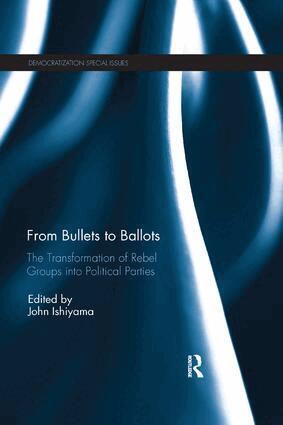
In recent years, an increasing amount of research has argued that the successful transformation of rebel organization into parties is critical to stable post-conflict peace and democratization. However, the process of the transformation of rebel groups into parties is not well understood. Under what conditions do rebel groups transform into parties? Or into something else? What are the causal mechanisms that lead to the "successful" transformation of rebel groups into political parties? Does the transformation of rebel groups into parties actually contribute to political stability and democratization? How does transformation differ from region to region? The chapters in this book directly address these questions, and include a combination of broader theoretical and empirical chapters coupled with several in depth case studies by some of the most notable scholars in the field. It should prove indispensable to students of both civil wars, post-conflict peace, and political parties.
This book was originally published as a special issue of Democratization.
883 kr
Läs direkt efter köp
In recent years, an increasing amount of research has argued that the successful transformation of rebel organization into parties is critical to stable post-conflict peace and democratization. However, the process of the transformation of rebel groups into parties is not well understood. Under what conditions do rebel groups transform into parties? Or into something else? What are the causal mechanisms that lead to the "successful" transformation of rebel groups into political parties? Does the transformation of rebel groups into parties actually contribute to political stability and democratization? How does transformation differ from region to region? The chapters in this book directly address these questions, and include a combination of broader theoretical and empirical chapters coupled with several in depth case studies by some of the most notable scholars in the field. It should prove indispensable to students of both civil wars, post-conflict peace, and political parties.
This book was originally published as a special issue of Democratization.
3 391 kr
Skickas inom 7-10 vardagar
602 kr
Läs direkt efter köp
In an effort to help faculty excel as classroom teachers, the expert contributors offer representation from various types of institutions located throughout the world. Split into three distinct parts, this book discusses:
curriculum and course designteaching subject areasin class teaching techniquesThis important Handbook is an essential guide for anyone looking to teach political science and international relations at the university level.
Contributors: V. Asal, E.A. Bennion, E. Berndtson, J.L. Bernstein, A. Blair, M.A. Boyer, A. Broscheid, M. Brown, F. Buckley, J. Craig, B. Gentry, R. Glazier, K. Hamann, J. Hamner, C. Harris, J. Ishiyama, K. Kas, B. Kauffman, K. King, C. Leston-Bandeira, S. Lightfoot, J.K. Lobasz, D. Malet, M.P. Marks, H. Maurer, E.F.Mcclellan, W.J. Miller, M.J. Moore, E.A. Oldmixon, A. Paczynska, G. Pleschova, C. Raymond, E. Richards, B.E. Ricks, R.G. Rodriguez, J.S. Rofe, J.M. Scott, E. Sheppard, E.Simon, B. Smentkowski, E.T. Smith, J.C. Strachan, P.E. Sum, S. Thornton, S. Usherwood, B. Valeriano, W.L. Watson
681 kr
Skickas inom 7-10 vardagar
329 kr
Skickas inom 7-10 vardagar
1 398 kr
Skickas inom 7-10 vardagar
321 kr
Läs direkt efter köp
Common questions are answered, such as: when is the right time to submit your manuscript; how to select a co-author; and when to contact an editor, as well as the challenging aspect of how to deal with rejections. Other key topics are thoroughly reviewed and explored, including guidance on ethics and integrity in publishing journal articles, emerging practices regarding research transparency, and new frontiers in academic journal publishing such as Open Access.
This engaging book will be an invaluable resource for graduate students and scholars looking to improve their understanding of the journal publishing process, as well as providing an essential guide for those undertaking this journey for the first time.
392 kr
Kommande
1 517 kr
Kommande
In 2022, the American Political Science Association initiated a review of the undergraduate major, culminating in the 2024 Presidential Taskforce Report on Rethinking Political Science Education. Focusing on programmatic design rather than classroom instruction, this innovative volume serves as a companion to the report. Addressing challenges like declining enrollments, demographic shifts, and the need for employable skills, it provides research-backed guidance for department-level curriculum development.
Led by John Ishiyama and Michelle Deardorff, this book offers insights for making substantial changes to the political science degree. Each chapter highlights case-study examples and high-impact best practices, including curricular assessment, continuous improvement, and demonstrating value. Diverse contributors, experts in the scholarship of teaching and learning, outline specific discipline-based student learning outcomes as well as critical reflection questions. Care is taken to root these considerations in the special concerns of a variety of different academic institution types – community colleges, liberal arts colleges, public universities, and research-intensive universities.
By providing rich data and perspectives for implementing program revision, this essential professional resource presents a unique, comprehensive, and applied roadmap for political science administrative leaders and faculty looking to adapt and thrive in an evolving higher education landscape.
421 kr
Kommande
Global Perspectives on Democratic Education for All
1 474 kr
Kommande
In a world where democratic backsliding and political uncertainty threaten societies, this volume offers an essential resource for educators and administrators at colleges and universities looking to prepare the next generation of engaged, informed citizens. This volume provides concrete models, innovative ideas, and practical tools for crafting dynamic civic engagement pedagogies that foster public-spirited citizens capable of sustaining inclusive, resilient democracies. With contributions from global political science scholars and educators, the book highlights effective and evidence-based classroom, campus, and community activities tailored to diverse student bodies.
The collection addresses the urgent need to move beyond traditional civic engagement strategies, which often focus on student populations with homogeneous demographics and identity, by presenting new approaches that embrace the lived experiences of disenfranchised and marginalized groups. Through well-vetted, evidence-based activities and assessment designs, readers will find tools to cultivate political learning and civic skills critical to today's pluralistic democracies.