1 350 kr
Läs direkt efter köp
1 350 kr
Läs direkt efter köp
1 360 kr
Läs direkt efter köp
700 kr
Skickas inom 10-15 vardagar
925 kr
Skickas inom 7-10 vardagar
1 937 kr
Skickas inom 7-10 vardagar
2 602 kr
Skickas inom 10-15 vardagar
2 497 kr
Skickas inom 10-15 vardagar
1 010 kr
Läs direkt efter köp
1 017 kr
Läs direkt efter köp
338 kr
Skickas inom 7-10 vardagar
2 582 kr
Skickas inom 11-20 vardagar
1 738 kr
Skickas inom 3-6 vardagar
973 kr
Skickas inom 10-15 vardagar
602 kr
Läs direkt efter köp
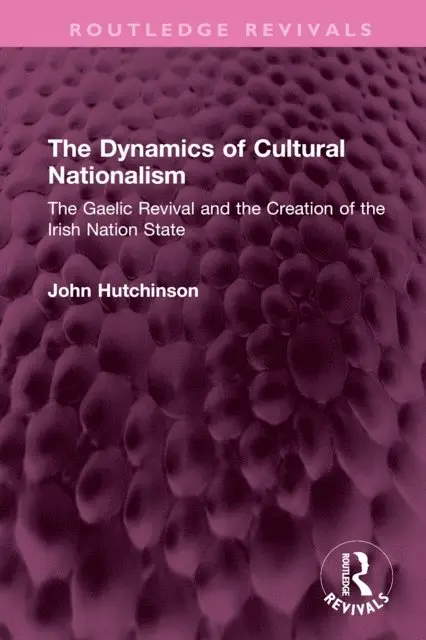
First published in 1987, The Dynamics of Cultural Nationalism demonstrates the nature and role of cultural nationalism as a separate movement in the creation of modern nations. This is done through an intensive study of the modern Irish movements, and in particular the Gaelic revival at the end of the nineteenth century, which makes clear the importance of cultural nationalism as a vision and politics in its own right. The author, by approaching his material as both historian and sociologist, is able to illuminate the Irish case of nationalism by placing it in a broad, comparative perspective, showing how cultural nationalism has often provided those answers to the problems of nation building and the rediscovery of national identity that political nationalism failed to provide. This book will be of interest to all those in the social sciences and history who are concerned with problems of national identity, the uses of history and culture in the creation of modern nations, and the particular case of the development of nationalist movements in Ireland.
593 kr
Läs direkt efter köp
First published in 1987, The Dynamics of Cultural Nationalism demonstrates the nature and role of cultural nationalism as a separate movement in the creation of modern nations. This is done through an intensive study of the modern Irish movements, and in particular the Gaelic revival at the end of the nineteenth century, which makes clear the importance of cultural nationalism as a vision and politics in its own right. The author, by approaching his material as both historian and sociologist, is able to illuminate the Irish case of nationalism by placing it in a broad, comparative perspective, showing how cultural nationalism has often provided those answers to the problems of nation building and the rediscovery of national identity that political nationalism failed to provide. This book will be of interest to all those in the social sciences and history who are concerned with problems of national identity, the uses of history and culture in the creation of modern nations, and the particular case of the development of nationalist movements in Ireland.
391 kr
Skickas inom 7-10 vardagar
271 kr
Skickas inom 7-10 vardagar
367 kr
Skickas inom 7-10 vardagar
408 kr
Skickas inom 7-10 vardagar
496 kr
Skickas inom 7-10 vardagar
484 kr
Skickas inom 7-10 vardagar
349 kr
Skickas inom 7-10 vardagar
191 kr
Skickas inom 7-10 vardagar
292 kr
Skickas inom 7-10 vardagar
200 kr
Skickas inom 7-10 vardagar
374 kr
Skickas inom 7-10 vardagar
385 kr
Skickas inom 7-10 vardagar
2 145 kr
Skickas inom 10-15 vardagar
503 kr
Skickas inom 10-15 vardagar
949 kr
Läs direkt efter köp
There has long been a debate about implications of globalization for the survival of the world of sovereign nation-states, and the role of nationalism as both an agent of and a response to globalization. In contrast, until recently there has been much less debate about the fate of religion. ‘Globalization’ has been viewed as part of the rationalization process, which has already relegated religion to the dustbin of history, just as it threatens the nation, as the world moves toward a cosmopolitan ethics and politics. The chapters in this book, however, make the case for the salience and resilience of religion, often in conjunction with nationalism, in the contemporary world in several ways.
This book highlights the diverse ways in which religions first and foremost make use of the traditional power and communication channels available to them, like strategies of conversion, the preservation of traditional value systems, and the intertwining of religious and political power. Nevertheless, challenged by a more culturally and religiously diversified societies and by the growth of new religious sects, contemporary religions are also forced to let go of these well known strategies of preservation and formulate new ways of establishing their position in local contexts. This collection of essays by established and emerging scholars brings together theory-driven and empirically-based research and case-studies about the global and bottom-up strategies of religions and religious traditions in Europe and beyond to rethink their positions in their local communities and in the world.