Language scholars have traditionally agreed that the development of the English language was largely unplanned. John H. Fisher challenges this view, demonstrating that the standardization of writing and pronunciation was, and still is, made under the control of political and intellectual forces.In these essays Fisher chronicles his gradual realization that Standard English was not a popular evolution at all but was the direct result of political decisions made by the Lancastrian administrations of Henry IV and Henry V. To achieve standardization and acceptance of the vernacular, these kings turned to their Chancery scribes, who were responsible for writing and copying legal and royal documents.Chaucer, a relative of the king, began to be labeled by the government as a master of the language, and it was Henry V who inspired the fifteenth-century tradition of citing Chaucer as the "maker" of English. An even more important link between language development and government practice is the fact that Chaucer himself composed in the English of the Chancery scribes.Fisher discusses the development of Chancery practices, royal involvement in promoting use of the vernacular, Chaucer's use of English, Caxton's use of Chancery Standard, and the nineteenth-century phenomenon of a standard, or "received," pronunciation of English. This engaging and clearly written work will change the way scholars understand the development of English and think about the intentional shaping of our language.


In Win Today, John Fisher gives readers the tools to complete any goal. Through personal anecdotes and life lessons, he shows readers out to chart their path and follow it.These lessons cover almost every aspect of life, ranging from health and nutrition, financial management, faith, and professional/goal setting to virtues such as perseverance, sacrifice, and gratitude.Ninety - seven percent of them are based upon abject failures, repeated mistakes, and in some cases, heartbreak, but our mistakes and failures make us who we are.Win Today was inspired by Fisher’s father, James H. Fisher, Esq., who knew better than anyone that the greatest lessons aren’t taught in classrooms.
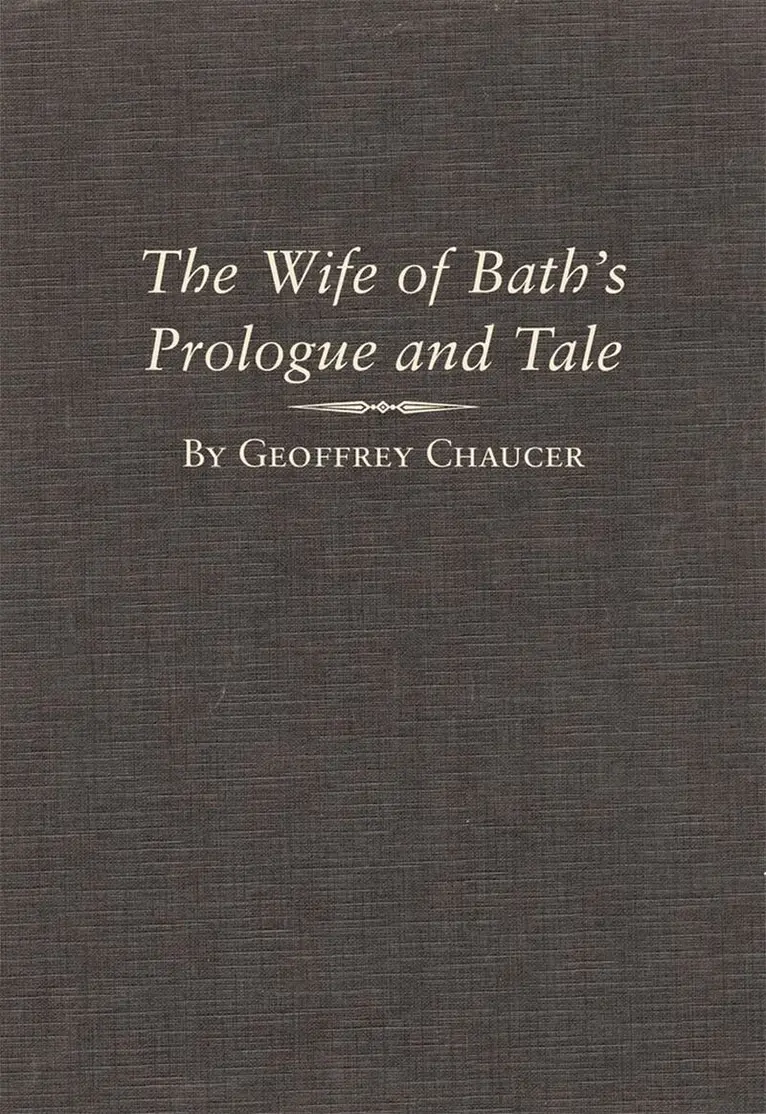
The Wife of Bath is the most vibrant character in The Canterbury Tales - and arguably the most famous. In creating his brilliant portrayal of the talkative wife, Chaucer weaves a dazzling array of allusions to biblical, classical, patristic, and vernacular sources. These two volumes - the most recent contribution to the Variorum Chaucer series - integrate six hundred years of scholarship on The Wife of Bath's Prologue and Tale.Editors Mark Allen and John H. Fisher present a comprehensive record of the textual traditions of the tale and of the critical commentary from the earliest manuscripts to the mid-1990s. Part A (the first volume) includes the text of Chaucer's poem, accompanied by exhaustive collation of the ten most valuable manuscript witnesses to the text and all twenty-two of the major editions. Also included in Part A are an introduction to the text, and extensive discussions of sources and analogues, genres, theoretical approaches, and major themes. A bibliographical index concludes the scholarly apparatus in Part A. In Part B (the second volume), the editors present a line-by-line, often word-by-word, record of the legacy of Chaucer's text, including variants, glosses, editors' notes, and observations by scholars through the ages.
This collection of readings, originally published by Prentice Hall in 1974, illustrates the development of the language by as many styles and levels of discourse as possible. Among the sample selections: King Alfred's Preface to Pope Gregory's Pastoral Care; The Lord's Prayer, Old English to Modern English; Chaucer's General Prologue to the Canterbury Tales; The Ancrene Riwle ó English and Anglo-Norman Texts; Piers Plowman; Sir Gawain and the Green Knight; Malory's Book of King Arthur; Two Letters by Queen Elizabeth; The King James Bible; Jonathan Edward's Sinners in the Hands of an Angry God; and Joel Chandler Harris's Mingo and Nights With Uncle Remus.
They never told you this in law school. Out of a hundred new lawyers in prestigious, high-profile law firms, two will have a long-term career at the firm, ninety-eight will be shown the door.There’s an overwhelming chance you will become another statistic and one day you’ll be on your own with no law firm to provide security, a paycheck, or even a desk. If you don’t know how to manage and grow a law firm, you will be lost in a sea of lawyers. You will be desperate for any clients you can get and have no idea how to manage a staff or hire a team of superstar employees. This book was written for youMost books about law firm management and marketing are motivational with little practical advice. But when you have your own law practice and are just trying to survive, you don’t need motivation—you need to know what to do … right now. This book was written to fill that gap—the gap between theory and practice. The gap that law schools ignore, the gap that many lawyers ignore. Take small, baby steps to implement these principles, and with some time, consistent application, and a heavy dose of courage, you will be on the way to building the law firm of your dreams.