207 kr
Skickas
207 kr
Skickas
227 kr
Skickas
252 kr
Skickas
286 kr
Skickas
203 kr
Skickas
Humanity in the twenty-first century is facing what might be described as its ultimate environmental catastrophe: the destruction of the climate that has nurtured human civilization and with it the basis of life on earth as we know it. All ecosystems on the planet are now in decline. Enormous rifts have been driven through the delicate fabric of the biosphere. The economy and the earth are headed for a fateful collision—if we don't alter course.
In The Ecological Rift: Capitalism’s War on the Earth environmental sociologists John Bellamy Foster, Brett Clark, and Richard York offer a radical assessment of both the problem and the solution. They argue that the source of our ecological crisis lies in the paradox of wealth in capitalist society, which expands individual riches at the expense of public wealth, including the wealth of nature. In the process, a huge ecological rift is driven between human beings and nature, undermining the conditions of sustainable existence: a rift in the metabolic relation between humanity and nature that is irreparable within capitalist society, since integral to its very laws of motion.
Critically examining the sanguine arguments of mainstream economists and technologists, Foster, Clark, and York insist instead that fundamental changes in social relations must occur if the ecological (and social) problems presently facing us are to be transcended. Their analysis relies on the development of a deep dialectical naturalism concerned with issues of ecology and evolution and their interaction with the economy. Importantly, they offer reasons for revolutionary hope in moving beyond the regime of capital and toward a society of sustainable human development.
363 kr
Skickas inom 7-10 vardagar
252 kr
Skickas
1 137 kr
Skickas inom 3-6 vardagar
789 kr
Skickas inom 7-10 vardagar
323 kr
Skickas
423 kr
Skickas inom 7-10 vardagar
296 kr
Skickas inom 7-10 vardagar
360 kr
Skickas inom 3-6 vardagar
1 394 kr
Skickas inom 3-6 vardagar
1 230 kr
Skickas inom 3-6 vardagar
322 kr
Skickas inom 7-10 vardagar
304 kr
Skickas inom 3-6 vardagar
1 183 kr
Skickas inom 3-6 vardagar
1 183 kr
Skickas inom 3-6 vardagar
276 kr
Skickas inom 3-6 vardagar
309 kr
Skickas inom 3-6 vardagar
338 kr
Skickas inom 3-6 vardagar
274 kr
Skickas inom 3-6 vardagar
165 kr
Skickas
331 kr
Skickas inom 7-10 vardagar
226 kr
Skickas
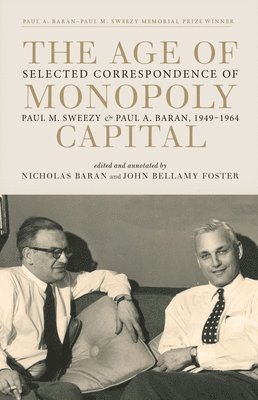
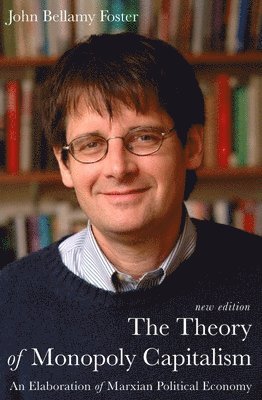
In 1966, Paul Baran and Paul Sweezy published Monopoly Capital,a monumental work of economic theory and social criticismthat sought to reveal the basic nature of the capitalism of theirtime. Their theory, and its continuing elaboration by Sweezy, HarryMagdoff, and others in Monthly Review magazine, infl uenced generationsof radical and heterodox economists. They recognizedthat Marxs work was unfi nished and itself historically conditioned,and that any attempt to understand capitalism as an evolvingphenomenon needed to take changing conditions into account.Having observed the rise of giant monopolistic (or oligopolistic)fi rms in the twentieth century, they put monopoly capital at thecenter of their analysis, arguing that the rising surplus such fi rmsaccumulatedas a result of their pricing power, massive salesefforts, and other factorscould not be profi tably invested backinto the economy. Absent any epoch making innovations like theautomobile or vast new increases in military spending, the resultwas a general trend toward economic stagnationa condition thatpersists, and is increasingly apparent, to this day. Their analysiswas also extended to issues of imperialism, or accumulation ona world scale, overlapping with the path-breaking work of SamirAmin in particular.John Bellamy Foster is a leading exponent of this theoretical perspectivetoday, continuing in the tradition of Baran and SweezysMonopoly Capital. This new edition of his essential work, TheTheory of Monopoly Capitalism, is a clear and accessible explicationof this outlook, brought up to the present, and incorporatingan analysis of recently discovered lost chapters from MonopolyCapital and correspondence between Baran and Sweezy. It alsodiscusses Magdoff and Sweezys analysis of the fi nancializationof the economy in the 1970s, 80s, and 90s, leading up to theGreat Financial Crisis of the opening decade of this century. Fosterpresents and develops the main arguments of monopoly capitaltheory, examining its key exponents, and addressing its critics in away that is thoughtful but rigorous, suspicious of dogma but adamantthat the deep-seated problems of todays monopoly-fi nancecapitalism can only truly be solved in the process of overcomingthe system itself.
220 kr
Skickas
213 kr
Skickas inom 3-6 vardagar
986 kr
Skickas inom 7-10 vardagar
504 kr
Skickas inom 7-10 vardagar