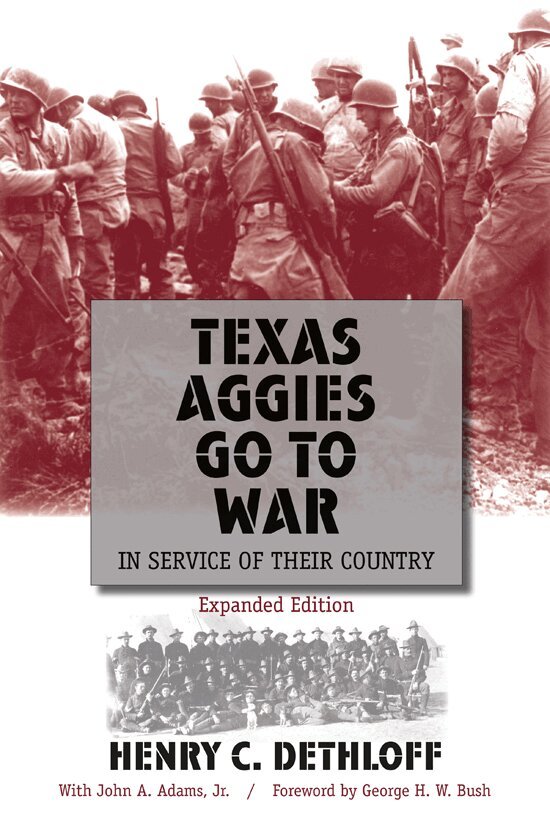
When their country calls, Texas Aggies go to war. From the Spanish-American War and World War I to the Second Gulf War, Aggies have been in the forefront of America's armed forces. More than 20,000 Texas Aggies served in World War II, for instance, including more than 14,000 as commissioned officers. Trained in leadership and the knowledge required for warfare, Aggies have served with distinction in all branches of the military service.In this newly updated compilation of the impressive war record of Texas Aggies, extended to include Aggies' service in Afghanistan and Iraq, stories of individual soldiers, airmen, sailors, and marines are displayed with an abundance of statistics, maps, and tables.""Texas Aggies Go to War"" celebrates the school's distinctive Corps of Cadets and its military contributions while honoring the individual sacrifices of its members. Those who fought and those who remember them will find here a comprehensive account of the distinguished war record of this school.
"Adams has skillfully analyzed hundreds of primary source documents and integrated contemporary political, social and cultural elements in bringing to light the values, customs, and controversies which have shaped the Corps' 125-year history."
By any measure, the battles of Bataan and Corregidor were amongthe most intensely fought and devastating episodes in the WorldWar II Pacific theater. Beginning in early 1942, the JapaneseImperial Army invaded the Philippines in an attempt to controlthe Pacific region and expand its sphere of influence. The retreatand last stand of Filipino and American allied forces marked thelargest surrender in their respective military histories. Their efforts slowed the Japanese advance but only at great cost.John A. Adams Jr. provides a new and compelling explorationof these pivotal events by recounting the history of Bataan andCorregidor through the eyes of 89 soldiers and officers who wereformer students and citizen soldiers from the Agricultural andMechanical College of Texas. All were products of the Corps ofCadets, and indeed no other institution could boast of such a largedeployment in the opening of the war.While many words have been written on Bataan and Corregidor,none have taken the approach of collective biography as TheFightin’ Texas Aggie Defenders of Bataan and Corregidor does here. As a result, this book is not only a new contribution to the history of World War II but also stands to be a landmark publication on the history of Texas A&M University.