837 kr
Skickas inom 10-15 vardagar
837 kr
Skickas inom 10-15 vardagar
1 105 kr
Skickas inom 7-10 vardagar
426 kr
Skickas inom 7-10 vardagar
302 kr
Skickas inom 7-10 vardagar
569 kr
Skickas inom 7-10 vardagar
455 kr
Skickas inom 7-10 vardagar
484 kr
Skickas inom 7-10 vardagar
356 kr
Skickas inom 7-10 vardagar
398 kr
Skickas inom 7-10 vardagar
294 kr
Skickas inom 7-10 vardagar
623 kr
Skickas inom 7-10 vardagar
514 kr
Skickas inom 7-10 vardagar
407 kr
Skickas inom 7-10 vardagar
455 kr
Skickas inom 7-10 vardagar
514 kr
Skickas inom 7-10 vardagar
379 kr
Skickas inom 7-10 vardagar
472 kr
Skickas inom 7-10 vardagar
394 kr
Skickas inom 7-10 vardagar
396 kr
Skickas inom 7-10 vardagar
289 kr
Skickas inom 7-10 vardagar
323 kr
Skickas inom 7-10 vardagar
219 kr
Skickas inom 7-10 vardagar
2 602 kr
Skickas inom 10-15 vardagar
728 kr
Skickas inom 10-15 vardagar
3 069 kr
Skickas inom 10-15 vardagar
969 kr
Skickas inom 10-15 vardagar
1 022 kr
Läs direkt efter köp
Dynamics of Democratic Elections explores modeling approaches to democratic elections and opinion dynamics at the intersection of mathematics, political science, and computational modeling. The book focuses on relatively simple models, their analysis, and how they perform in real-world applications. In order to make the book easy to navigate, the material is divided into three major parts concerning ‘The Voter Model’, ‘Nonlinear Election Models’, and ‘Game Theoretical Models’. Although the material is unashamedly mathematical, the concepts are discussed in a way that should be accessible to anyone with a reasonably strong quantitative background and should prove interesting to a broad audience beyond mathematicians.
Features
Suitable for graduate students and researchers (mathematicians, physicists, social and political scientists with a strong theoretical background) Step-by-step data preparation and analysis Abundant exercises Numerous color illustrations1 022 kr
Läs direkt efter köp
Dynamics of Democratic Elections explores modeling approaches to democratic elections and opinion dynamics at the intersection of mathematics, political science, and computational modeling. The book focuses on relatively simple models, their analysis, and how they perform in real-world applications. In order to make the book easy to navigate, the material is divided into three major parts concerning ‘The Voter Model’, ‘Nonlinear Election Models’, and ‘Game Theoretical Models’. Although the material is unashamedly mathematical, the concepts are discussed in a way that should be accessible to anyone with a reasonably strong quantitative background and should prove interesting to a broad audience beyond mathematicians.
Features
Suitable for graduate students and researchers (mathematicians, physicists, social and political scientists with a strong theoretical background) Step-by-step data preparation and analysis Abundant exercises Numerous color illustrations974 kr
Läs direkt efter köp
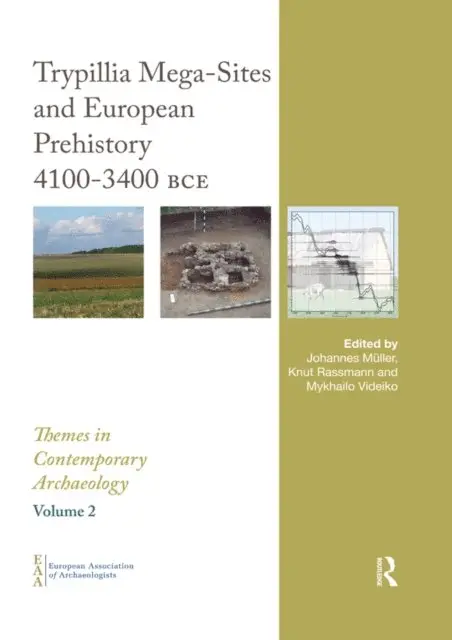
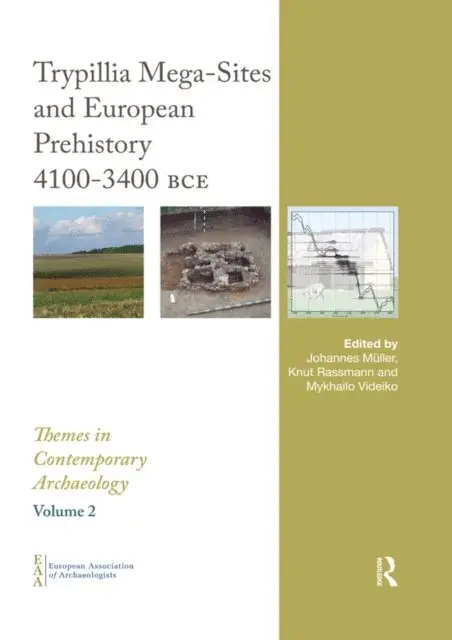
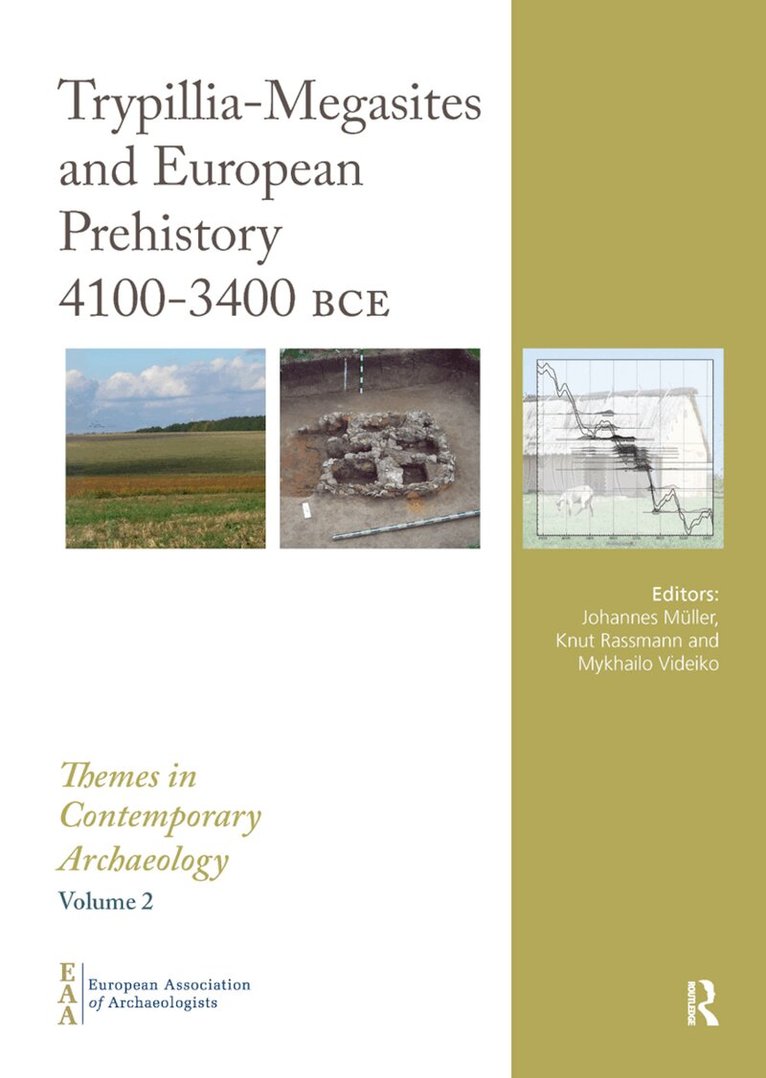
In European prehistory population agglomerations of more than 10,000 inhabitants per site are a seldom phenomenon. A big surprise to the archaeological community was the discovery of Trypillia mega-sites of more than 250 hectares and with remains of more than 2000 houses by a multidisciplinary approach of Soviet and Ukrainian archaeology, including aerial photography, geophysical prospection and excavations nearly 50 years ago. The extraordinary development took place at the border of the North Pontic Forest Steppe and Steppe zone ca. 4100–3400 BCE.
Since then many questions arose which are of main relevance: Why, how and under which environmental conditions did Trypillia mega-sites develop? How long did they last? Were social and/or ecological reasons responsible for this social experiment? Are Trypillia and the similar sized settlement of Uruk two different concepts of social behaviour?
Paradigm change in fieldwork and excavation strategies enabled research teams during the last decade to analyse the mega-sites in their spatial and social complexity. High precision geophysics, target excavations and a new design of systematic field strategies deliver empirical data representative for the large sites. Archaeological research contributed immensely to aspects of anthropogenic induced steppe development and subsistence concepts that did not reach the carrying capacities. Probabilistic models based on 14C-dates made the contemporaneity of the mega-site house structures most probable.
In consequence, Trypillia mega-sites are an independent European phenomenon that contrasts both concepts of urbanism and social stratification that is seen with similar demographic figures in Mesopotamia. The new Trypillia research can be read as the methodological progress in European archaeology.

974 kr
Läs direkt efter köp
In European prehistory population agglomerations of more than 10,000 inhabitants per site are a seldom phenomenon. A big surprise to the archaeological community was the discovery of Trypillia mega-sites of more than 250 hectares and with remains of more than 2000 houses by a multidisciplinary approach of Soviet and Ukrainian archaeology, including aerial photography, geophysical prospection and excavations nearly 50 years ago. The extraordinary development took place at the border of the North Pontic Forest Steppe and Steppe zone ca. 4100–3400 BCE.
Since then many questions arose which are of main relevance: Why, how and under which environmental conditions did Trypillia mega-sites develop? How long did they last? Were social and/or ecological reasons responsible for this social experiment? Are Trypillia and the similar sized settlement of Uruk two different concepts of social behaviour?
Paradigm change in fieldwork and excavation strategies enabled research teams during the last decade to analyse the mega-sites in their spatial and social complexity. High precision geophysics, target excavations and a new design of systematic field strategies deliver empirical data representative for the large sites. Archaeological research contributed immensely to aspects of anthropogenic induced steppe development and subsistence concepts that did not reach the carrying capacities. Probabilistic models based on 14C-dates made the contemporaneity of the mega-site house structures most probable.
In consequence, Trypillia mega-sites are an independent European phenomenon that contrasts both concepts of urbanism and social stratification that is seen with similar demographic figures in Mesopotamia. The new Trypillia research can be read as the methodological progress in European archaeology.