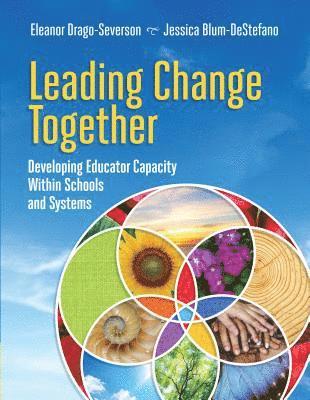
Prepare education leaders to support adult professional growth with this comprehensive guide!Supporting adult professional development—or capacity building—is a challenge in today’s high-accountability atmosphere, especially with new teacher and principal evaluations. Help prepare leaders to nurture human potential and build internal capacities with this one-of-a-kind resource. Through the authors’ practical advice, you’ll learn to Employ practices that support leadership development in your schools and districtsTeach on-the-ground applications for effective professional learning initiatives Design and implement action plans based on Four Pillar Practices for Growth that comprise a learning-oriented model of school leadership: Teaming, Providing Leadership Roles, Collegial Inquiry, and Mentoring with Developmental IntentionalityHelp leaders bridge theory and practice with first-hand case study analysesIf you want to improve student achievement, then make schools and districts havens for learning for both students and educators with this comprehensive, highly adaptable, and accessible resource! "Ellie Drago-Severson is one of our most insightful experts on the development of adult educational leaders. She is unique in her ability to move back and forth comfortably between powerful ideas and promising practices."—Howard Gardner, Professor of Cognition and EducationHarvard University"This is not another book about education reform to be read and cast aside—this is a book to be savored. It contributes profoundly to our understanding about how adults learn, the differences in the ways that adults learn, and how we can support and challenge adults as continuous learners within the context of the school day."—Deanna Burney, Executive DirectorLeading by Learning, LLC"Can those who teach in and lead our schools dramatically improve the development of their students without a new commitment to their own ongoing development? Drago-Severson and her co-authors think not. But more than this, they provide an expansively intelligent, intensely practical, research-based route to realizing this new commitment."—Robert G. Kegan, Meehan Professor of Adult Learning and Professional DevelopmentHarvard Graduate School of Education
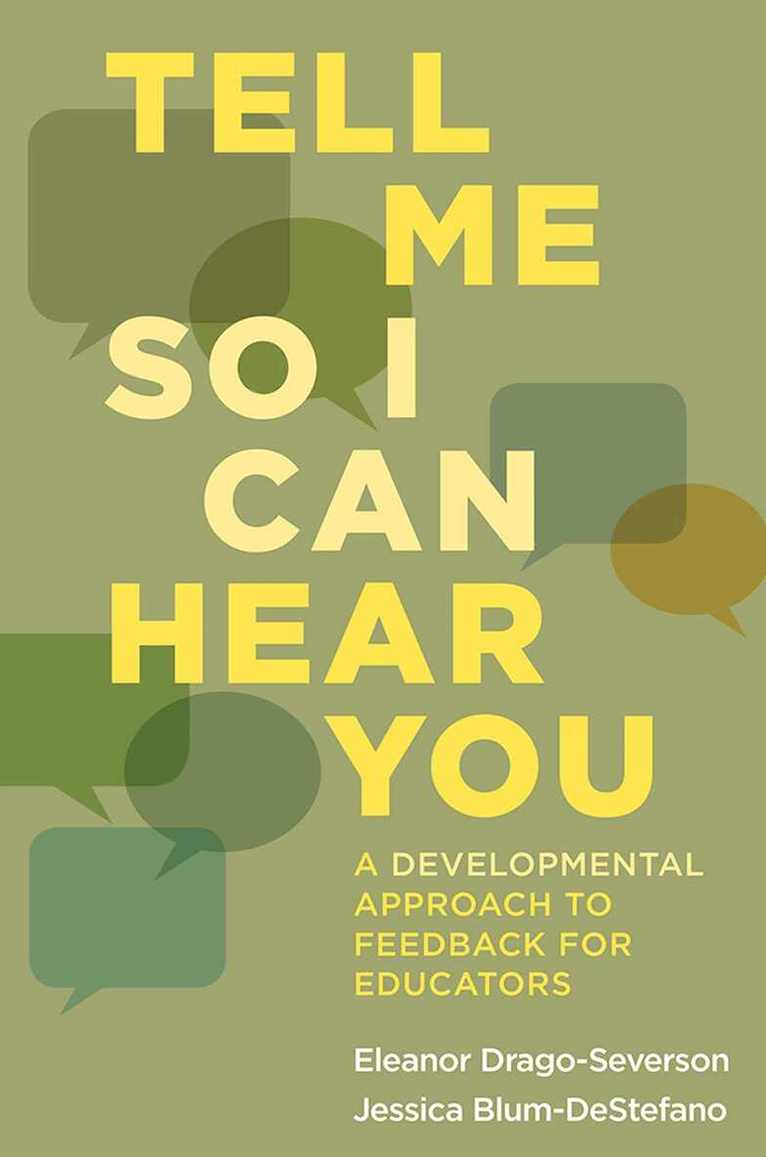
In Tell Me So I Can Hear You, Eleanor Drago-Severson and Jessica Blum-DeStefano show how education leaders can learn to deliver feedback in a way that strengthens relationships as well as performance and builds the capacity for growth. Drawing on constructive-developmental theory, the authors describe four stages of adult growth and development and explain how to differentiate feedback for colleagues with different “ways of knowing,” which include:Instrumental knowers, who tend to see things in black and white (“Did I do it right or wrong?”) and may need to develop the capacity for reflection.Socializing knowers, who are concerned with maintaining relationships (“What do you want me to do?”) and may need support developing their own ideas.Self-authoring knowers, who have strong ideologies and values (“How does this fit with my goals and vision?”) and may need help with perspective taking.Self-transformative knowers, who are able to examine issues from multiple points of view (“How can I understand this more deeply?”) and may need guidance in resolving tensions and contradictions.The authors show how leaders can provide feedback in ways that “meet people where they are” while expanding the developmental capacities educators bring to their work. Drago-Severson and Blum-DeStefano provide real-life examples with practical strategies for creating a safe space for feedback, finding the right words, and bridging feedback and action. Tell Me So I Can Hear You offers invaluable guidance to help educators support a culture of learning in classrooms, schools, and districts.
In Tell Me So I Can Hear You, Eleanor Drago-Severson and Jessica Blum-DeStefano show how education leaders can learn to deliver feedback in a way that strengthens relationships as well as performance and builds the capacity for growth. Drawing on constructive-developmental theory, the authors describe four stages of adult growth and development and explain how to differentiate feedback for colleagues with different “ways of knowing,” which include: • Instrumental knowers, who tend to see things in black and white (“Did I do it right or wrong?”) and may need to develop the capacity for reflection. • Socializing knowers, who are concerned with maintaining relationships (“What do you want me to do?”) and may need support developing their own ideas. • Self-authoring knowers, who have strong ideologies and values (“How does this fit with my goals and vision?”) and may need help with perspective taking. • Self-transformative knowers, who are able to examine issues from multiple points of view (“How can I understand this more deeply?”) and may need guidance in resolving tensions and contradictions. The authors show how leaders can provide feedback in ways that “meet people where they are” while expanding the developmental capacities educators bring to their work. Drago-Severson and Blum-DeStefano provide real-life examples with practical strategies for creating a safe space for feedback, finding the right words, and bridging feedback and action. Tell Me So I Can Hear You offers invaluable guidance to help educators support a culture of learning in classrooms, schools, and districts.