

Inbunden, Engelska, 2018
1 886 kr
Skickas inom 7-10 vardagar
1 886 kr
Skickas inom 7-10 vardagar
1 718 kr
Läs direkt efter köp
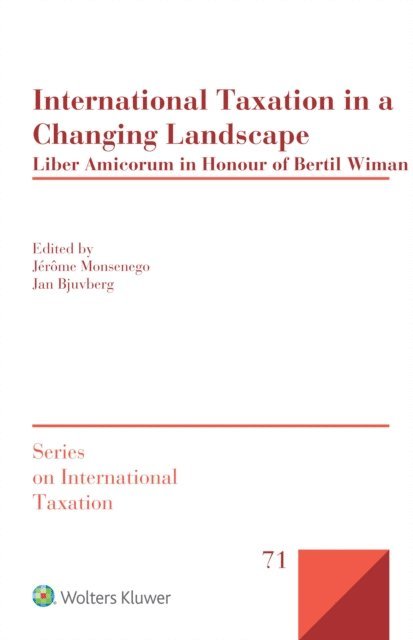
This book contains essays written in honour of Prof. Dr Bertil Wiman, a renowned tax scholar and much-appreciated teacher. Prof. Wiman is one of the founding members of EATLP, former chairman of EATLP and former vice president of IFA.
The essays cover various topics in the field of international tax law, with a major focus on corporate taxation, an area to which Prof. Dr Bertil Wiman has dedicated most of his research. The book includes authoritative analyses by acknowledged experts on several key international tax topics, which illustrates the growing complexity of this area together with its rapid evolution.
The book contains analyses of key international topics, such as:
the tax challenges of the digitalisation of the economy; the resolution of international tax disputes; the principles for the taxation of corporations; EU tax law; transfer pricing; and tax treaty law.The depth of the essays contained in this book mirrors the importance of the contributions of Prof. Dr Bertil Wiman to the international tax community. It will also prove of great value to policymakers, tax practitioners and academics.
1 718 kr
Läs direkt efter köp
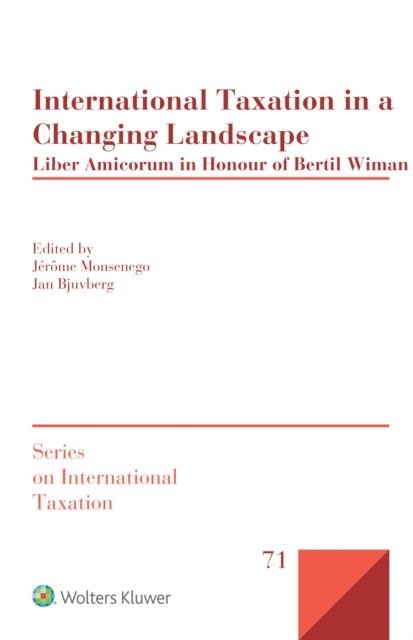
This book contains essays written in honour of Prof. Dr Bertil Wiman, a renowned tax scholar and much-appreciated teacher. Prof. Wiman is one of the founding members of EATLP, former chairman of EATLP and former vice president of IFA.
The essays cover various topics in the field of international tax law, with a major focus on corporate taxation, an area to which Prof. Dr Bertil Wiman has dedicated most of his research. The book includes authoritative analyses by acknowledged experts on several key international tax topics, which illustrates the growing complexity of this area together with its rapid evolution.
The book contains analyses of key international topics, such as:
the tax challenges of the digitalisation of the economy; the resolution of international tax disputes; the principles for the taxation of corporations; EU tax law; transfer pricing; and tax treaty law.The depth of the essays contained in this book mirrors the importance of the contributions of Prof. Dr Bertil Wiman to the international tax community. It will also prove of great value to policymakers, tax practitioners and academics.
1 591 kr
Läs direkt efter köp
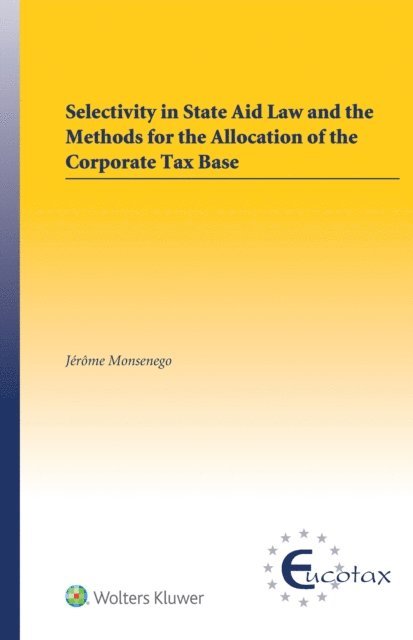
High profile cases before the European Commission and the EU courts have intensified scrutiny of the link between State aid law and the taxation of multinational enterprises. Certain decisions have raised questions about fiscal sovereignty and the interpretation of the rules on State aid – in particular the notion of selectivity, which have not been addressed in detail by existing research. The combination of the evolution of the notion of selectivity in State aid law, on the one hand, and the need to adapt the rules for the taxation of the profits of multinational enterprises to the modern economy, on the other hand, makes it necessary to assess whether existing as well as alternative rules for the allocation of the corporate tax base might entail a selective treatment. This book responds to the need of research in the area of State aid law applied to the taxation of the income of multinational enterprises, focusing on the crucial concept of selectivity.
The analysis proceeds with a detailed investigation of the theoretical issues that arise when applying the selectivity test in State aid law to three methods for the allocation of the corporate tax base between the members of multinational enterprises:
– the arm’s length principle;– transfer pricing safe harbours; and– systems of formula apportionment.This research project is conducted at a theoretical level, without considering national provisions or particular tax treaties. The author suggests an analytical framework on the application of the selectivity test to the three allocation methods. It is concluded that these methods are likely to have certain selective features, with varying possibilities to be justified by the inner logic of a corporate income tax system. It is also demonstrated that selectivity occurs for different reasons, due to the different rationales of the three allocation methods.
This book is intended at contributing to the academic literature on the impact of State aid law on the principles for the taxation of the income of multinational enterprises. The outcome of this research project is also relevant for lawmakers who need to reconcile the imperatives of State aid law with the design of rules that match their tax policies, as well as for judges or lawyers who apply the rules on State aid to tax provisions.
1 602 kr
Läs direkt efter köp
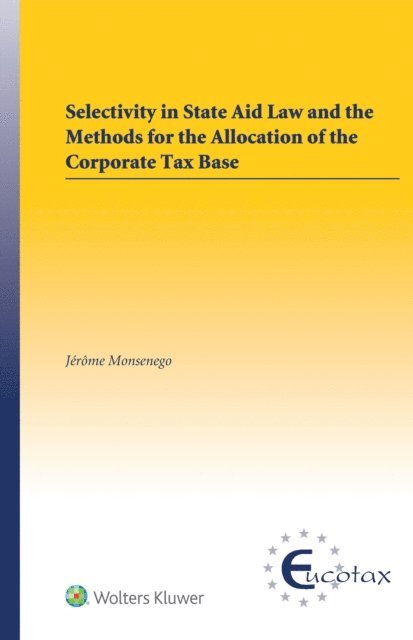
High profile cases before the European Commission and the EU courts have intensified scrutiny of the link between State aid law and the taxation of multinational enterprises. Certain decisions have raised questions about fiscal sovereignty and the interpretation of the rules on State aid – in particular the notion of selectivity, which have not been addressed in detail by existing research. The combination of the evolution of the notion of selectivity in State aid law, on the one hand, and the need to adapt the rules for the taxation of the profits of multinational enterprises to the modern economy, on the other hand, makes it necessary to assess whether existing as well as alternative rules for the allocation of the corporate tax base might entail a selective treatment. This book responds to the need of research in the area of State aid law applied to the taxation of the income of multinational enterprises, focusing on the crucial concept of selectivity.
The analysis proceeds with a detailed investigation of the theoretical issues that arise when applying the selectivity test in State aid law to three methods for the allocation of the corporate tax base between the members of multinational enterprises:
– the arm’s length principle;– transfer pricing safe harbours; and– systems of formula apportionment.This research project is conducted at a theoretical level, without considering national provisions or particular tax treaties. The author suggests an analytical framework on the application of the selectivity test to the three allocation methods. It is concluded that these methods are likely to have certain selective features, with varying possibilities to be justified by the inner logic of a corporate income tax system. It is also demonstrated that selectivity occurs for different reasons, due to the different rationales of the three allocation methods.
This book is intended at contributing to the academic literature on the impact of State aid law on the principles for the taxation of the income of multinational enterprises. The outcome of this research project is also relevant for lawmakers who need to reconcile the imperatives of State aid law with the design of rules that match their tax policies, as well as for judges or lawyers who apply the rules on State aid to tax provisions.