Inbunden, Engelska, 2026
2 058 kr
Kommande
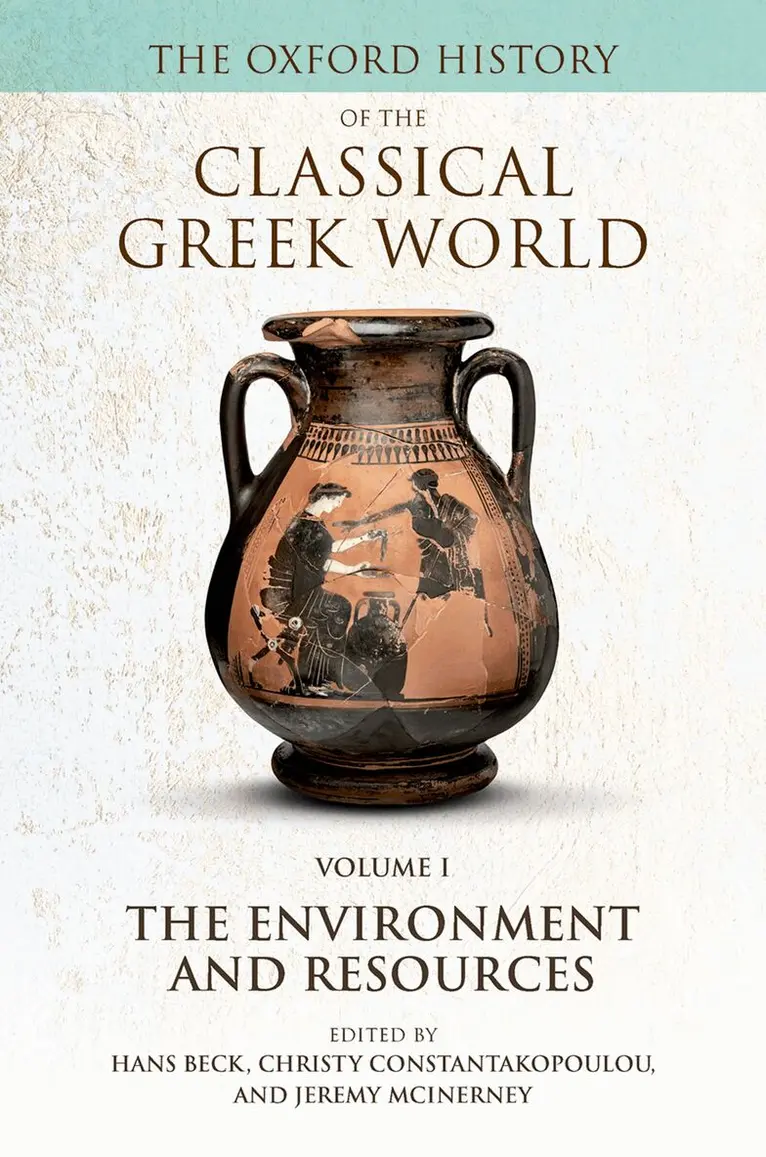
The Oxford History of the Classical Greek World (OHCGW) offers a new comprehensive account of the history and culture of ancient Greece in the fifth and fourth centuries BCE. Over seven volumes, the series deals with all aspects of the Greek world during this seminal period of Classical antiquity, from the Persian Wars to the Age of Alexander the Great. The scope is broad both in geographic and temporal terms. Ancient Greece is typically understood as the Aegean Sea and its littoral regions, with an emphasis on the southern end of the Balkan peninsula. OHCGW pays close attention to this space but also explores developments in the larger Greek world, including much of the Mediterranean and the Black Sea regions. In doing so, the series accounts for the tight interplay between Greek and non-Greek cultures. It also moves away from traditional narratives, crafting an account that is appropriate for a twenty-first-century global audience.A diverse international team of scholars at different stages of professional careers bring to the series different disciplinary and academic traditions from a wide range of scholarly contexts. The slate of contributions reflects the editors' ideas about the role of the history of Classical Greece within a modern, globalized, and diversified world. To this effect, OHCGW is guided by several conceptual and analytical principles, including alertness to the local diversity; decentered historical narratives; entangled story-telling and diverse focalizations; the integration of literary and material bodies of evidence.OHCGW is designed to provide a comprehensive overview of the topics and subjects that are the focus of scholarly investigation among experts working in the fields of Ancient History and Classical Studies. Volume I: Environment and Resources turns to the physical world inhabited by the ancient Greeks and how they interacted with this world, highlighting how creative responses to the environment nourished a bouquet of rich cultural practices that became formative for Greek civilization.