344 kr
Skickas inom 7-10 vardagar
344 kr
Skickas inom 7-10 vardagar
442 kr
Skickas inom 10-15 vardagar
114 kr
Skickas inom 7-10 vardagar
1 067 kr
Skickas inom 7-10 vardagar
419 kr
Skickas inom 10-15 vardagar
719 kr
Skickas inom 7-10 vardagar
393 kr
Skickas inom 7-10 vardagar
274 kr
Skickas inom 7-10 vardagar
1 518 kr
Skickas inom 7-10 vardagar
1 894 kr
Skickas inom 7-10 vardagar
581 kr
Skickas inom 10-15 vardagar
885 kr
Skickas inom 7-10 vardagar
225 kr
Skickas inom 3-6 vardagar
822 kr
Skickas inom 10-15 vardagar
1 076 kr
Läs direkt efter köp
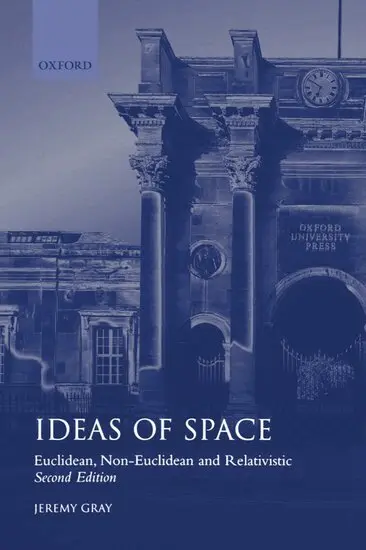
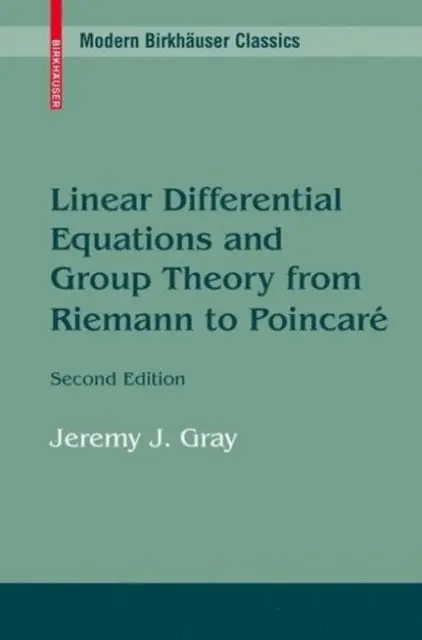
This book is a study of how a particular vision of the unity of mathematics, often called geometric function theory, was created in the 19th century. The central focus is on the convergence of three mathematical topics: the hypergeometric and related linear differential equations, group theory, and on-Euclidean geometry.
The text for this second edition has been greatly expanded and revised, and the existing appendices enriched with historical accounts of the Riemann–Hilbert problem, the uniformization theorem, Picard–Vessiot theory, and the hypergeometric equation in higher dimensions. The exercises have been retained, making it possible to use the book as a companion to mathematics courses at the graduate level.
2 328 kr
Skickas inom 7-10 vardagar
489 kr
Läs direkt efter köp
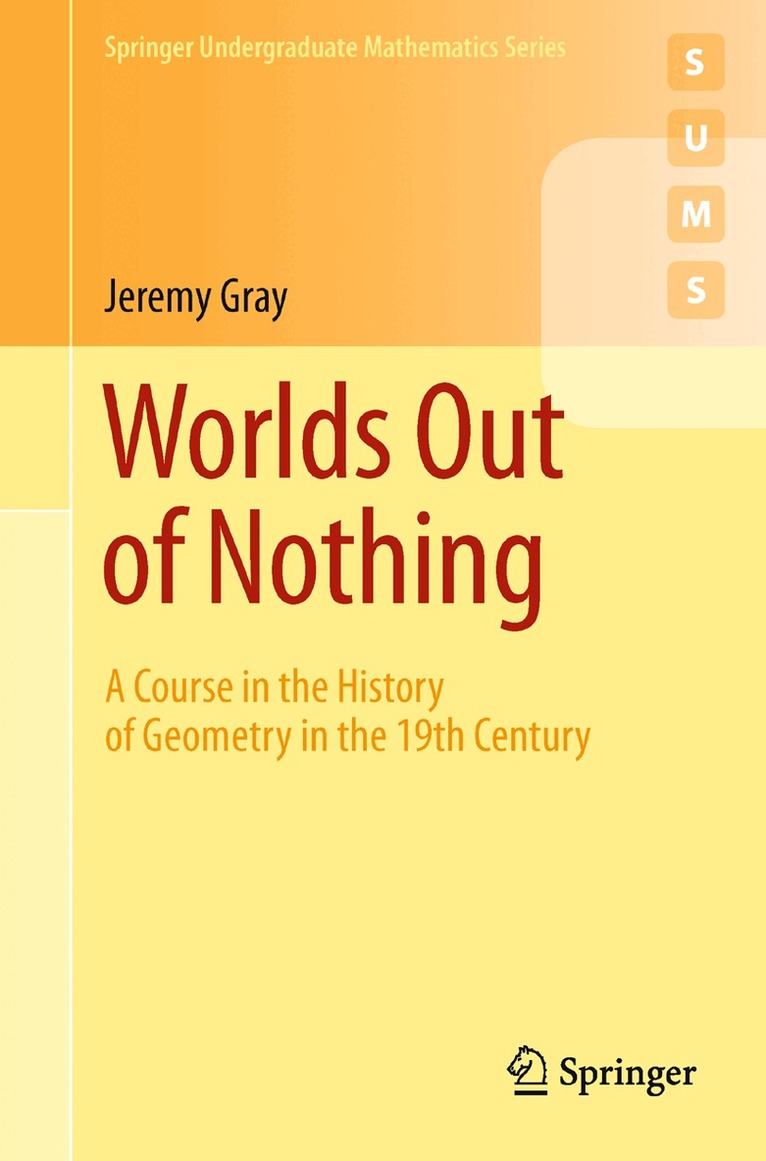
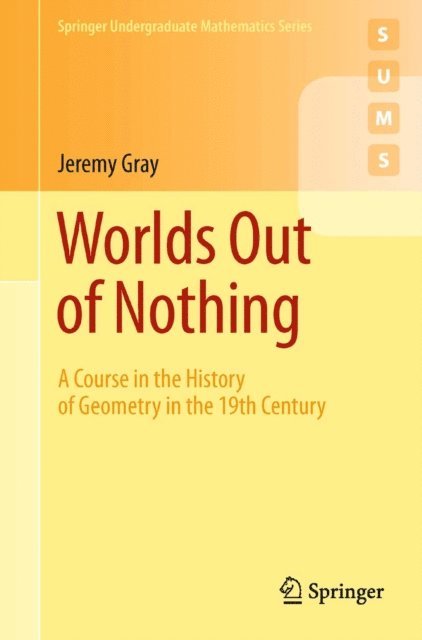
Based on the latest historical research, Worlds Out of Nothing is the first book to provide a course on the history of geometry in the 19th century. Topics covered in the first part of the book are projective geometry, especially the concept of duality, and non-Euclidean geometry. The book then moves on to the study of the singular points of algebraic curves (Plücker’s equations) and their role in resolving a paradox in the theory of duality; to Riemann’s work on differential geometry; and to Beltrami’s role in successfully establishing non-Euclidean geometry as a rigorous mathematical subject. The final part of the book considers how projective geometry rose to prominence, and looks at Poincaré’s ideas about non-Euclidean geometry and their physical and philosophical significance.
Three chapters are devoted to writing and assessing work in the history of mathematics, with examples of sample questions in the subject, advice on how to write essays, and comments on what instructors should be looking for.
558 kr
Läs direkt efter köp
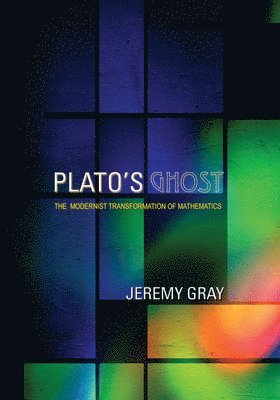
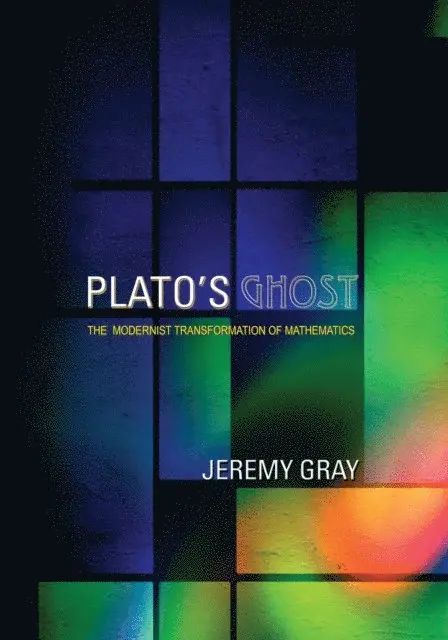
Plato''s Ghost is the first book to examine the development of mathematics from 1880 to 1920 as a modernist transformation similar to those in art, literature, and music. Jeremy Gray traces the growth of mathematical modernism from its roots in problem solving and theory to its interactions with physics, philosophy, theology, psychology, and ideas about real and artificial languages. He shows how mathematics was popularized, and explains how mathematical modernism not only gave expression to the work of mathematicians and the professional image they sought to create for themselves, but how modernism also introduced deeper and ultimately unanswerable questions.Plato''s Ghost evokes Yeats''s lament that any claim to worldly perfection inevitably is proven wrong by the philosopher''s ghost; Gray demonstrates how modernist mathematicians believed they had advanced further than anyone before them, only to make more profound mistakes. He tells for the first time the story of these ambitious and brilliant mathematicians, including Richard Dedekind, Henri Lebesgue, Henri Poincaré, and many others. He describes the lively debates surrounding novel objects, definitions, and proofs in mathematics arising from the use of naïve set theory and the revived axiomatic method—debates that spilled over into contemporary arguments in philosophy and the sciences and drove an upsurge of popular writing on mathematics. And he looks at mathematics after World War I, including the foundational crisis and mathematical Platonism.Plato''s Ghost is essential reading for mathematicians and historians, and will appeal to anyone interested in the development of modern mathematics.
455 kr
Läs direkt efter köp
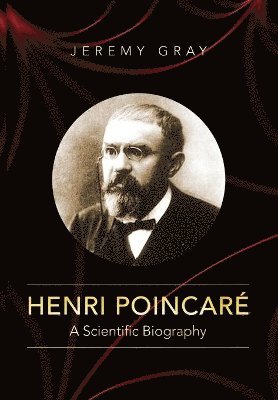
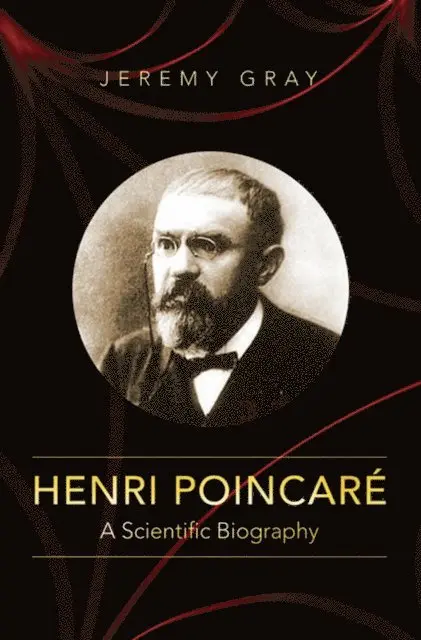
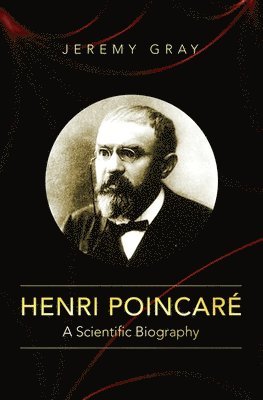
A comprehensive look at the mathematics, physics, and philosophy of Henri PoincaréHenri Poincaré (1854–1912) was not just one of the most inventive, versatile, and productive mathematicians of all time—he was also a leading physicist who almost won a Nobel Prize for physics and a prominent philosopher of science whose fresh and surprising essays are still in print a century later. The first in-depth and comprehensive look at his many accomplishments, Henri Poincaré explores all the fields that Poincaré touched, the debates sparked by his original investigations, and how his discoveries still contribute to society today.Math historian Jeremy Gray shows that Poincaré''s influence was wide-ranging and permanent. His novel interpretation of non-Euclidean geometry challenged contemporary ideas about space, stirred heated discussion, and led to flourishing research. His work in topology began the modern study of the subject, recently highlighted by the successful resolution of the famous Poincaré conjecture. And Poincaré''s reformulation of celestial mechanics and discovery of chaotic motion started the modern theory of dynamical systems. In physics, his insights on the Lorentz group preceded Einstein''s, and he was the first to indicate that space and time might be fundamentally atomic. Poincaré the public intellectual did not shy away from scientific controversy, and he defended mathematics against the attacks of logicians such as Bertrand Russell, opposed the views of Catholic apologists, and served as an expert witness in probability for the notorious Dreyfus case that polarized France.Richly informed by letters and documents, Henri Poincaré demonstrates how one man''s work revolutionized math, science, and the greater world.
498 kr
Skickas inom 10-15 vardagar
728 kr
Läs direkt efter köp
1 141 kr
Läs direkt efter köp
867 kr
Skickas inom 10-15 vardagar
2 480 kr
Skickas inom 10-15 vardagar
3 251 kr
Läs direkt efter köp
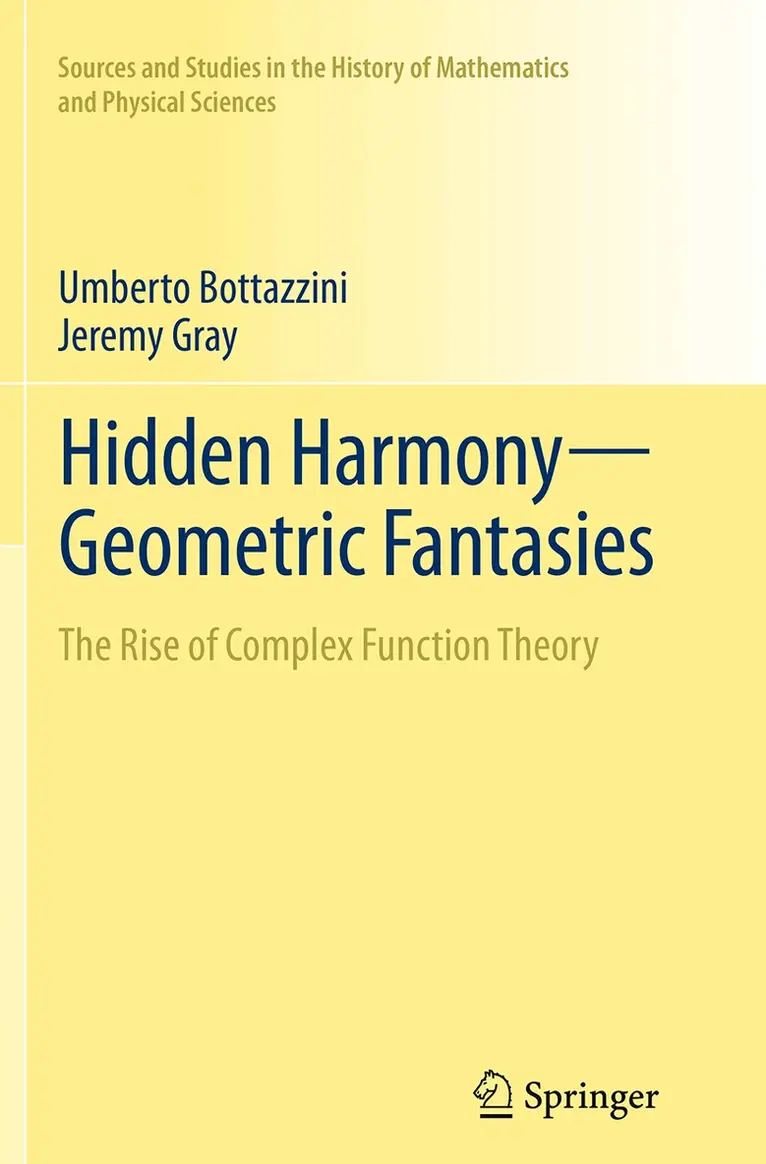
This book is a history of complex function theory from its origins to 1914, when the essential features of the modern theory were in place. It is the first history of mathematics devoted to complex function theory, and it draws on a wide range of published and unpublished sources. In addition to an extensive and detailed coverage of the three founders of the subject – Cauchy, Riemann, and Weierstrass – it looks at the contributions of authors from d’Alembert to Hilbert, and Laplace to Weyl.
Particular chapters examine the rise and importance of elliptic function theory, differential equations in the complex domain, geometric function theory, and the early years of complex function theory in several variables. Unique emphasis has been devoted to the creation of a textbook tradition in complex analysis by considering some seventy textbooks in nine different languages. The book is not a mere sequence of disembodied results and theories, but offers a comprehensive picture of the broad cultural and social context in which the main actors lived and worked by paying attention to the rise of mathematical schools and of contrasting national traditions.
The book is unrivaled for its breadth and depth, both in the core theory and its implications for other fields of mathematics. It documents the motivations for the early ideas and their gradual refinement into a rigorous theory.
1 917 kr
Skickas inom 7-10 vardagar
1 067 kr
Skickas inom 7-10 vardagar
2 508 kr
Skickas inom 10-15 vardagar
216 kr
Skickas inom 7-10 vardagar
142 kr
Skickas inom 3-6 vardagar