
Over the last two decades, scientific accounts of religion have received a great deal of scholarly and popular attention both because of their intrinsic interest and because they are widely seen as potentially constituting a threat to the religion they analyse. The Believing Primate aims to describe and discuss these scientific accounts as well as to assess their implications. The volume begins with essays by leading scientists in the field, describing theseaccounts and discussing evidence in their favour. Philosophical and theological reflections on these accounts follow, offered by leading philosophers, theologians, and scientists. This diverse group of scholars address some fascinating underlying questions: Do scientific accounts of religion undermine thejustification of religious belief? Do such accounts show religion to be an accidental by-product of our evolutionary development? And, whilst we seem naturally disposed toward religion, would we fare better or worse without it? Bringing together dissenting perspectives, this provocative collection will serve to freshly illuminate ongoing debate on these perennial questions.
Over the last two decades, scientific accounts of religion have received a great deal of scholarly and popular attention both because of their intrinsic interest and because they are widely seen as potentially as constituting a threat to the religion they analyse. The Believing Primate aims to describe and discuss these scientific accounts as well as to assess their implications. The volume begins with essays by leading scientists in the field, describing these accounts and discussing evidence in their favour. Philosophical and theological reflections on these accounts follow, offered by leading philosophers, theologians, and scientists. This diverse group of scholars address some fascinating underlying questions: Do scientific accounts of religion undermine the justification of religious belief? Do such accounts show religion to be an accidental by-product of our evolutionary development? And, whilst we seem naturally disposed toward religion, would we fare better or worse without it? Bringing together dissenting perspectives, this provocative collection will serve to freshly illuminate ongoing debate on these perennial questions.
Over the last two decades, scientific accounts of religion have received a great deal of scholarly and popular attention both because of their intrinsic interest and because they are widely seen as potentially constituting a threat to the religion they analyse. The Believing Primate aims to describe and discuss these scientific accounts as well as to assess their implications. The volume begins with essays by leading scientists in the field, describing these accounts and discussing evidence in their favour. Philosophical and theological reflections on these accounts follow, offered by leading philosophers, theologians, and scientists. This diverse group of scholars address some fascinating underlying questions: Do scientific accounts of religion undermine the justification of religious belief? Do such accounts show religion to be an accidental by-product of our evolutionary development? And, whilst we seem naturally disposed toward religion, would we fare better or worse without it? Bringing together dissenting perspectives, this provocative collection will serve to freshly illuminate ongoing debate on these perennial questions.
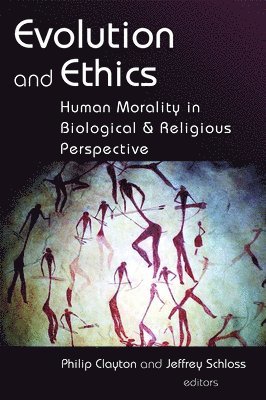
Christians frequently resist evolutionary theory, believing it to be incompatible with the core values of their tradition. But what exactly are the tensions between evolution and religious faith in the area of human morality? Evolution and Ethics examines the burning questions of human morality from the standpoint of Christian thought and contemporary biology, asking where the two perspectives diverge and where they may complement one another.Representing a significant dialogue between world-class scientists, philosophers, and theologians, this volume explores the central features of biological and religious accounts of human morality, introducing the leading theories and locating the key points of contention. Central to these discussions are the questions of whether human actions are ever genuinely selfless, whether there is something in the moral life that transcends biological function, and whether one can sensibly speak of an overall purpose to the course of evolution.Certain to engage scholars, students, and general readers alike, Evolution and Ethics offers a balanced, levelheaded, constructive approach to an often divisive debate.Contributors: "Larry ArnhartChristopher BoehmCraig A. BoydRobert BoydMichael J. ChapmanPhilip ClaytonLoren HaarsmaJohn HareS. Mark HeimDavid C. LahtiThomas Jay OordGregory R. PetersonJoseph PoulshockPeter J. RichersonPhilip A. RolnickHolmes Rolston IIIMichael RuseJeffrey SchlossRené van Woudenberg"
Poder descifrar el origen de la religión en la naturaleza humana y su fundamento en la razón es uno de los temas antropológicos más interesantes y polémicos de la modernidad. Sin embargo, 250 años después de Hume y 150 años después de Darwin, este crucial y fascinante debate entre la religión y las ciencias naturales sigue siendo un tema poco tratado en la vida cívica e intelectual.El primate creyente lanza una serie de cuestiones que invitan a la discusión y reflexión sobre este tema. El libro comienza con una introducción que repasa el panorama teórico y comenta los puntos más importantes de cada una de las áreas religiosas y científicas, y continúa con una serie de capítulos que describen y defienden varias aproximaciones para explicar la religión desde una perspectiva evolucionista. Finalmente, algunas secciones —las cuales incluyen contribuciones de filósofos, teólogos y científicos del comportamiento— lidian con las implicaciones de las teorías actuales.Desde una perspectiva claramente interdisciplinar, el lector se verá estimulado por las cuestiones que aquí se plantean y que surgen después de más de un siglo de debate, en los que se ha pasado de buscar las interpretaciones religiosas de la evolución a plantear, dando un vuelco al tema, las interpretaciones evolucionistas de la religión.