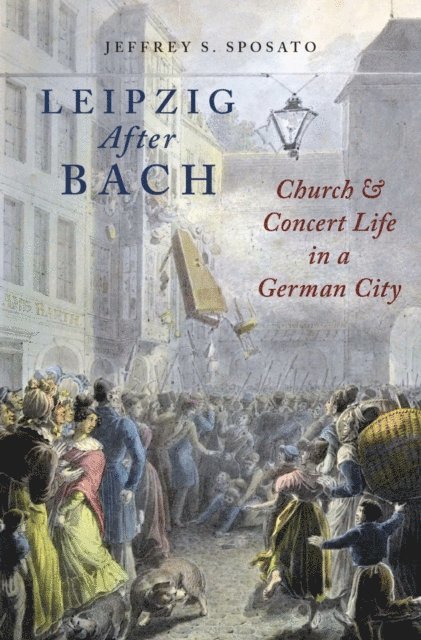
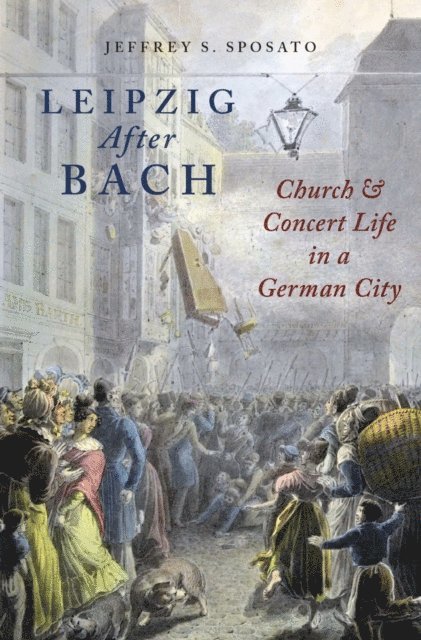
Leipzig, Germany, is renowned as the city where Johann Sebastian Bach worked as a church musician until his death in 1750, and where Felix Mendelssohn Bartholdy directed the famed Gewandhaus orchestra until his own death in 1847. But the century in between these events was critically important as well. During this period, Leipzig's church music enterprise was convulsed by repeated external threats-a growing middle class that viewed music as an object of public consumption, religious and political tumult, and the chaos of the Seven Years and Napoleonic wars. Jeffrey S. Sposato's Leipzig After Bach examines how these forces changed church and concert life in Leipzig. Whereas most European cities saw their public concerts grow out of secular institutions such as a royal court or an opera theater, neither of these existed when Leipzig's first subscription concert series, the Grosse Concert, was started in 1743. Instead, the city had a thriving Lutheran church-music enterprise that had been brought to its zenith by Bach. Paid subscription concerts therefore found their roots in Leipzig's church music tradition, with important and unique results. These included a revolving door between the Thomaskantor position and the Gewandhaus directorship, as well as public concerts with a distinctly sacred flavor. Late in the century, as church attendance faltered and demand for subscription concerts rose, the Gewandhaus dominated the musical life of Leipzig, influencing church music programming in turn. Examining liturgical documents, orchestral programs, and dozens of unpublished works of church and concert music, Leipzig After Bach sheds new light on a century that redefined the relationship between sacred and secular musical institutions.
Leipzig, Germany, is renowned as the city where Johann Sebastian Bach worked as a church musician until his death in 1750, and where Felix Mendelssohn Bartholdy directed the famed Gewandhaus orchestra until his own death in 1847. But the century in between these events was critically important as well. During this period, Leipzig''s church music enterprise was convulsed by repeated external threats-a growing middle class that viewed music as an object of public consumption, religious and political tumult, and the chaos of the Seven Years and Napoleonic wars. Jeffrey S. Sposato''s Leipzig After Bach examines how these forces changed church and concert life in Leipzig. Whereas most European cities saw their public concerts grow out of secular institutions such as a royal court or an opera theater, neither of these existed when Leipzig''s first subscription concert series, the Grosse Concert, was started in 1743. Instead, the city had a thriving Lutheran church-music enterprise that had been brought to its zenith by Bach. Paid subscription concerts therefore found their roots in Leipzig''s church music tradition, with important and unique results. These included a revolving door between the Thomaskantor position and the Gewandhaus directorship, as well as public concerts with a distinctly sacred flavor. Late in the century, as church attendance faltered and demand for subscription concerts rose, the Gewandhaus dominated the musical life of Leipzig, influencing church music programming in turn. Examining liturgical documents, orchestral programs, and dozens of unpublished works of church and concert music, Leipzig After Bach sheds new light on a century that redefined the relationship between sacred and secular musical institutions.
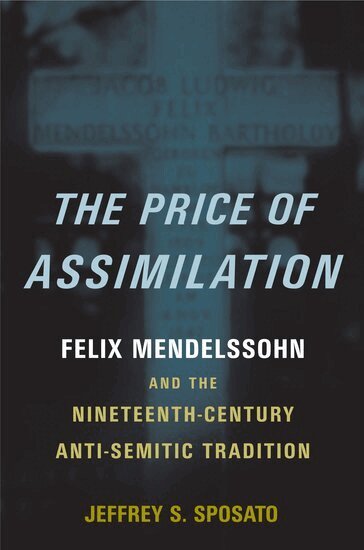
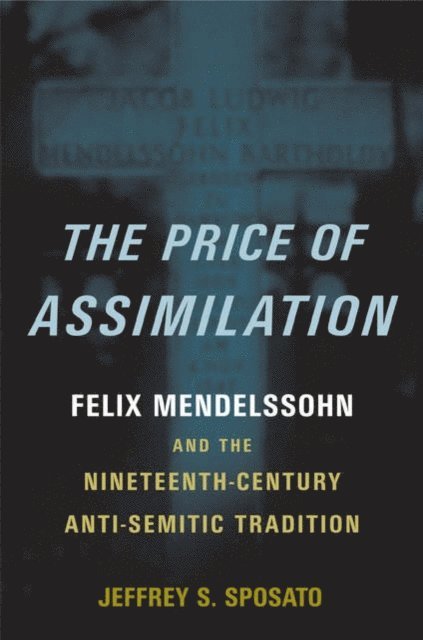
Most scholars since World War Two have assumed that composer Felix Mendelssohn Bartholdy (1809-1847) maintained a strong attachment to Judaism throughout his lifetime. As these commentators have rightly noted, Mendelssohn was born Jewish and not converted to Protestantism until age seven, his grandfather was the famous Jewish reformer and philosopher Moses Mendelssohn, and his music was banned by the Nazis, who clearly viewed him as a Jew. Such facts tell only part of the story, however. Through a mix of cultural analysis, biographical study, and a close examination of the libretto drafts of Mendelssohn's sacred works, The Price of Assimilation provides dramatic new answers to the so-called "Mendelssohn Jewish question." Sposato demonstrates how Mendelssohn's father, Abraham, worked to distance the family from its Jewish past, and how Mendelssohn's reputation as a composer of Christian sacred music was threatened by the reverence with which German Jews viewed his family name. In order to prove the sincerity of his Christian faith to both his father and his audiences, Mendelssohn aligned his early sacred works with a nineteenth-century anti-Semitic musical tradition, and did so more fervently than even his Christian collaborators required. With the death of Mendelssohn's father and the near simultaneous establishment of the composer's career in Leipzig in 1835, however, Mendelssohn's fear of his background began to dissipate, and he began to explore ways in which he could prove the sincerity of his faith without having to publicly disparage his Jewish heritage.
Most scholars since World War Two have assumed that composer Felix Mendelssohn Bartholdy (1809-1847) maintained a strong attachment to Judaism throughout his lifetime. As these commentators have rightly noted, Mendelssohn was born Jewish and did not convert to Protestantism until age seven, his grandfather was the famous Jewish reformer and philosopher Moses Mendelssohn, and his music was banned by the Nazis, who clearly viewed him as a Jew.Such facts tell only part of the story, however. Through a mix of cultural analysis, biographical study, and a close examination of the libretto drafts of Mendelssohn''s sacred works, The Price of Assimilation provides dramatic new answers to the so-called "Mendelssohn Jewish question."Sposato demonstrates how Mendelssohn''s father, Abraham, worked to distance the family from its Jewish past, and how Mendelssohn''s reputation as a composer of Christian sacred music was threatened by the reverence with which German Jews viewed his family name. In order to prove the sincerity of his Christian faith to both his father and his audiences, Mendelssohn aligned his early sacred works with a nineteenth-century anti-Semitic musical tradition, and did so more fervently than even his Christian collaborators required. With the death of Mendelssohn''s father and the near simultaneous establishment of the composer''s career in Leipzig in 1835, however, Mendelssohn''s fear of his background began to dissipate, and he began to explore ways in which he could prove the sincerity of his faith without having to publicly disparage his Jewish heritage.