729 kr
Skickas inom 10-15 vardagar
729 kr
Skickas inom 10-15 vardagar
1 151 kr
Skickas inom 10-15 vardagar
379 kr
Skickas inom 10-15 vardagar
405 kr
Läs direkt efter köp
403 kr
Läs direkt efter köp
826 kr
Läs direkt efter köp
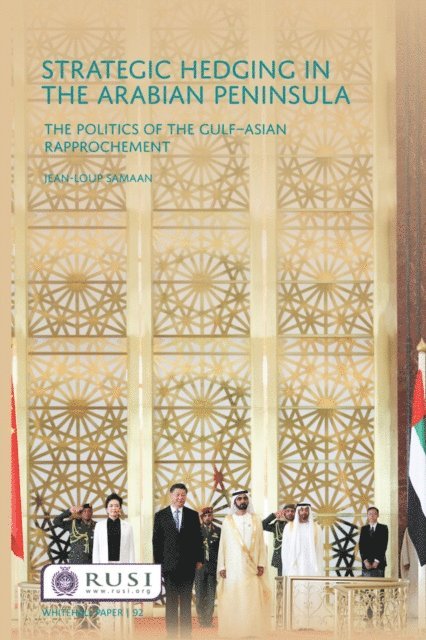
Strategic Hedging in the Arab Peninsula: The Politics of the Gulf-Asian Rapprochement offers a new perspective on the geopolitics of Gulf-Asian relations. Jean-Loup Samaan explores the dynamics underpinning the evolution of strategic partnerships between the Gulf States and Asian partners. He looks at how Gulf countries have pursued a diversification strategy in response to the risk of a potential retreat from the region on the part of traditional partners such as the US, and argues that, rather than being the result of a deliberate common policy on the part of the Gulf States, this trend derives from unilateral choices by Gulf leaders, best explained by the concept of ‘strategic hedging’.
2 489 kr
Skickas inom 10-15 vardagar
23 kr
Läs direkt efter köp
312 kr
Skickas inom 7-10 vardagar
927 kr
Skickas inom 10-15 vardagar
343 kr
Läs direkt efter köp
343 kr
Läs direkt efter köp
762 kr
Läs direkt efter köp
For over 60 years, Israel’s foreign policy establishment has looked at its regional policy through the lens of a geopolitical concept named "the periphery doctrine." The idea posited that due to the fundamental hostility of neighboring Arab countries, Israel ought to counterbalance this threat by engaging with the "periphery" of the Arab world through clandestine diplomacy.
Based on original research in the Israeli diplomatic archives and interviews with key past and present decision-makers, this book shows that this concept of a periphery was, and remains, a core driver of Israel’s foreign policy. The periphery was borne out of the debates among Zionist circles concerning the geopolitics of the nascent Israeli State. The evidence from Israel’s contemporary policies shows that these principles survived the historical relationships with some countries (Iran, Turkey, Ethiopia) and were emulated in other cases: Azerbaijan, Greece, South Sudan, and even to a certain extent in the attempted exchanges by Israel with Gulf Arab kingdoms. The book enables readers to understand Israel’s pessimistic – or realist, in the traditional sense – philosophy when it comes to the conduct of foreign policy. The history of the periphery doctrine sheds light on fundamental issues, such as Israel’s role in the regional security system, its overreliance on military and intelligence cooperation as tools of diplomacy, and finally its enduring perception of inextricable isolation.
Through a detailed appraisal of Israel’s periphery doctrine from its birth in the fifties until its contemporary renaissance, this book offers a new perspective on Israel’s foreign policy, and will appeal to students and scholars of Middle East Politics and History, and International Relations.

757 kr
Läs direkt efter köp
For over 60 years, Israel’s foreign policy establishment has looked at its regional policy through the lens of a geopolitical concept named "the periphery doctrine." The idea posited that due to the fundamental hostility of neighboring Arab countries, Israel ought to counterbalance this threat by engaging with the "periphery" of the Arab world through clandestine diplomacy.
Based on original research in the Israeli diplomatic archives and interviews with key past and present decision-makers, this book shows that this concept of a periphery was, and remains, a core driver of Israel’s foreign policy. The periphery was borne out of the debates among Zionist circles concerning the geopolitics of the nascent Israeli State. The evidence from Israel’s contemporary policies shows that these principles survived the historical relationships with some countries (Iran, Turkey, Ethiopia) and were emulated in other cases: Azerbaijan, Greece, South Sudan, and even to a certain extent in the attempted exchanges by Israel with Gulf Arab kingdoms. The book enables readers to understand Israel’s pessimistic – or realist, in the traditional sense – philosophy when it comes to the conduct of foreign policy. The history of the periphery doctrine sheds light on fundamental issues, such as Israel’s role in the regional security system, its overreliance on military and intelligence cooperation as tools of diplomacy, and finally its enduring perception of inextricable isolation.
Through a detailed appraisal of Israel’s periphery doctrine from its birth in the fifties until its contemporary renaissance, this book offers a new perspective on Israel’s foreign policy, and will appeal to students and scholars of Middle East Politics and History, and International Relations.

1 425 kr
Skickas inom 10-15 vardagar
1 772 kr
Läs direkt efter köp
1 425 kr
Skickas inom 10-15 vardagar
206 kr
Skickas inom 5-8 vardagar
363 kr
Tillfälligt slut
164 kr
Tillfälligt slut
171 kr
Tillfälligt slut
203 kr
Tillfälligt slut