1 080 kr
Läs direkt efter köp
1 080 kr
Läs direkt efter köp
797 kr
Skickas inom 11-20 vardagar
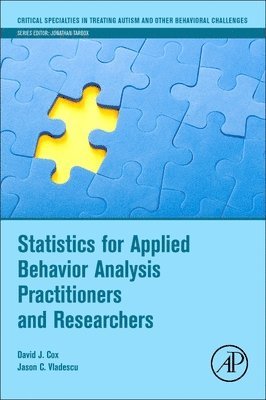
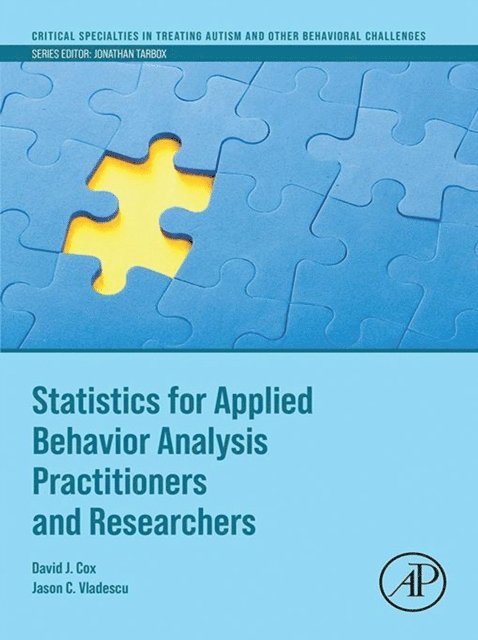
Professionals who provide services based on the principles of behavior are required to use evidence-based practices and to make data-based decisions regarding assessments and interventions. Doing so requires statistical literacy: competence in collecting, analyzing, interpreting and presenting aggregate quantitative data within or between subjects. Without statistical literacy, behavior analysts cannot take advantage of, or intelligently discuss, ongoing scientific developments around interventions for autism spectrum disorders (ASD). Statistics for Applied Behavior Analysis Practitioners and Researchers provides practical and useful content for individuals who work directly with, or supervise those who work directly with, individuals with ASD. This book introduces core concepts and principles of modern statistical analysis that behavior analysts will need to deliver and consume the larger scientific literature. The organization of the book follows the common sequence of decisions for collecting, describing and analyzing data associated with behavior analytic service delivery and research. By the end of the book, readers should be able to understand and accurately incorporate statistics in their assessment and intervention effects using statistics.
Describes the logic behind the many variations to statistically describe human behaviorExplains the conditions under which variations in statistical description are most appropriateHighlights common methods for quantitively determine the effectiveness of an interventionDiscusses the unique challenges of the time-series data and reviews current solutionsCovers current standards in writing and presenting statistical effects of interventionsReviews the application of statistical description for both single-case and between-group experimental designs1 654 kr
Skickas inom 11-20 vardagar
2 092 kr
Läs direkt efter köp
2 107 kr
Läs direkt efter köp
1 654 kr
Skickas inom 11-20 vardagar
The number of practitioners working in applied behavior analysis (ABA) has rapidly increased over the last several decades. Much of this is likely attributable to the success of applying ABA to support the needs of individuals with autism spectrum disorder/autistic individuals. However, as many researchers and practitioners repeatedly demonstrate, the power and potential of ABA can be extended to nearly any area of social significance. Applied Behavior Analysis for Clinical, Educational, and Training Applications provides 12 chapters written by current experts who apply ABA to various clinical, educational, and training contexts and spanning a variety of populations. This volume covers the application of ABA to autism and other developmental disabilities, pediatric feeding, severe problem behavior, behavioral pediatrics and pediatric psychology, clinical behavior analysis, education, child maltreatment, juvenile correction services, brain injury rehabilitation, behavioral gerontology, substance use, and applied animal behavior. In each chapter, the authors describe how basic behavioral principles and processes are relevant to the discussed topic, what applied work in that area involves, and-most importantly- the skill set and training needed to work in that area successfully. This volume is particularly useful for behavior analysts who seek to apply their behavior analytic skillset within various clinical or educational contexts.
Reviews how the basic behavior processes are relevant to clinical, educational, and training contextsDemonstrates how ABA can contribute to helping a variety of populations spanning developmental disabilities, brain injury, substance use/misuse, and gerontologyDemonstrates how ABA can successfully improve various social systems spanning pediatrics, education, child maltreatment, juvenile correction, and applied animal behaviorEach chapter includes a detailed outline of the skills, knowledge, and experiences necessary to enter each field, in addition to foundational training in behavior analysis460 kr
Skickas inom 10-15 vardagar
1 772 kr
Skickas inom 10-15 vardagar
585 kr
Läs direkt efter köp
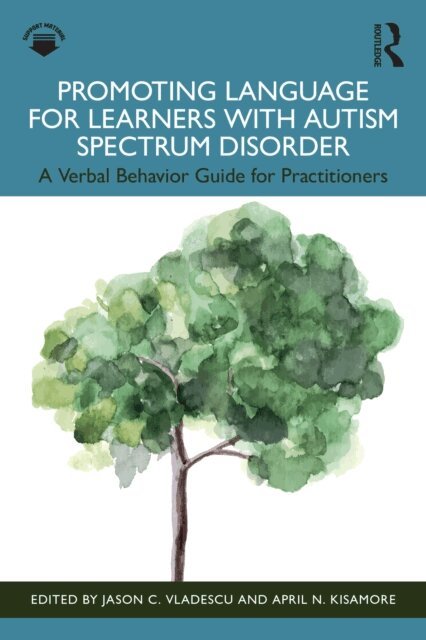
Promoting Language for Learners with Autism Spectrum Disorder: A Verbal Behavior Guide for Practitioners introduces the core principles of verbal behavior and provides practical, evidence-based strategies for teaching language skills to children with autism in applied settings.
The book opens with a section that orients the reader to a functional approach to language, best practices for assessing verbal repertoires, and common models for arranging language-training environments. The second section focuses on teaching critical verbal operants and derived language skills. The final section addresses professional matters relevant to practitioners, including the importance of basic and translational research in verbal behavior, considerations related to diversity, and best practices for interdisciplinary collaboration.
Grounded in the science of behavior analysis and aligned with Skinner’s (1957) analysis of verbal behavior, this book equips professionals with tools to assess language, design effective teaching environments, and build essential repertoires like manding, tacting, and conversation skills. Intended for professionals and students alike, this text is broad enough to support graduate-level instruction and specific enough to serve as a valuable reference for practicing clinicians.