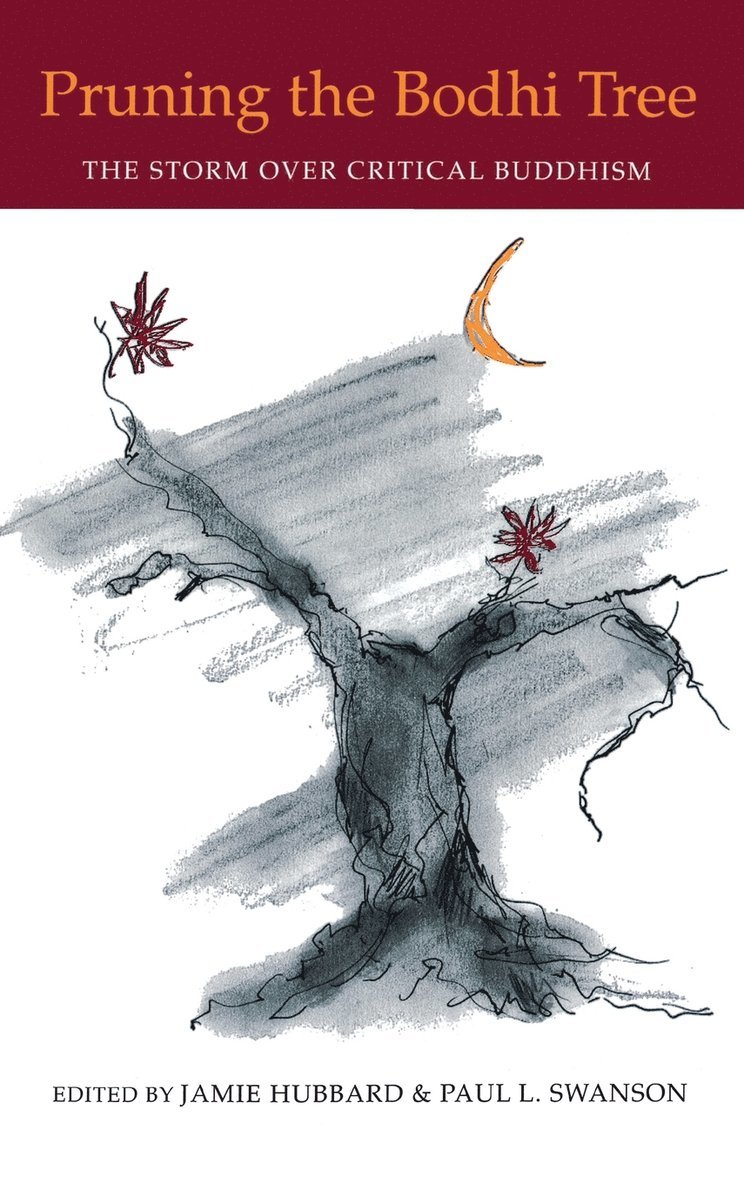
What is Buddhism? According to Hakamaya Noriaki and Matsumoto Shiro, the answer lies in neither Ch’an nor Zen; in neither the Kyoto school of philosophy nor the non-duality taught in the Vimalakirti Sutra. Hakamaya contends that “criticism alone is Buddhism.”This volume introduces and analyzes the ideas of “critical Buddhism” in relation to the targets of its critique and situates those ideas in the context of current discussions of postmodern academic scholarship, the separation of the disinterested scholar and committed religious practitioner, and the place of social activism within the academy.Essays critical of the received traditions of Buddhist thought—many never before translated—are presented and then countered by the work of respected scholars, both Japanese and Western, who take contrary positions.
The San-chieh (Three Levels) was a popular and influential Chinese Buddhist movement during the Sui and T'ang periods, counting powerful statesmen, imperial princes, and even an empress, Empress Wu, among its patrons. In spite, or perhaps because, of its proximity to power, the San-chieh movement ran afoul of the authorities, and its teaching and texts were officially proscribed numerous times over a several-hundred-year history. This study of the San-chieh movement uses manuscripts discovered at Tun-huang to examine the doctrine and institutional practices of this movement in the larger context of Mahayana doctrine and practice. By viewing San-chieh in the context of Mahayana Buddhism, Jamie Hubbard reveals it to be far from heretical and thereby raises important questions about orthodoxy and canon in Buddhism. He shows that many of the hallmark ideas and practices of Chinese Buddhism find an early and unique expression in the San-chieh texts. One such idea, that of the decline of the dharma, was systemized as the astonishing notion of spiritual idiocy as the norm together with the precept breaking monk as the rule (ideas more commonly associated with Japanese Tendai and Pure Land thought).
The Expository Commentary on the Vimalakirti Sutra is a translation of the Yuimagyo-gisho, a three-fascicle commentary on Kumarajiva’s translation of the Vimalakirtinirdesa-sutra. Together with commentaries on the Lotus Sutra and the Srimaladevi-sutra, it is known as one of the “Three Commentaries” (Sangyo-gisho) attributed to Shotoku Taishi. While questions about Shotoku’s authorship still remain, this text has played significant role in the history of Japanese Buddhism. The Vimalakirti-sutra’s dramatic narrative of an awakened merchant prince, long popular in China as a model for the sage-ruler, had obvious appeal to Japanese rulers in the sixth–seventh centuries as well, an era that marks the beginning of the Japanese state. Adopting Buddhism as the state religion, initiating diplomatic relations with Korea and China, and integrating the superior technologies of the continent required great changes in the legitimization of rule and the structure of virtually every aspect of Japanese life. Shotoku and his family have long been seen as central pillars of this “internationalization” of Japan, and the connection between The Commentary and Shotoku Taishi assured its importance and influence to this day.