Inbunden, Engelska, 2010
840 kr
Skickas inom 7-10 vardagar
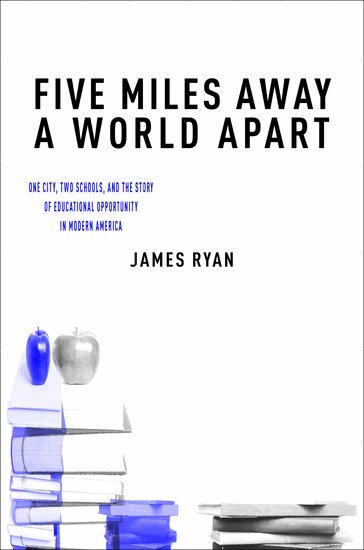
How is it that half a century after Brown v. Board of Education--and in spite of increased funding for urban schools and programs like No Child Left Behind--educational opportunities for blacks and whites in America still remain so unequal? In Five Miles Away, A World Apart, James Ryan provides a sobering answer to this question by tracing the fortunes of two schools in Richmond, Virginia--one suburban, relatively affluent, and mostly white, and the other urban, relatively poor, and mostly black. Ryan shows how court rulings against desegregation in the 1970s laid the groundwork for the massive disparities between urban and suburban public school districts that persist to this day. The Nixon administration, intent on shoring up its base in the "silent majority," allowed suburbs to lock nonresidents out of their school systems. Urban schools, whose student bodies were becoming increasingly poor and black, simply received more funding, a panacea that has proven largely ineffective, while the academic independence (and superiority) of suburban schools was held sacrosanct. Drawing on compelling interviews with students, teachers, and principals, including one who has been a principal at both schools featured in the book, Ryan explains how certain policies--school finance, school choice, and standardized testing--not only fail to bridge the performance gap between students at urban and suburban schools but actually perpetuate segregation across the country. Ryan closes by suggesting innovative reforms that would bring greater diversity into our schools by shifting the emphasis from racial to socioeconomic integration. An incisive critique of exactly how and why our educational policies have gone wrong, Five Miles Away, A World Apart will interest all those who wish to see our educational system heal the divide between rich and poor and live up to our highest democratic ideals.