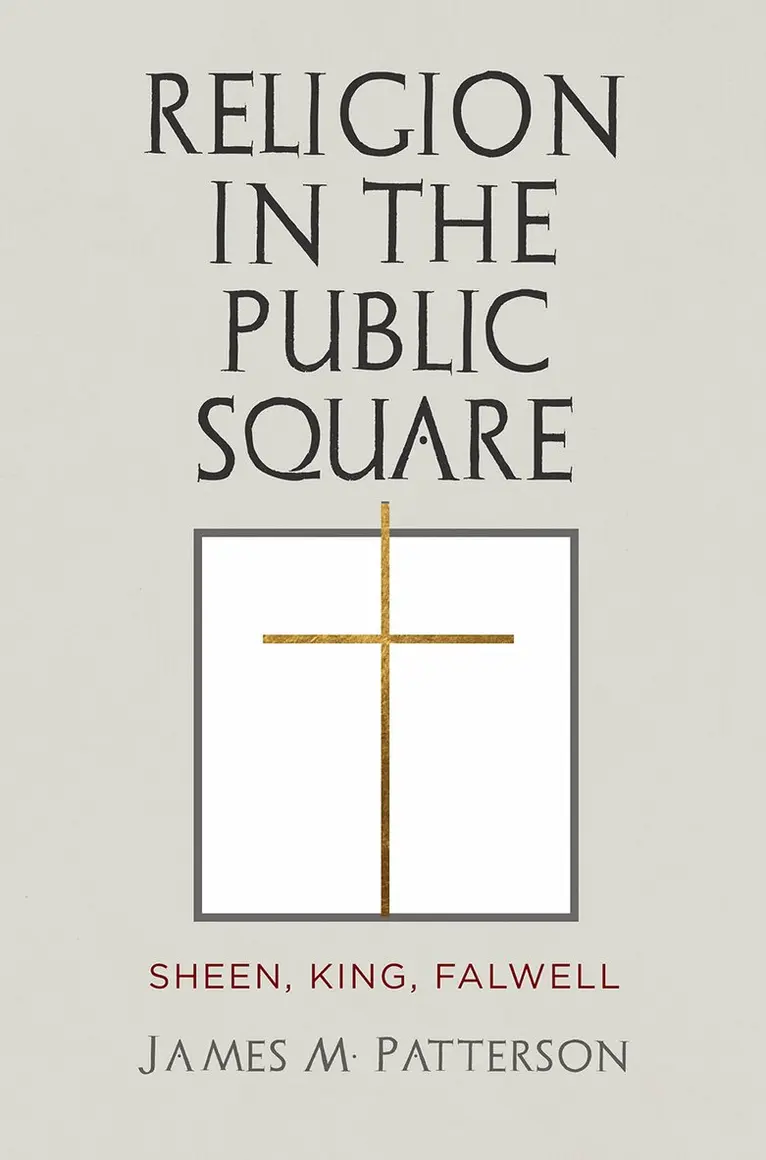
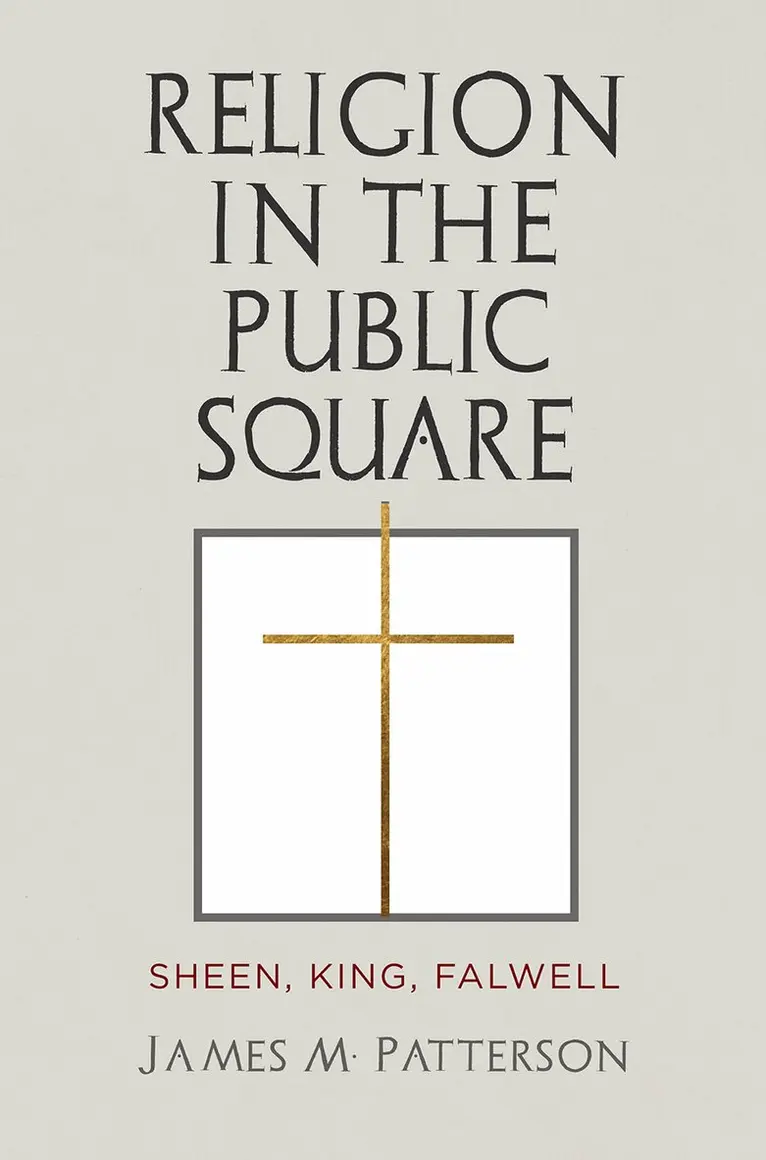
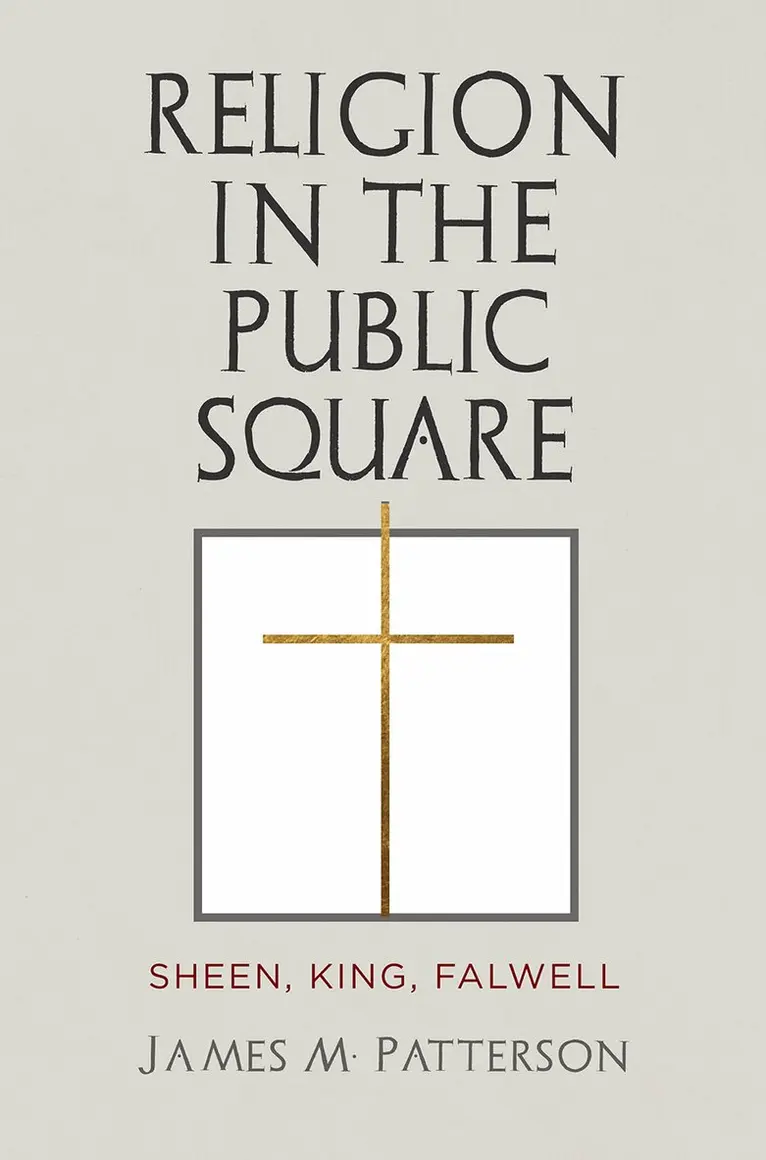
Ven. Fulton J. Sheen, Dr. Martin Luther King Jr., and Rev. Jerry Falwell—religious leaders who popularized theology through media campaigns designed to persuade the publicIn Religion in the Public Square, James M. Patterson considers religious leaders who popularized theology through media campaigns designed to persuade the public. Ven. Fulton J. Sheen, Dr. Martin Luther King Jr., and Rev. Jerry Falwell differed profoundly on issues of theology and politics, but they shared an approach to public ministry that aimed directly at changing how Americans understood the nature and purpose of their country. From the 1930s through the 1950s, Sheen was an early adopter of paperbacks, radio, and television to condemn totalitarian ideologies and to defend American Catholicism against Protestant accusations of divided loyalty. During the 1950s and 1960s, King staged demonstrations and boycotts that drew the mass media to him. The attention provided him the platform to preach Christian love as a political foundation in direct opposition to white supremacy. Falwell started his own church, which he developed into a mass media empire. He then leveraged it during the late 1970s through the 1980s to influence the Republican Party by exhorting his audience to not only ally with religious conservatives around issues of abortion and the traditional family but also to vote accordingly.Sheen, King, and Falwell were so successful in popularizing their theological ideas that they won prestigious awards, had access to presidents, and witnessed the results of their labors. However, Patterson argues that Falwell's efforts broke with the longstanding refusal of religious public figures to participate directly in partisan affairs and thereby catalyzed the process of politicizing religion that undermined the Judeo-Christian consensus that formed the foundation of American politics.
Ven. Fulton J. Sheen, Dr. Martin Luther King Jr., and Rev. Jerry Falwell—religious leaders who popularized theology through media campaigns designed to persuade the publicIn Religion in the Public Square, James M. Patterson considers religious leaders who popularized theology through media campaigns designed to persuade the public. Ven. Fulton J. Sheen, Dr. Martin Luther King Jr., and Rev. Jerry Falwell differed profoundly on issues of theology and politics, but they shared an approach to public ministry that aimed directly at changing how Americans understood the nature and purpose of their country. From the 1930s through the 1950s, Sheen was an early adopter of paperbacks, radio, and television to condemn totalitarian ideologies and to defend American Catholicism against Protestant accusations of divided loyalty. During the 1950s and 1960s, King staged demonstrations and boycotts that drew the mass media to him. The attention provided him the platform to preach Christian love as a political foundation in direct opposition to white supremacy. Falwell started his own church, which he developed into a mass media empire. He then leveraged it during the late 1970s through the 1980s to influence the Republican Party by exhorting his audience to not only ally with religious conservatives around issues of abortion and the traditional family but also to vote accordingly.Sheen, King, and Falwell were so successful in popularizing their theological ideas that they won prestigious awards, had access to presidents, and witnessed the results of their labors. However, Patterson argues that Falwell's efforts broke with the longstanding refusal of religious public figures to participate directly in partisan affairs and thereby catalyzed the process of politicizing religion that undermined the Judeo-Christian consensus that formed the foundation of American politics.
Ven. Fulton J. Sheen, Dr. Martin Luther King Jr., and Rev. Jerry Falwell—religious leaders who popularized theology through media campaigns designed to persuade the publicIn Religion in the Public Square, James M. Patterson considers religious leaders who popularized theology through media campaigns designed to persuade the public. Ven. Fulton J. Sheen, Dr. Martin Luther King Jr., and Rev. Jerry Falwell differed profoundly on issues of theology and politics, but they shared an approach to public ministry that aimed directly at changing how Americans understood the nature and purpose of their country. From the 1930s through the 1950s, Sheen was an early adopter of paperbacks, radio, and television to condemn totalitarian ideologies and to defend American Catholicism against Protestant accusations of divided loyalty. During the 1950s and 1960s, King staged demonstrations and boycotts that drew the mass media to him. The attention provided him the platform to preach Christian love as a political foundation in direct opposition to white supremacy. Falwell started his own church, which he developed into a mass media empire. He then leveraged it during the late 1970s through the 1980s to influence the Republican Party by exhorting his audience to not only ally with religious conservatives around issues of abortion and the traditional family but also to vote accordingly.Sheen, King, and Falwell were so successful in popularizing their theological ideas that they won prestigious awards, had access to presidents, and witnessed the results of their labors. However, Patterson argues that Falwell's efforts broke with the longstanding refusal of religious public figures to participate directly in partisan affairs and thereby catalyzed the process of politicizing religion that undermined the Judeo-Christian consensus that formed the foundation of American politics.
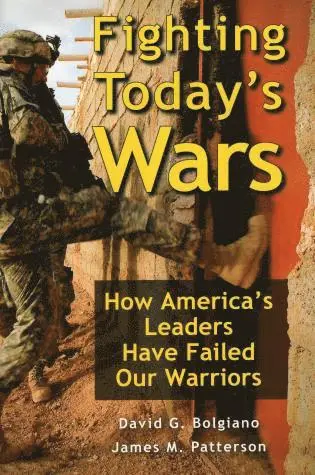
This insightful book from two combat experts provides an important critical commentary of the U.S. military’s strategy including nation-building efforts and counterinsurgency operations.Authors Bolgiano and Patterson cover the background of the law of war and analyse how these laws have and should be applied. They argue that misinterpretations of law and policy misdirect the military from the objective of achieving victory.Fighting Today’s War identifies correctable problems in how America decides to go to war and prepares for battle whilst giving positive solutions for restoring the proper role of America’s Armed Force. This book is a fascinating exploration of the use and misuse of the military in modern warfare.About the AuthorA former law enforcement officer and paratrooper, David Bolgiano currently serves as a judge advocate and instructor at the U.S. Army War College. He has served multiple combat tours in Iraq and Afghanistan with the 82nd Airborne Division and Special Operations Forces. A certified tactical pistol instructor, he has taught Judgement-based Engagement Training (JET) Seminars to thousands of deploying forces. Colonel Jim Patterson has over 32 years of experience as a Green Beret and legal advisor. His worldwide deployments have shaped his particularly keen view of the tactical environment. As a Special Forces Weapons Specialist, Combat Diver and Master Parachutist, Jim has served in multiple combat rotations and provided direct operational law support of special mission units.