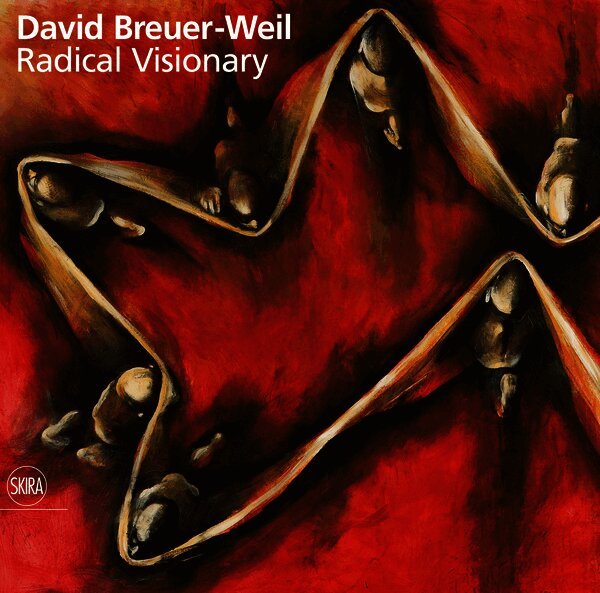
The first complete monograph devoted to the work of one of Britain’s most powerful and original contemporary artists. David Breuer-Weil studied at the Central Saint Martins School of Art and Clare College, Cambridge. From the late 1980’s until the late 1990’s he worked as a specialist in Impressionist, Modern and Contemporary art at Sotheby’s, London and as a curator for de Pury and Luxembourg Art in Geneva. He subsequently embarked on the epic series of apocalyptic works now known as the Project, over three hundred monumental paintings, a cycle that is arguably one of the most profound and consistent achievements in recent British painting. His determination to produce an art that deals with momentous and challenging themes is a reaction to a world he knows well, in which “art often seems to be reduced to a commodity”: “In my own work I consciously avoided the high polish, commercial, slick look of much contemporary art. I wanted to produce colossal, un-commercialized images of existential doubt”. This lavishly illustrated monograph presents a collection of paintings, drawings, sculptures, installations and studio shots.
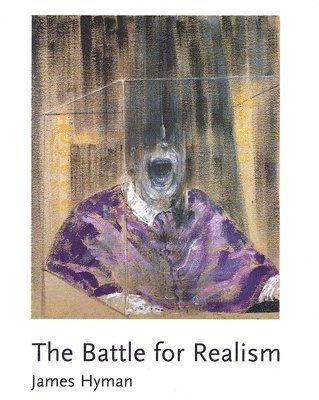
In this book art historian James Hyman takes a fresh look at the crucial years after the Second World War, when attempts were made to revive European culture and debates about the future of art were fierce. The author proposes that realism in Europe during the early Cold War years occupied a radical vanguard position and stood in opposition to the competing claims made for American abstract expressionism. He examines two distinct visions of realism—social realism and Modernist realism—and explores their political implications and ideological significance. Hyman argues that this Battle for Realism shaped and internationalized British art, and he addresses a range of artists from Modernist realists such as Auerbach, Bacon, Freud, Kossoff, Moore, and Sutherland to social realists Hogarth, de Francia, and the “kitchen-sink painters.” He also illuminates the impact of foreign and émigré artists on British culture, addressing artists such as Giacometti, Guttuso, and Picasso, and examining the claims made for London as an art center to rival the Ecole de Paris and the New York School. Hyman draws on contemporary critical writing to give fresh insights into the art debates of the period and gives prominence to the central roles of the critics John Berger and David Sylvester.Published for the Paul Mellon Centre for Studies in British Art