370 kr
Läs direkt efter köp
370 kr
Läs direkt efter köp
367 kr
Läs direkt efter köp
1 744 kr
Läs direkt efter köp
634 kr
Skickas inom 7-10 vardagar
2 781 kr
Skickas inom 7-10 vardagar
1 242 kr
Skickas inom 7-10 vardagar
John Wiley & Sons Inc
1 389 kr
Skickas inom 7-10 vardagar
682 kr
Skickas inom 7-10 vardagar
1 382 kr
Skickas inom 7-10 vardagar
760 kr
Skickas inom 7-10 vardagar
1 103 kr
Skickas inom 7-10 vardagar
1 207 kr
Skickas inom 10-15 vardagar
227 kr
Skickas inom 7-10 vardagar
562 kr
Skickas inom 3-6 vardagar
1 017 kr
Läs direkt efter köp
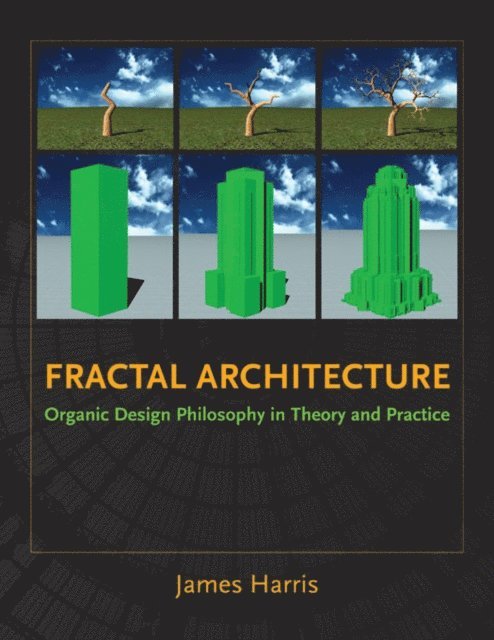
Throughout history, nature has served as an inspiration for architecture and designers have tried to incorporate the harmonies and patterns of nature into architectural form. Alberti, Charles Renee Macintosh, Frank Lloyd Wright, and Le Courbusier are just a few of the well- known figures who have taken this approach and written on this theme. With the development of fractal geometry--the study of intricate and interesting self- similar mathematical patterns--in the last part of the twentieth century, the quest to replicate nature’s creative code took a stunning new turn. Using computers, it is now possible to model and create the organic, self-similar forms of nature in a way never previously realized.
In Fractal Architecture, architect James Harris presents a definitive, lavishly illustrated guide that explains both the “how” and “why” of incorporating fractal geometry into architectural design.
219 kr
Skickas
James Beattie (1735-1803) was appointed professor of moral philosophy and logic at Marischal College, Aberdeen, Scotland at the age of twenty-five. Though more fond of poetry than philosophy, he became part of the Scottish 'Common Sense' school of philosophy that included Thomas Reid and George Campbell. In 1770 Beattie published the work for which he is best known, An Essay on Truth, an abrasive attack on 'modern scepticism' in general, and on David Hume in particular, subsequently and despite Beattie's attack, Scotland's most famous philosopher. The Essay was a great success, earning its author an honorary degree from Oxford and an audience with George III. Samuel Johnson declared in 1772 that 'We all love Beattie'. Hume, on the other hand, described the Essay as 'a horrible large lie in octavo', and dismissed its author as a 'bigotted silly Fellow'. Although Beattie is no match for Hume as a philosopher, the success of the Essay suggests that, unlike Hume, Beattie voices the characteristic assumptions, and anxieties, of his age. The first part of this selection—the first ever made from Beattie's prose writings—includes several key chapters from the Essay on Truth, along with extracts from all of Beattie's other works on moral philosophy. The topics treated include memory, the existence of God, the nature of virtue, and slavery. The second part of the selection is devoted to Beattie's contributions to literary criticism and aesthetics. Beattie's studies of poetry, music, taste, and the sublime are vital to the understanding of the literary culture out of which developed the early Romanticism of Wordsworth and Coleridge.
453 kr
Skickas inom 7-10 vardagar
342 kr
Skickas inom 7-10 vardagar
460 kr
Skickas inom 7-10 vardagar
499 kr
Skickas inom 7-10 vardagar
417 kr
Skickas inom 7-10 vardagar
352 kr
Skickas inom 7-10 vardagar
377 kr
Skickas inom 7-10 vardagar
299 kr
Skickas inom 7-10 vardagar
558 kr
Skickas inom 7-10 vardagar
440 kr
Skickas inom 7-10 vardagar
Methods and Protocols
2 174 kr
Skickas inom 10-15 vardagar
2 925 kr
Läs direkt efter köp
80 kr
Läs direkt efter köp
1 307 kr
Läs direkt efter köp