2 610 kr
Skickas inom 10-15 vardagar
2 610 kr
Skickas inom 10-15 vardagar
854 kr
Skickas inom 10-15 vardagar
999 kr
Läs direkt efter köp
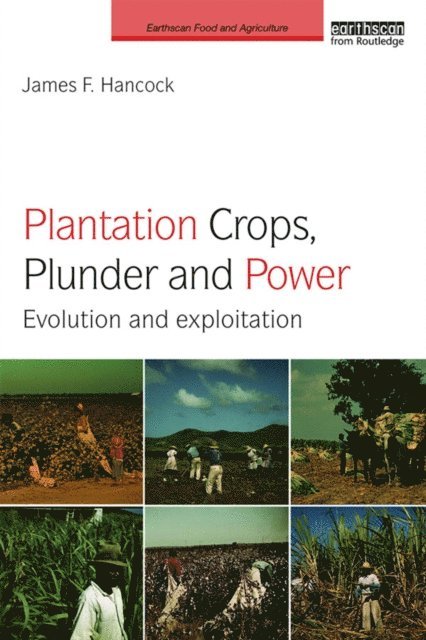
Over the last five centuries, plantation crops have represented the best and worst of industrialized agriculture – "best" through their agronomic productivity and global commercial success, and "worst" as examples of exploitative colonialism, conflict and ill-treatment of workers. This book traces the social, political and evolutionary history of seven major plantation crops – sugarcane, banana, cotton, tea, tobacco, coffee and rubber.
It describes how all of these were domesticated in antiquity and grown by small landowners for thousands of years before European traders and colonists sought to make a profit out of them. The author relates how their development and spread were closely associated with government expansionist policies. They stimulated the exploration of far off lands, were the focus of major conflicts and led to the enslavement of both native and displaced peoples.
From the southern United States, Latin America and the Caribbean, to Asia and Africa, plantation crops turned social structures upside down leading to revolution and government change. The economies of whole countries became tied to the profits of these plantations, leading to internal power struggles to control the burgeoning wealth. Open warfare routinely broke out between the more powerful countries and factions for trade dominance. This book shows that from the early 1500s to today, at least one of the plantation crops was always at the center of world politics, and that this still continues today, for example with the development of oil palm plantations in Southeast Asia. Written in an accessible style, it is fascinating supplementary reading for students of agricultural, environmental and colonial history.
970 kr
Läs direkt efter köp
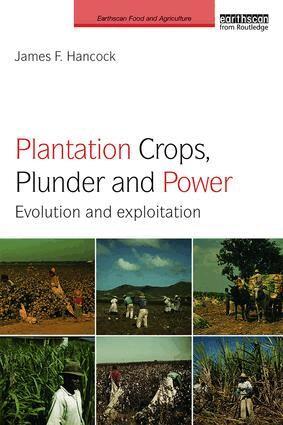
Over the last five centuries, plantation crops have represented the best and worst of industrialized agriculture – "best" through their agronomic productivity and global commercial success, and "worst" as examples of exploitative colonialism, conflict and ill-treatment of workers. This book traces the social, political and evolutionary history of seven major plantation crops – sugarcane, banana, cotton, tea, tobacco, coffee and rubber.
It describes how all of these were domesticated in antiquity and grown by small landowners for thousands of years before European traders and colonists sought to make a profit out of them. The author relates how their development and spread were closely associated with government expansionist policies. They stimulated the exploration of far off lands, were the focus of major conflicts and led to the enslavement of both native and displaced peoples.
From the southern United States, Latin America and the Caribbean, to Asia and Africa, plantation crops turned social structures upside down leading to revolution and government change. The economies of whole countries became tied to the profits of these plantations, leading to internal power struggles to control the burgeoning wealth. Open warfare routinely broke out between the more powerful countries and factions for trade dominance. This book shows that from the early 1500s to today, at least one of the plantation crops was always at the center of world politics, and that this still continues today, for example with the development of oil palm plantations in Southeast Asia. Written in an accessible style, it is fascinating supplementary reading for students of agricultural, environmental and colonial history.
502 kr
Skickas inom 7-10 vardagar
The history of how North Atlantic America was revealed to the Europeans in the 16th and early 17th centuries is largely forgotten. This book seeks to remedy that, describing the English, French and Dutch expeditions to North America before the Pilgrims arrived at Plymouth Rock. Drawing extensively on firsthand accounts of explorers, this history spans the precolonial period from John Cabot's discovery of Newfoundland in 1497 to the founding of Jamestown in 1607.
The French and English expeditions into the North Atlantic searching for cod, gold, and a route to China came first, followed by Jaques Cartier's and other French fur trading activities in the St. Lawrence River Valley, and then a series of French and English expeditions along the New England coast in pursuit of cod and furs. The pre-colonial period would end after Henry Hudson's exploits in New York Harbor and Hudson Bay. Central to the story of European discovery was their contacts with the dense populations of Indigenous people and the effect their presence had on tribal cultures. What generally began as friendly interactions almost always turned ugly as the Europeans pushed for land, and their diseases raced through the native people. This exhaustively researched book presents many such events from an understudied period of European exploration.
502 kr
Skickas inom 7-10 vardagar
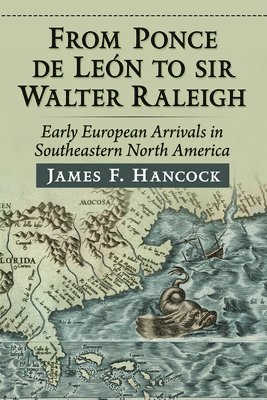
Few people know the events that occurred in the North American Southeast before the Pilgrims' arrival at Plymouth Rock. By 1620, the coast of Atlantic America had been extensively explored and charted by dozens of Europeans and several colonies had already been attempted. This history covers all the Spanish expeditions into Southern Atlantic America and the Gulf Coast, and the early French and English infringements into what the Spanish would ruthlessly defend as their territory.
The unveiling of North America was often violent, as the Indigenous people valiantly fought to protect their cultures against the onslaught of Europeans. Interactions between the people of the two worlds generally started out friendly, but soon deteriorated as the Europeans took food and land from the local populations by force. European diseases would further decimate Indigenous populations, emptying their land for colonial farms and weakening their ability to resist the growing onslaught. Drawing extensively on eyewitness reports from the explorers themselves, this book reveals the full, complex story of the European discovery and settlement of Florida and the coastal Southeast.
1 644 kr
Skickas inom 10-15 vardagar
2 096 kr
Läs direkt efter köp
The year 2022 is the 50th anniversary of Alfred Crosby’s celebrated book - The Columbian Exchange: Biological and Cultural Consequences of 1492. In the book, Crosby was the first to discuss the impact that the Spanish and Portuguese colonial period had on world agriculture and human culture. How the crops of the world became homogenized, and how an indigenous culture was destroyed by disease after Columbus landed. His landmark study broke new ground in its broad conceptualization of the Atlantic exchange.
Building on what Crosby so succinctly and brilliantly presented, the main goal of this new work is to present the depth of information that has emerged since "The Columbian Exchange" and to discuss more fully the development of crops and agriculture before and after the Iberian contact. It follows the journey of crops and livestock in the Old and New Worlds and end’s with their distribution in today’s world.
1 644 kr
Skickas inom 10-15 vardagar
1 925 kr
Tillfälligt slut