270 kr
Skickas
270 kr
Skickas
194 kr
Skickas
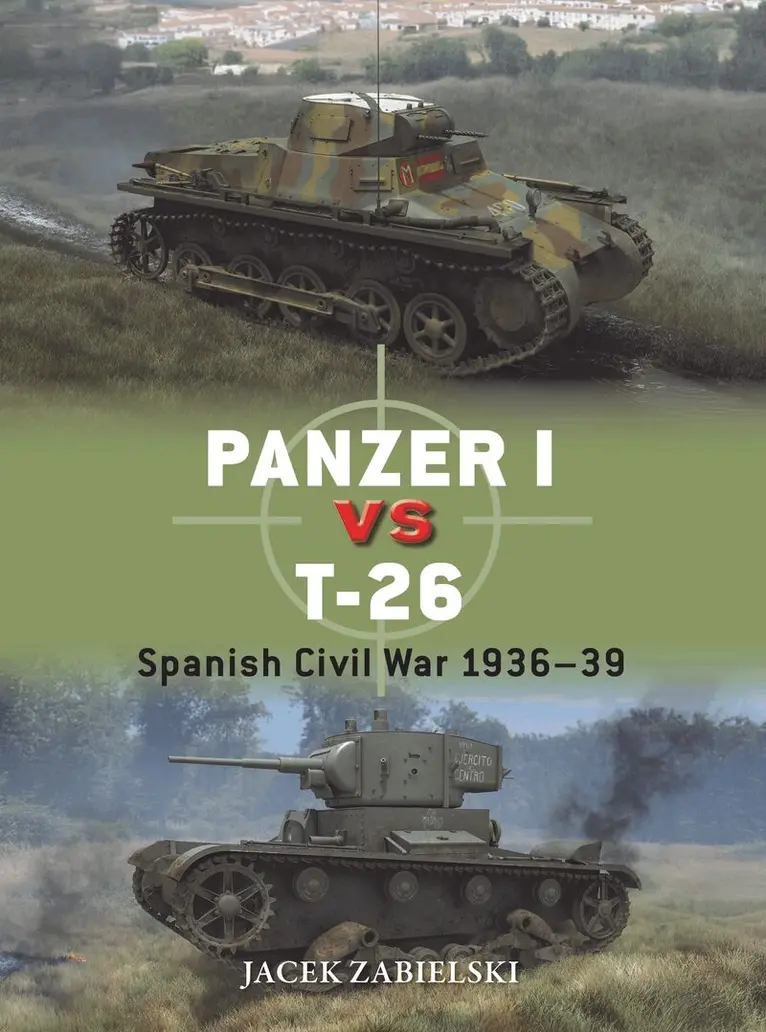
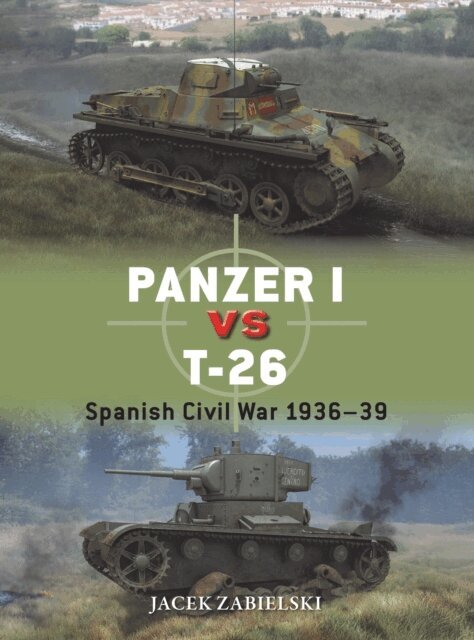
Spanish Civil War 1936–39
194 kr
Skickas
278 kr
Skickas
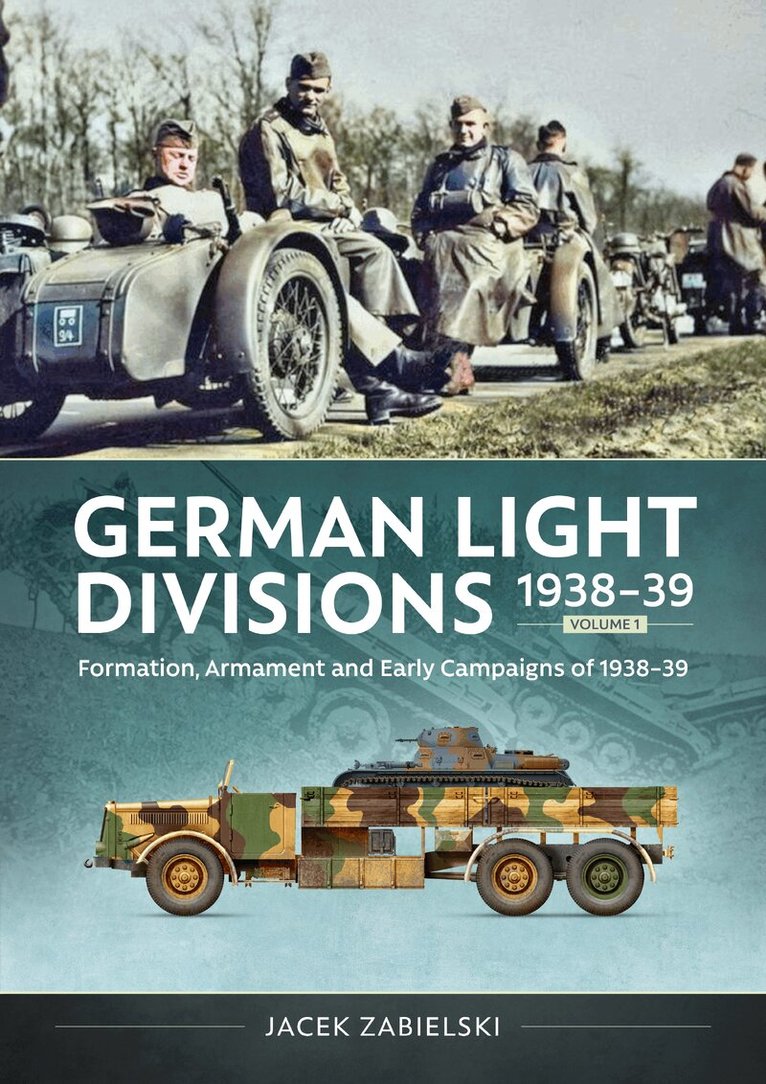
In the years immediately preceding the Second World War, the German Army stood on the cusp of a revolution in warfare. Between the horse-mounted traditions of the Reichswehr and the fully developed Panzer divisions of 1940 lay an often overlooked but crucial transitional force: the German Light Divisions (leichte Divisionen).
Formed in 1938, these mobile formations embodied the Wehrmacht’s search for speed, flexibility, and operational reach. Drawing on cavalry traditions while embracing motorization, the light divisions combined motorized infantry, reconnaissance units, artillery, engineers, and a single battalion of light tanks, many of them carried forward on transporters to maximize operational tempo. They were conceived not as breakthrough forces, but as fast-moving reconnaissance and exploitation formations—an experimental solution to the evolving demands of modern war.
This first volume of German Light Divisions 1938–39 offers the most detailed and comprehensive study yet of these formations during their formative years. Covering their origins, organization, armament, doctrine, and early operational employment, the book traces the evolution of Germany’s motorized cavalry from the Reichswehr era through the ‘Flower Campaigns’ of 1938–39 and into the opening phase of the war in Poland.
Drawing on a wide range of German-language sources, archival photographs, and private collections, the author reconstructs the structure and capabilities of all four light divisions, examining their tank battalions, reconnaissance units, motorized infantry, artillery, anti-tank forces, and supporting arms in detail. Particular attention is paid to vehicles, weapons, camouflage and markings, as well as to the distinctive role played by Czech-built tanks following the annexation of Bohemia and Moravia.
Lavishly illustrated throughout, the volume features a wealth of rare photographs, detailed organizational charts, and high-quality color artwork by David Bocquelet, depicting vehicles, tactical markings, and equipment with exceptional clarity. These visuals make the book not only an authoritative operational history, but also an invaluable reference for historians, researchers, and modelers alike.
Often overshadowed by the later successes of the Panzer divisions, the German light divisions played a vital role in shaping the Wehrmacht’s approach to mobile warfare. Their strengths—and their limitations—directly influenced the decision to convert them into full Panzer divisions in late 1939. This volume restores them to their rightful place in the story of German armored and motorized forces on the eve of the Second World War.

214 kr
Skickas
353 kr
Skickas inom 3-6 vardagar
278 kr
Skickas
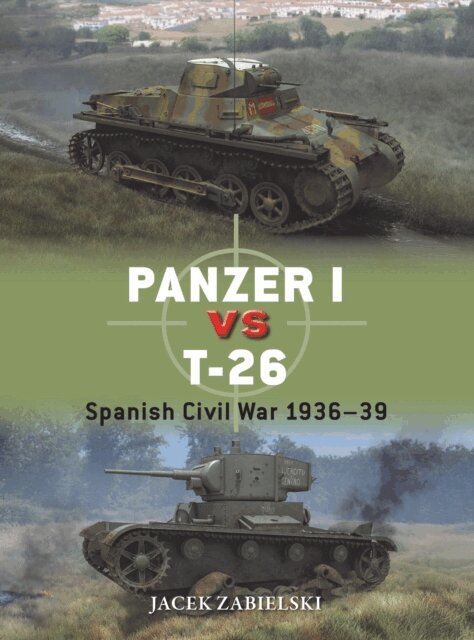
Spanish Civil War 1936–39
224 kr
Läs direkt efter köp
Spanish Civil War 1936–39
229 kr
Läs direkt efter köp
Eastern Front 1943–44
194 kr
Kommande
313 kr
Skickas
The First World War is often remembered for trench warfare, massed artillery and the dominance of horse-drawn logistics—but it was also the first truly motorised conflict. Imperial German Army Motorised Troops 1914–18 Volume 1 uncovers the overlooked story of Germany’s mechanical transport and the soldiers who operated it, charting the rise of the Kraftfahrtruppen from pre-war experiments to a vital arm of the Kaiser’s army.
Drawing on extensive German-language sources and rare archival photography, Jacek Zabielski explores how the Imperial Army harnessed trucks, motorcycles, staff cars and road locomotives to meet the enormous demands of modern industrial war. Beginning with early state subsidies and the tentative establishment of motor transport battalions before 1914, the book traces how civilian vehicles were requisitioned on mobilisation, and how thousands of new machines were pressed into service to feed, equip and move the army across Europe.
The narrative examines the creation and daily operation of transport columns, depots and parks, as well as the integration of motor vehicles into specialised branches: pioneers hauling pontoons, motorcycle detachments carrying urgent messages, ambulances evacuating casualties, and aviation units relying on motorised recovery teams. Motor traction was also central to moving Germany’s heaviest siege artillery, with steam and petrol-powered tractors hauling giant howitzers across shattered landscapes.
This richly illustrated volume reproduces hundreds of rare and previously unpublished photographs, showing vehicles and their crews on every front—from the Western Front and the Balkans to the Middle East, as well as specially commissioned colour artwork. Technical detail is combined with human stories: drivers in leather tunics posing proudly by their machines, improvised adaptations to vehicles in the field, and the constant struggle against poor roads, shortages of fuel and tyres, and the sheer mechanical strain of total war.
Volume 1 lays the groundwork for understanding the broader impact of Germany’s motorized forces, which are further explored in Volume 2.
280 kr
Kommande
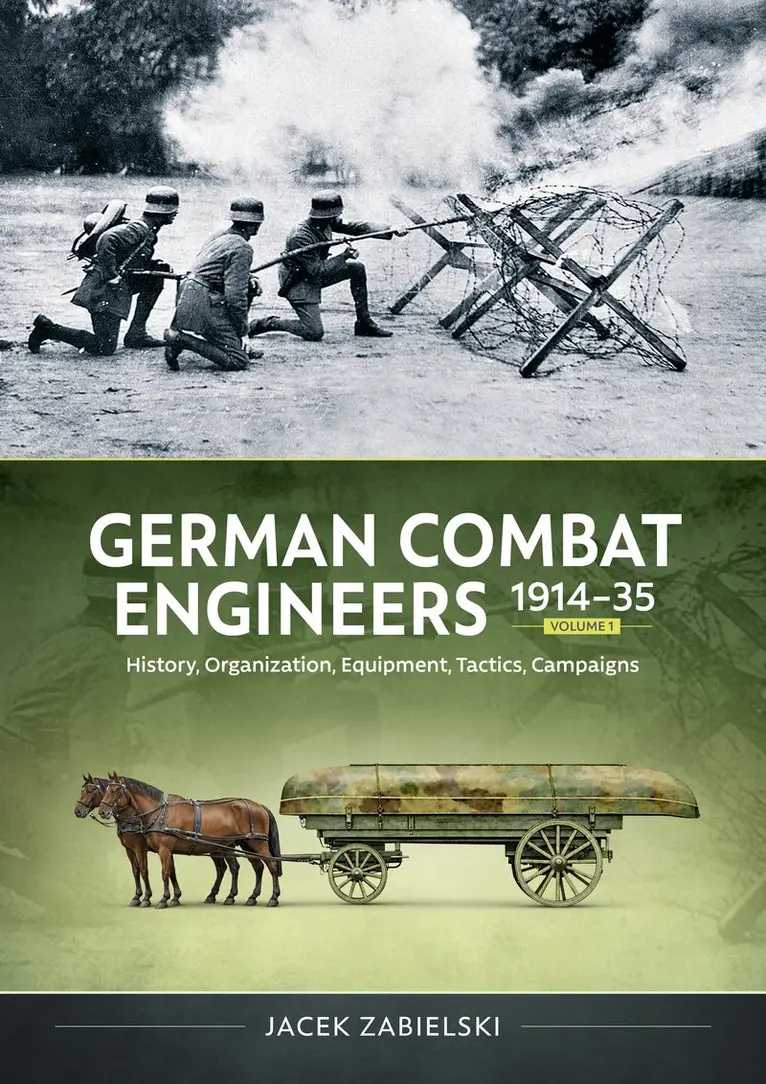
cross rivers, through fortifications, under wire, and beneath the earth itself, German combat engineers—the Pioniere—fought a war few remember but none could have been won without. From the muddy trenches of Flanders to the shattered forests of the Eastern Europe, these specialist soldiers shaped the course of modern warfare with sweat, skill, and steel.
German Combat Engineers brings their hidden world to light. Drawing on rare photographs, archival documents, and detailed technical research, this book traces the evolution, organization, and combat role of Germany’s engineer troops from the pre- 1914 Imperial Army through the crucible of the First World War. Readers will discover how Pioniere built bridges under fire, carved tunnels deep beneath enemy positions, stormed strongpoints with explosives and flamethrowers, and supported the first assault troops in history—the legendary Sturmtruppen.
Inside are vivid accounts of engineer operations on the Western and Eastern Fronts; technical studies of weapons, uniforms, and equipment; and clear explanations of the many specialist branches—field pioneers, fortress pioneers, railway engineers, flamethrower units, mortar crews, searchlight sections, bridging trains, and more. Richly illustrated and meticulously researched, the book reveals how these highly trained soldiers combined construction and destruction in equal measure, shaping the battlefield long before the infantry arrived.
The book also follows the story beyond 1918. In the postwar Reichswehr, engineers survived as a small but elite corps, preserving hard-won technical knowledge despite the strict limits of the Treaty of Versailles. Former wartime pioneers became instructors, designers, and officers who quietly shaped Germany’s interwar doctrine. Their experience in fortification, mobility, demolitions, and combined-arms support helped lay the engineering foundations later expanded by the Wehrmacht.