The call to teach means different things to different people. This collection contends, however, that, at the very least, faithful work in the teaching vocation involves excellence, commitment, and community. Representing diverse disciplines and institutional perspectives from a Christian research university, the contributors present reflections based on personal experience, empirical data, and theoretical models. This wide-ranging collection offers insight, encouragement, and a challenge to teachers in all areas of Christian higher education. Building upon the legacy of thoughtful teaching at Baylor University while looking toward the future of higher education, this collection is framed for Christians who teach in higher education but who are also committed to research and graduate training.
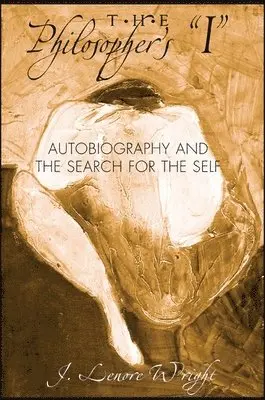
Using works written over the course of 1,500 years, considers philosophers' autobiographies as a genre of philosophical writing.This book examines philosophers' autobiographies as a genre of philosophical writing. Author J. Lenore Wright focuses her attention on five philosophical autobiographies: Augustine's Confessions, Descartes' Meditations, Rousseau's The Confessions, Nietzsche's Ecce Homo, and Hazel Barnes's The Story I Tell Myself. In the context of first-person narration, she shows how the philosophers in question turn their attention inward and unleash their analytical rigor on themselves.Wright argues that philosophical autobiography makes philosophical analysis necessary and that one cannot unfold without the other. Her distinction between the ontological and rhetorical dimensions of the self creates a rich middle ground in which questions of essence and identity bear upon existence.
Using works written over the course of 1,500 years, considers philosophers' autobiographies as a genre of philosophical writing.This book examines philosophers' autobiographies as a genre of philosophical writing. Author J. Lenore Wright focuses her attention on five philosophical autobiographies: Augustine's Confessions, Descartes' Meditations, Rousseau's The Confessions, Nietzsche's Ecce Homo, and Hazel Barnes's The Story I Tell Myself. In the context of first-person narration, she shows how the philosophers in question turn their attention inward and unleash their analytical rigor on themselves.Wright argues that philosophical autobiography makes philosophical analysis necessary and that one cannot unfold without the other. Her distinction between the ontological and rhetorical dimensions of the self creates a rich middle ground in which questions of essence and identity bear upon existence.