2 572 kr
Skickas inom 7-10 vardagar
2 572 kr
Skickas inom 7-10 vardagar
2 133 kr
Skickas inom 7-10 vardagar
937 kr
Skickas inom 7-10 vardagar
759 kr
Skickas inom 7-10 vardagar
11 kr
Läs direkt efter köp
34 kr
Läs direkt efter köp
364 kr
Skickas inom 7-10 vardagar
359 kr
Läs direkt efter köp
In a rapidly changing world, are we on the brink of creating technology that outpaces our ability to control it?
Astrophysicist J. Craig Wheeler, former president of the American Astronomical Society, takes a critical look at the technological advances shaping our future. From artificial intelligence to genetic engineering, Wheeler explores how these innovations are interconnected and the potential they hold for humanity's evolution. He warns of a future where autonomous machines outsmart us and genetic modifications challenge our very essence. With thought-provoking insights into the ethical dilemmas we face, Wheeler stresses the importance of staying informed and proactive.
Key Questions Raised by Wheeler:
Will there be jobs for those willing to work in a future dominated by automation?How might social media companies manipulate our decisions, potentially stripping us of free will?Could AI influence or even dictate our voting behaviors?If widespread mental connectivity becomes a reality, could we see the emergence of a collective consciousness that erases individuality?Have we exhausted Earth's resources, and is population control necessary?What implications arise if we solve aging? How will society adapt to the challenges of perpetual youth?What are the realistic prospects of migrating to space as Earth becomes increasingly inhospitable?Our decisions today will determine if we control technology or if it controls us. Through an engaging narrative, Wheeler not only outlines the challenges but also offers practical advice on how we can retain control over our technological destiny.
Includes a Foreword by Neil DeGrasse Tyson.

1 638 kr
Skickas inom 10-15 vardagar
2 096 kr
Läs direkt efter köp
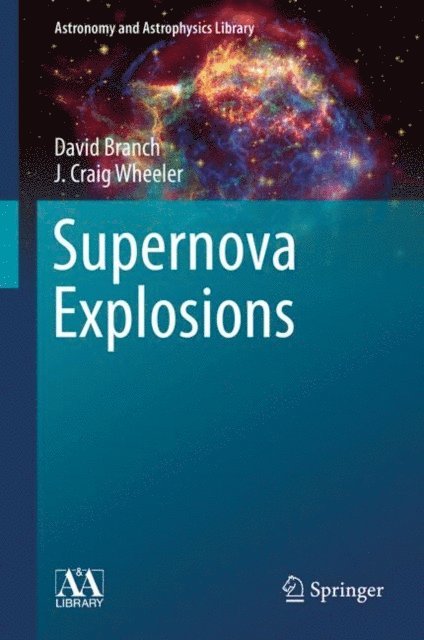
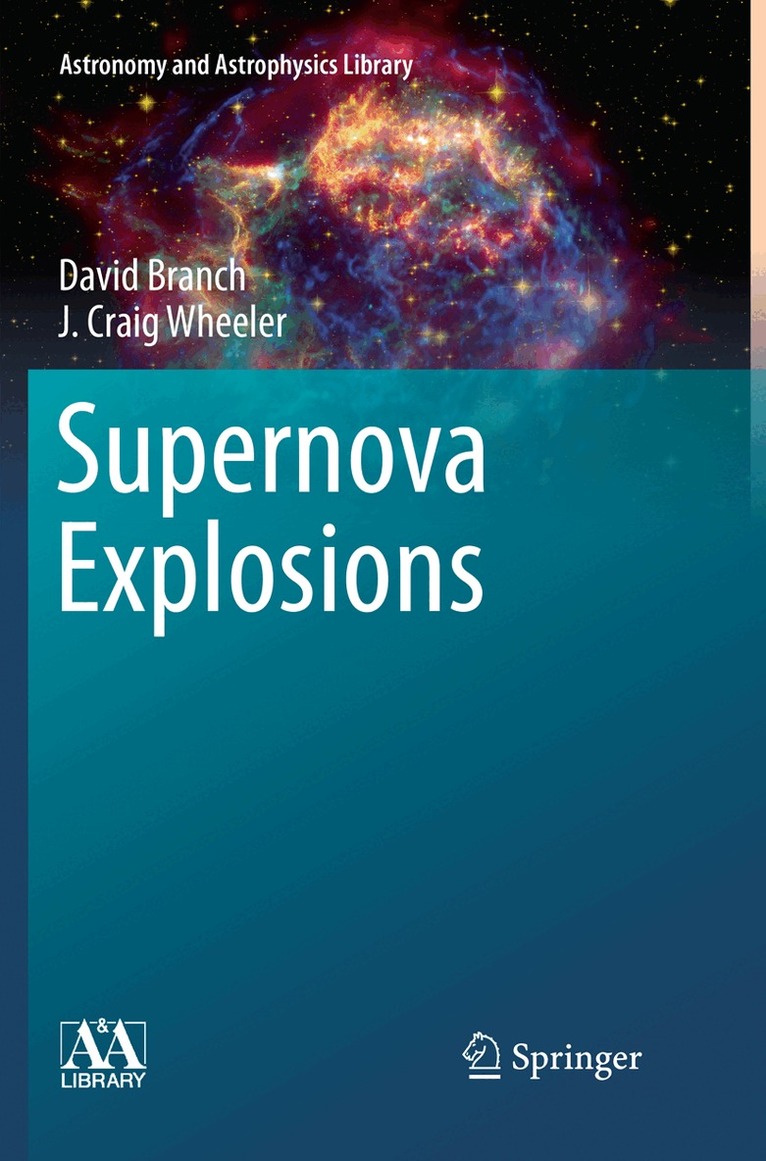
Targeting advanced students of astronomy and physics, as well as astronomers and physicists contemplating research on supernovae or related fields, David Branch and J. Craig Wheeler offer a modern account of the nature, causes and consequences of supernovae, as well as of issues that remain to be resolved.
Owing especially to (1) the appearance of supernova 1987A in the nearby Large Magellanic Cloud, (2) the spectacularly successful use of supernovae as distance indicators for cosmology, (3) the association of some supernovae with the enigmatic cosmic gamma-ray bursts, and (4) the discovery of a class of superluminous supernovae, the pace of supernova research has been increasing sharply. This monograph serves as a broad survey of modern supernova research and a guide to the current literature.
The book’s emphasis is on the explosive phases of supernovae. Part 1 is devoted to a survey of the kinds of observations that inform us about supernovae, some basic interpretations of such data, and an overview of the evolution of stars that brings them to an explosive endpoint. Part 2 goes into more detail on core-collapse and superluminous events: which kinds of stars produce them, and how do they do it? Part 3 is concerned with the stellar progenitors and explosion mechanisms of thermonuclear (Type Ia) supernovae. Part 4 is about consequences of supernovae and some applications to astrophysics and cosmology. References are provided in sufficient number to help the reader enter the literature.
1 638 kr
Skickas inom 10-15 vardagar
1 791 kr
Skickas inom 3-6 vardagar
597 kr
Skickas inom 3-6 vardagar
2 643 kr
Tillfälligt slut