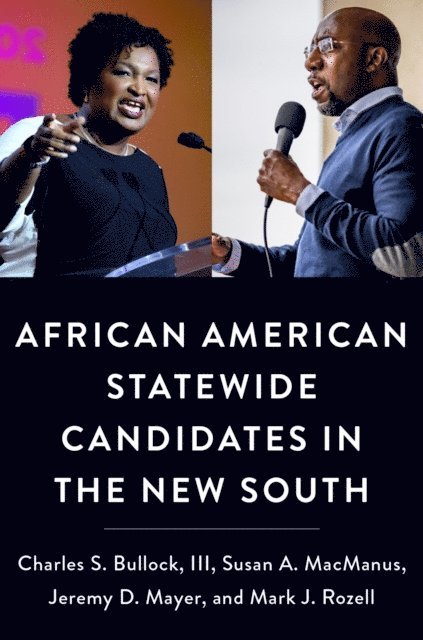
African American candidates for state and federal office in the United States face unique challenges, given the nation''s complicated racial dynamics. To date, there have been only two elected African American governors in the country, the first elected in Virginia in 1989 and the second in Massachusetts in 2006. While Black candidates running statewide have been elected in increasing numbers in many areas of the country, there have been fewer successes in the US South. The relative lack of success in the South for Black candidates is puzzling given that, as a percentage of the population, the South has the highest concentration of African American citizens. This book examines the campaigns of Black statewide candidates in the South to untangle the factors that led to their electoral successes as well as the factors that continue to stymie positive electoral results. Looking at broader regional demographic and political trends, the authors project that the South is on the threshold of a major breakthrough for African American statewide candidates, who will have a substantial role in not only fundamentally changing the political dynamics of the region, but the nation as well. This change will be driven not only by Black candidates and voters, but a rising regional coalition of racial minority and white voters who are increasingly willing to vote for Black candidates.
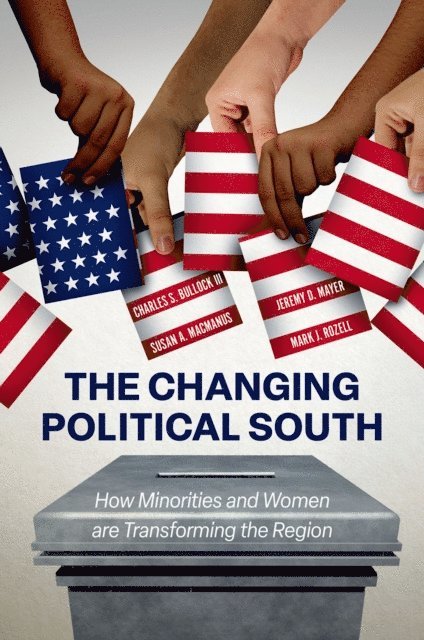
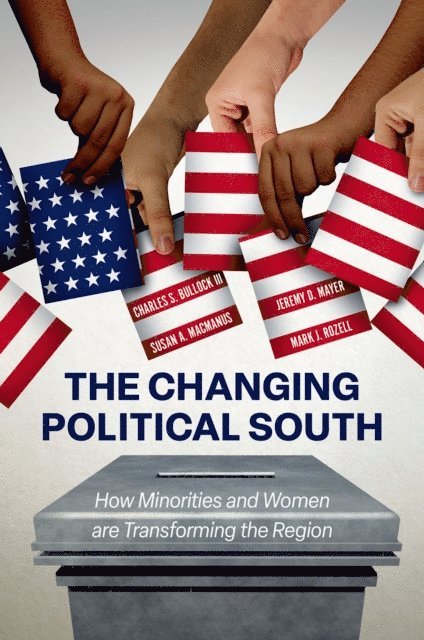
The phenomenal growth of minority populations in the U.S. South is quickly transforming the region''s politics. Most political observers see the Democratic Party rising in the region, with increasingly Democratic-leaning women voters joining emergent populations of Asian and Latino voters and African American voters. Some argue that demography is destiny, and yet the analyses presented in The Changing Political South demonstrate little such certainty about the future competitiveness of the two major parties in the South. Authors Charles S. Bullock, III, Susan A. MacManus, Jeremy D. Mayer, and Mark J. Rozell substantiate the idea of strong and persistent Democratic leanings among Black voters and a majority of women. However, they find that the rising minority populations'' votes are increasingly "up for grabs" by the two major parties. How the two parties fare in the future of Southern politics will be driven largely by their abilities to reach these new voters.
When the Second Vote Decides analyzes a wealth of information in the course of examining the impact of elections in which a plurality vote does not determine the winner. The types of elections include traditional runoffs (as practiced in much of the South and many municipalities across the country), the instant runoff (also known as ranked choice voting and the alternative vote), and Top Two elections (as used in California and Washington). The datasets used include one from the traditional states that spans from 1970 to 2019; Top Two results from the time of their adoption in California and Washington through 2019; county-level results from Georgia from 1954 to 1994; results from North Carolina during the period when the state had 40% as the threshold for nominations; and ranked choice voting for municipalities and states (Alaska and Maine), beginning with the adoption of the format in San Francisco through 2022. The book explores the many impacts that a runoff system has on elections, assessing the differences between Democrats and Republicans and general election versus primary runoffs. The author draws on numerous datasets, supported by interviews with candidates and political consultants, to explore the frequency with which the initial leader wins the second round, the impact on incumbents seeking re-election, and whether requiring a majority vote disadvantages women or minority candidates. Some questions explored in the volume include: how does the messaging of the candidates change in a runoff? What happens in a runoff in terms of staffing, targeting, fund raising, and endorsements? How do runoffs, ranked choice voting, and plurality elections compare, and which approach is most desirable?
A thought-provoking examination of the constituencies and the impact of one of the most controversial political figures of our time. Journalists have thoroughly documented David Duke''s rise to prominence in Louisiana politics, but until now, few intensive analyses of the Duke phenomenon have been undertaken. This new collection identifies the significant junctures of Duke''s political career, from its earliest beginnings to his recent campaigns for governor, the Senate, and the Presidency. Through a variety of methods and approaches, the contributors to this work advance our understanding of what made this former Ku Klux Klan member a significant political force, and of how and why he very nearly succeeded in his attempts to gain higher office.