1 079 kr
Skickas inom 10-15 vardagar
1 079 kr
Skickas inom 10-15 vardagar
2 470 kr
Skickas inom 10-15 vardagar
909 kr
Skickas inom 10-15 vardagar
368 kr
Skickas inom 7-10 vardagar
1 496 kr
Skickas inom 10-15 vardagar
621 kr
Läs direkt efter köp
This special issue of the Peabody Journal of Education provides a comprehensive overview of the latest developments in peace education reform. School reforms based upon principles of peace education have in common a belief in the power of peace to create a positive learning climate in schools and to address the problems of violence in the broader culture. A peace education strategy for improving school productivity rests upon three main assumptions: 1. Violence contributes to the poor performance of many students. 2. Adults in school settings need to address problems created by violence in order for schools to improve. 3. Anxieties that make it hard for students to master traditional subject matter can best be addressed by a comprehensive peace education strategy that makes school a safe place to learn and provides students with knowledge about alternative nonviolent ways to resolve conflicts. Peace building reforms go beyond responding to immediate forms of violence that may be overwhelming students and teachers to promoting positive images of peace through the study of nonviolence. Written by established experts in the field of peace education from six different countries, this collection of articles not only represents a wide variety of peace education practices from different corners of the globe, but it also represents varying academic perspectives. Educators can play a key role in helping human societies progress toward more sustainable ways of living by implementing peacemaking, peacekeeping, and peace building strategies in school programs. Peace education reforms point to a new way of thinking about schools as vehicles for promoting a peace culture through insights offered by nonviolent theory.
640 kr
Läs direkt efter köp
This special issue of the Peabody Journal of Education provides a comprehensive overview of the latest developments in peace education reform. School reforms based upon principles of peace education have in common a belief in the power of peace to create a positive learning climate in schools and to address the problems of violence in the broader culture. A peace education strategy for improving school productivity rests upon three main assumptions: 1. Violence contributes to the poor performance of many students. 2. Adults in school settings need to address problems created by violence in order for schools to improve. 3. Anxieties that make it hard for students to master traditional subject matter can best be addressed by a comprehensive peace education strategy that makes school a safe place to learn and provides students with knowledge about alternative nonviolent ways to resolve conflicts. Peace building reforms go beyond responding to immediate forms of violence that may be overwhelming students and teachers to promoting positive images of peace through the study of nonviolence. Written by established experts in the field of peace education from six different countries, this collection of articles not only represents a wide variety of peace education practices from different corners of the globe, but it also represents varying academic perspectives. Educators can play a key role in helping human societies progress toward more sustainable ways of living by implementing peacemaking, peacekeeping, and peace building strategies in school programs. Peace education reforms point to a new way of thinking about schools as vehicles for promoting a peace culture through insights offered by nonviolent theory.
1 067 kr
Läs direkt efter köp
1 091 kr
Läs direkt efter köp
540 kr
Skickas inom 10-15 vardagar
626 kr
Skickas inom 7-10 vardagar
1 108 kr
Skickas inom 7-10 vardagar
446 kr
Läs direkt efter köp
626 kr
Skickas inom 7-10 vardagar
1 108 kr
Skickas inom 7-10 vardagar
446 kr
Läs direkt efter köp
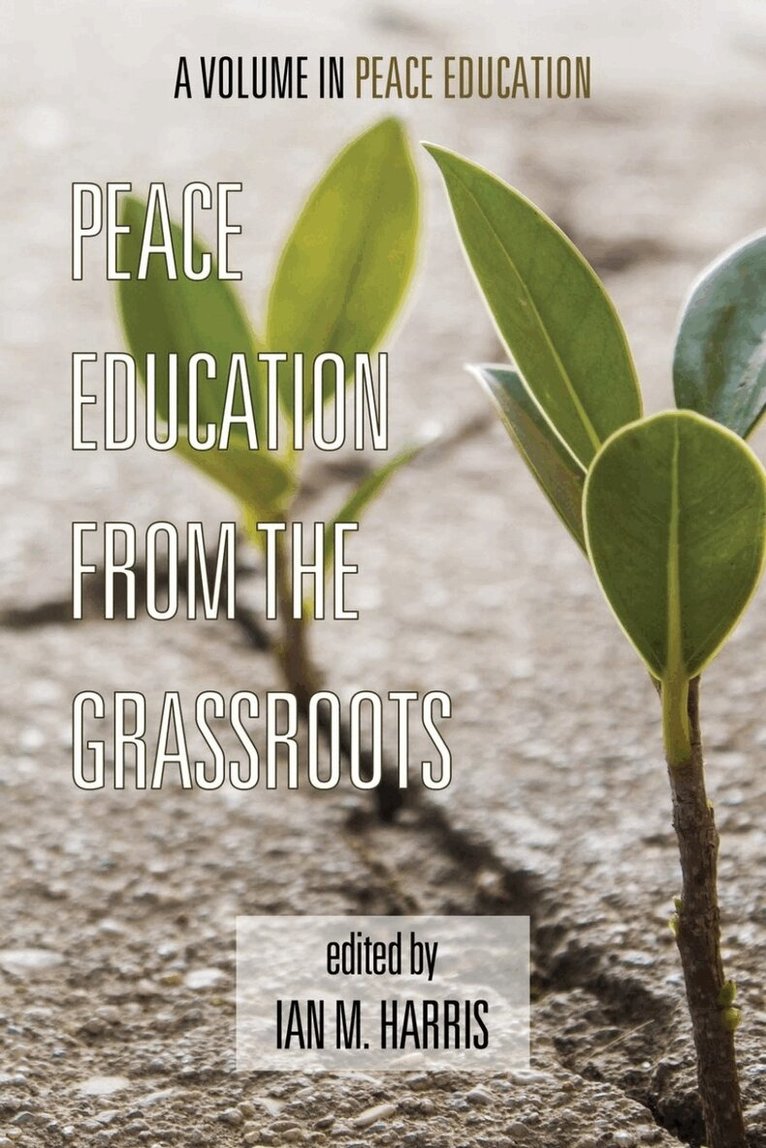
Historians often ignore the day-to-day struggles of ordinary people to improve their lives. They tend to focus on the accomplishments of illustrious leaders. Peace Education from the Grassroots tells the stories of concerned citizens, teachers, and grassroots peace activists who have struggled to counteract high levels of violence by teaching about the sources for violence and strategies for peace. The stories told here come from the grass roots meaning the educators are close to the forms of violence they are addressing.
This collection of essays tells how citizens at the grassroots level developed peace education initiatives in thirteen different nations (Belgium, Canada, El Salvador, Germany, India, Jamaica, Japan, Mexico, the Philippines, South Korea, Spain, Uganda, and the United States). A fourteenth article describes the efforts of the International Red Cross to implement a human rights curriculum to teachers on the ground in the Balkans, Iran, Senegal, and the United Sates. These chapters describe a variety of schools, colleges, peace movement organizations, community-based organizations, and international nongovernmental organizations engaged in peace education.
664 kr
Läs direkt efter köp
669 kr
Läs direkt efter köp