451 kr
Läs direkt efter köp
451 kr
Läs direkt efter köp
551 kr
Läs direkt efter köp
1 202 kr
Skickas inom 7-10 vardagar
1 577 kr
Skickas inom 7-10 vardagar
679 kr
Skickas
510 kr
Läs direkt efter köp
514 kr
Läs direkt efter köp
2 927 kr
Skickas inom 7-10 vardagar
872 kr
Skickas inom 7-10 vardagar
2 856 kr
Skickas inom 7-10 vardagar
725 kr
Skickas inom 10-15 vardagar
2 525 kr
Skickas inom 10-15 vardagar
855 kr
Skickas inom 10-15 vardagar
2 515 kr
Skickas inom 10-15 vardagar
1 004 kr
Läs direkt efter köp
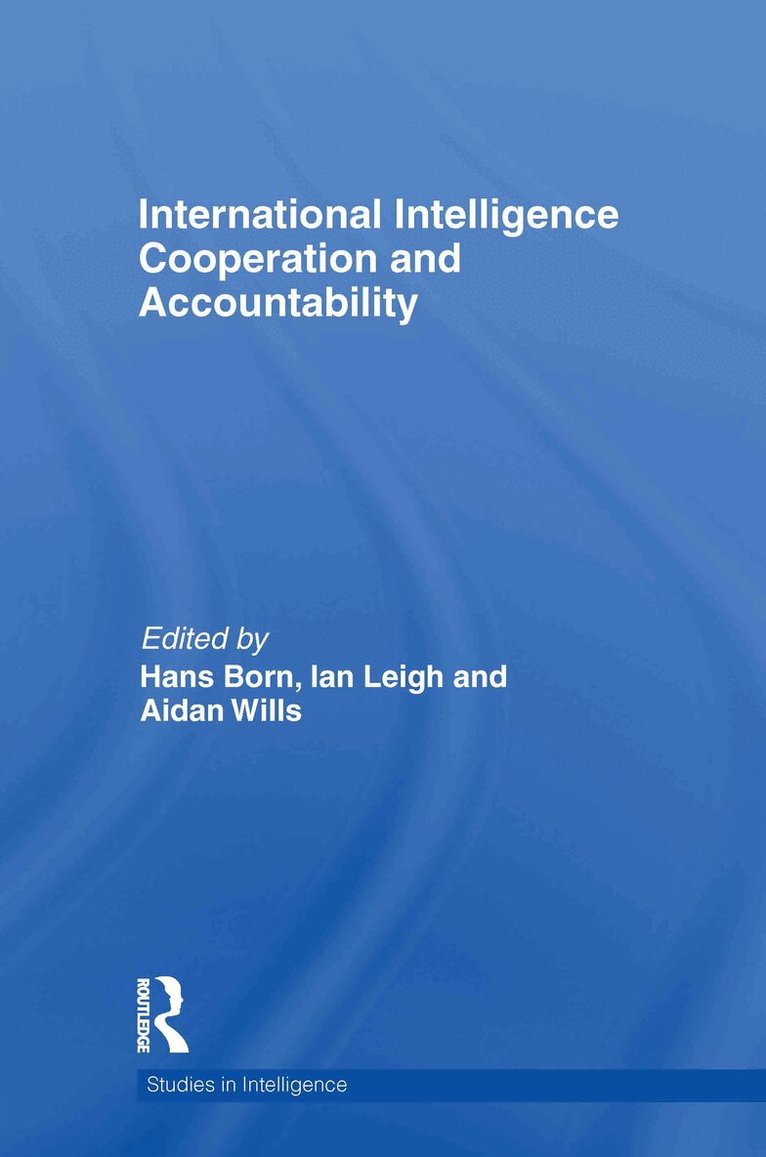
This book examines how international intelligence cooperation has come to prominence post-9/11 and introduces the main accountability, legal and human rights challenges that it poses.
Since the end of the Cold War, the threats that intelligence services are tasked with confronting have become increasingly transnational in nature – organised crime, the proliferation of weapons of mass destruction and terrorism. The growth of these threats has impelled intelligence services to cooperate with contemporaries in other states to meet these challenges. While cooperation between certain Western states in some areas of intelligence operations (such as signals intelligence) is longstanding, since 9/11 there has been an exponential increase in both their scope and scale.
This edited volume explores not only the challenges to accountability presented by international intelligence cooperation but also possible solutions for strengthening accountability for activities that are likely to remain fundamental to the work of intelligence services. The book will be of much interest to students of intelligence studies, security studies, international law, global governance and IR in general.
997 kr
Läs direkt efter köp
This book examines how international intelligence cooperation has come to prominence post-9/11 and introduces the main accountability, legal and human rights challenges that it poses.
Since the end of the Cold War, the threats that intelligence services are tasked with confronting have become increasingly transnational in nature – organised crime, the proliferation of weapons of mass destruction and terrorism. The growth of these threats has impelled intelligence services to cooperate with contemporaries in other states to meet these challenges. While cooperation between certain Western states in some areas of intelligence operations (such as signals intelligence) is longstanding, since 9/11 there has been an exponential increase in both their scope and scale.
This edited volume explores not only the challenges to accountability presented by international intelligence cooperation but also possible solutions for strengthening accountability for activities that are likely to remain fundamental to the work of intelligence services. The book will be of much interest to students of intelligence studies, security studies, international law, global governance and IR in general.
781 kr
Läs direkt efter köp
This book examines how key developments in international relations in recent years have affected intelligence agencies and their oversight.
Since the turn of the millennium, intelligence agencies have been operating in a tense and rapidly changing security environment. This book addresses the impact of three factors on intelligence oversight: the growth of more complex terror threats, such as those caused by the rise of Islamic State; the colder East-West climate following Russia’s intervention in Ukraine and annexation of Crimea; and new challenges relating to the large-scale intelligence collection and intrusive surveillance practices revealed by Edward Snowden. This volume evaluates the impact these factors have had on security and intelligence services in a range of countries, together with the challenges that they present for intelligence oversight bodies to adapt in response. With chapters surveying developments in Norway, Romania, the UK, Belgium, France, the USA, Canada and Germany, the coverage is varied, wide and up-to-date.
This book will be of much interest to students of intelligence studies, security studies and International Relations.
291 kr
Skickas inom 10-15 vardagar
1 183 kr
Skickas inom 10-15 vardagar
1 291 kr
Läs direkt efter köp