

Inbunden, Tyska, 2026
255 kr
Skickas inom 3-6 vardagar
255 kr
Skickas inom 3-6 vardagar
189 kr
Läs direkt efter köp
146 kr
Skickas inom 7-10 vardagar
44 kr
Läs direkt efter köp
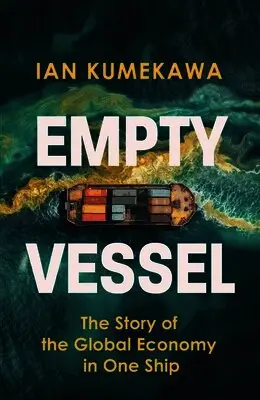
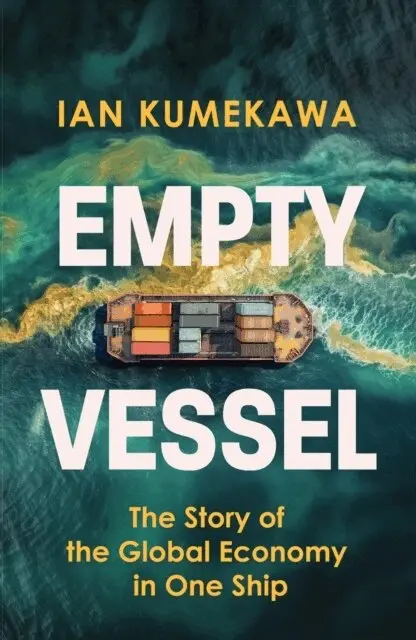
''Thrilling, meticulous and wondrously original'' PHILIPPE SANDSA jaw-dropping microhistory of the global economy over the last fifty years told through the many lives of a single ship.At 94 meters long and 9,500 deadweight tonnes, once called the Bibby Resolution, is an unremarkable hulk, crossing the oceans unnoticed. And yet, the astonishing journey of this boat can tell us the story of the modern world.First built as a Swedish offshore oil rig in the 1970s, it went on to become a barracks for British soldiers in the Falklands War in the 1980s, a jail off New York in the 1990s, a prison in Portland in the 2000s, and accommodation for Nigerian oil workers off the coast of Africa in the 2010s. It has been called Safe Esperia, HMP The Weare, even ''The Love Boat''. In each of its lives this empty vessel has been commanded by economic forces much larger than itself: private investment, war, mass incarceration, imperial interests, national sovereignty, inflation, booms, busts and greed.Through its encounters with a world of island tax havens, the English court system, exploited labour forces, free banking zones or immigration politics, the ordinary boat at the heart of this story reveals our complex modern economy to us, connecting the dots of a dramatically changing world in the making, and warning us of its dangerous consequences.

1 031 kr
Kommande

312 kr
Kommande
348 kr
Skickas inom 3-6 vardagar
448 kr
Skickas inom 7-10 vardagar
242 kr
Skickas inom 7-10 vardagar
188 kr
Skickas inom 7-10 vardagar
593 kr
Läs direkt efter köp
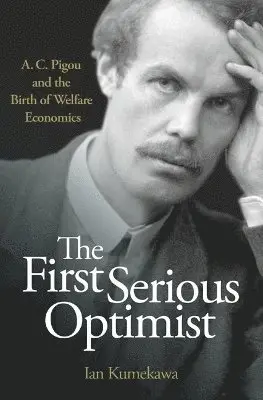
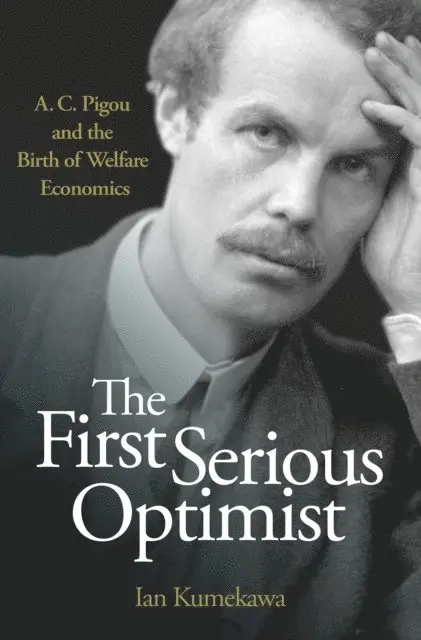
A groundbreaking intellectual biography of one of the twentieth century''s most influential economistsThe First Serious Optimist is an intellectual biography of the British economist A. C. Pigou (1877–1959), a founder of welfare economics and one of the twentieth century''s most important and original thinkers. Though long overshadowed by his intellectual rival John Maynard Keynes, Pigou was instrumental in focusing economics on the public welfare. And his reputation is experiencing a renaissance today, in part because his idea of "externalities" or spillover costs is the basis of carbon taxes. Drawing from a wealth of archival sources, Ian Kumekawa tells how Pigou reshaped the way the public thinks about the economic role of government and the way economists think about the public good.Setting Pigou''s ideas in their personal, political, social, and ethical context, the book follows him as he evolved from a liberal Edwardian bon vivant to a reserved but reform-minded economics professor. With World War I, Pigou entered government service, but soon became disenchanted with the state he encountered. As his ideas were challenged in the interwar period, he found himself increasingly alienated from his profession. But with the rise of the Labour Party following World War II, the elderly Pigou re-embraced a mind-set that inspired a colleague to describe him as "the first serious optimist."The story not just of Pigou but also of twentieth-century economics, The First Serious Optimist explores the biographical and historical origins of some of the most important economic ideas of the past hundred years. It is a timely reminder of the ethical roots of economics and the discipline''s long history as an active intermediary between the state and the market.
Not Stated
256 kr
Skickas inom 3-6 vardagar
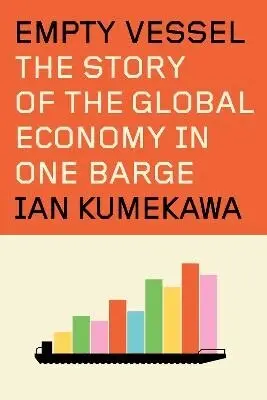
The rise of globalization and financialization as seen from a barge-one Swedish barge, to be exact, built in 1979
"The many-headed hydra of neoliberalism has found its chronicler." -Sven Beckert, author of Empire of Cotton
"I've rarely read a book that so deftly entwines a single, accessible story with the broad forces of globalization. A stunningly original history." -Maya Jasanoff, author of The Dawn Watch
What do a barracks for British troops in the Falklands War, a floating jail off the Bronx, and temporary housing for VW factory workers in Germany have in common? The Balder Scapa: a single barge that served all three roles. Though the name would eventually change to Finnboda 12. And then to Safe Esperia. And later on, to the Bibby Resolution. And after that . . . in short, a vessel with so many names, and so many fates, that to keep it in our sights-as the protagonist of this fascinating economic parable-Ian Kumekawa has no choice but to call it, simply, the Vessel.
Despite its sturdy steel structure, weighing 9,500 deadweight tons, the Vessel is a figure as elusive and abstract as the offshore market it comes to embody: a world of island tax havens, exploited labor forces, free banking zones, Thatcherism, Reaganomics, and mass incarceration, where even the prisoners are held offshore. Fitted with modular shipping containers, themselves the product of standardized global trade, the ship could become whatever the market demanded. Whether caught in an international dispute involving Hong Kong, Nigeria, Indonesia, and the Virgin Islands-to be settled in an English court of law-or flying yet another foreign "flag of convenience" to mask its ownership-the barge is ever a container for forces much larger than even its hulking self.
Empty Vessel is a jaw-dropping microhistory that speaks volumes about the global economy as a whole. In following the Vessel-and its Sister Vessel, built alongside it in Stockholm-from one thankless task to the next, Kumekawa connects the dots of a neoliberal world order in the making, where regulation is for suckers and "Made in USA" feels almost quaint.