427 kr
Skickas
427 kr
Skickas
509 kr
Skickas
569 kr
Skickas
621 kr
Skickas inom 7-10 vardagar
446 kr
Skickas inom 3-6 vardagar
288 kr
Läs direkt efter köp
509 kr
Skickas
2 952 kr
Skickas inom 10-15 vardagar
862 kr
Skickas inom 10-15 vardagar
1 088 kr
Läs direkt efter köp
First published in 1988, behavioural family therapists worked in an area that had greatly changed since its inception over 20 years before. Growing out of the pioneering work of Gerald Patterson, Robert Paul Liberman, and Richard Stuart, whose backgrounds vary from psychology to psychiatry to social work, behavioural family therapy (BFT) had evolved to encompass systems theory, considerations of the therapeutic alliance, as well as approaches to accounting for and restructuring family members’ subjective experiences through cognitive strategies.
As BFT had not been the ‘brain child’ of any one charismatic innovator, but rather of a wide array of clinicians and researchers developing and rigorously testing hypotheses, it is fitting that this much-needed summation of the field was a collaborative product of an array of well-established practitioners of the time. They discuss in Part 1 of the book the theoretical parameters of BFT, focusing on modular behavioural strategies, the indications for therapy, assessment of family problems, pertinent issues arising in clinical practice, and approaches to the problem of resistance to change. Contributors to Part 2 then apply theory to such clinical situations as ‘parent training’ and helping families cope with patients suffering from developmental disabilities, alcoholism, schizophrenia, senile dementia, as well as anxiety, obsessive-compulsive, and depressive disorders. Specific attention is also given to acute inpatient and primary health-care settings.
While BFT had already proved quite effective in treating a great number of family problems, it was only in its infancy at the time of writing. As Falloon says in his overview ‘all exponents of the method are constantly involved with the process of refinement, each clinician is a researcher, each family member is a research subject, and each researcher is contributing to clinical advancement.’
This openness, in combination with a willingness to modify ‘sacred’ tenets of behaviourism while adapting proven techniques from other family therapies, made this title a landmark in its field. As such, it was not only of interest to all clinicians and researchers with a behavioural slant, but also to all family therapists who wished to challenge themselves to develop an integrative approach.
550 kr
Skickas inom 3-6 vardagar
397 kr
Skickas inom 7-10 vardagar
394 kr
Skickas inom 7-10 vardagar
25 kr
Läs direkt efter köp
318 kr
Skickas inom 3-6 vardagar
286 kr
Läs direkt efter köp
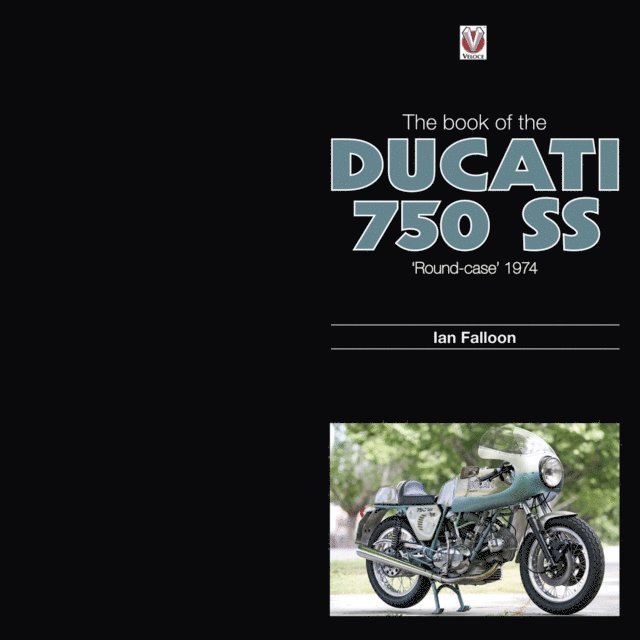
Although manufactured for only one year - 1974 - the Ducati 750 Super Sport was immediately touted as a future classic. It was a pioneering motorcycle - expensive and rare, and produced by Ducati''s race department to celebrate victory in the 1972 Imola 200 Formula 750 race.Much of the mystique centred on the 750 SS is a result of this rarity and uniqueness. The 750 round-case Ducati engine was produced for only four years, and was discontinued primarily because it was extremely expensive to manufacture. Only one variant of the 750 was fitted with desmodromic valve gear - the Super Sport. It was also the only Ducati ever hand-assembled in the race shop with special engine components.Although built in small numbers (401), this motorcycle is hailed as the ancestor of Ducati''s current World Championship Desmosedici. As a result, the 750 SS has become extremely valuable and desirable, fetching prices beyond the most expensive contemporary Ducati; for Ducatisti, the 750 SS is the Holy Grail.One of the world''s foremost motorcycle historians, Ian Falloon is the author of many books on motorcycles, of which several are on Ducati, including the best-selling Ducati Story, and Ducati Twins Restoration Guide. He has owned a number of Ducati 750s since 1973 and has a particular enthusiasm for this model, still owning the 750 Super Sport he bought back in the 1970s.
155 kr
Läs direkt efter köp
219 kr
Läs direkt efter köp
181 kr
Läs direkt efter köp
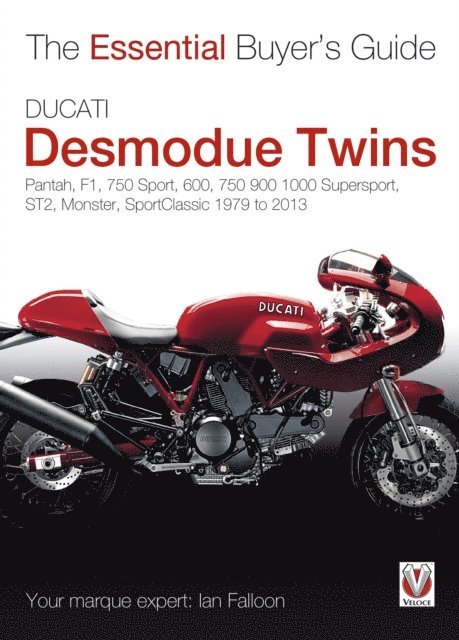
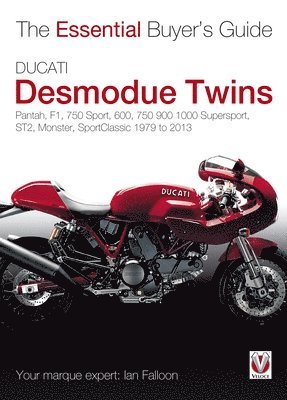
Here is a book packed with good advice on how to find and maintain a Ducati Desmodue twin. From running costs, through paperwork, vital statistics, valuation - this book shows you exactly what to look for when examining a potential Ducati Desmodue purchase. Along with a detailed description of all the individual models, there is a comprehensive condition checklist and guide, photos of key areas to check, and foibles to be aware of. Includes key specifications and details of useful upgrades that will enable one of these classic machines to be used on a regular basis, and a guide to the market and values.Written by Ian Falloon who has been involved with Ducati motorcycles for nearly 40 years. He has written several books covering the two-valve, belt-twin Desmodue models. He has owned several examples, and through his role as a motorcycle journalist, he has attended press launches for many of the models covered in this book. A long standing, close association with the Ducati factory, and a personal association with many of its engineers, has provided Ian with an invaluable insight into the Desmodue development.
16 kr
Läs direkt efter köp
226 kr
Läs direkt efter köp
227 kr
Läs direkt efter köp
134 kr
Skickas inom 7-10 vardagar
286 kr
Läs direkt efter köp
169 kr
Läs direkt efter köp
227 kr
Läs direkt efter köp
344 kr
Skickas
461 kr
Skickas inom 3-6 vardagar
452 kr
Skickas inom 3-6 vardagar